

When we swim in the ocean, we enter another animal's home. Here's how to keep us all safe
- Written by: Rebecca Olive, Vice Chancellor's Senior Research Fellow, RMIT University
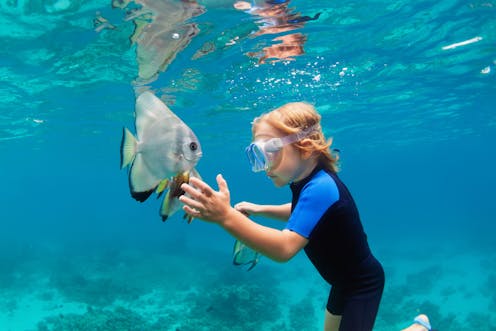
Every summer, many Australians head to the ocean to swim, surf, sail, kayak, and walk along the beach.
But humans are not alone when we use the ocean. Fish, seals, dolphins, sharks, jellyfish, turtles, stingrays, cuttlefish, and birds often swim alongside us. When we enter the ocean we become part of an entangled web of animal relationships.
Encountering animals when we swim and surf in the ocean is fun and exciting. But sharing the water with animals also comes with the risk of stings, bites, frights, and injury to us. It can also bring harm to ocean wildlife.
By educating ourselves about marine life, humans can minimise risks to ourselves and the animals who call the ocean home.
We can frighten animals – and they can scare us
Despite how vulnerable we feel when swimming, our presence in the ocean can frighten or harm an animal. Animals may see us as a predator and alter their behaviour accordingly.
Fish, birds and small stingrays might swim off, and turtles might delay rising to the ocean’s surface to breathe.
Not all animals are frightened of humans. It’s a highlight when curious dolphins swim and play around us. But dolphins can attack humans or other animals if they feel threatened - for example when feeding or protecting their young.
Humans can also be scared of animals in the water. This fear drives the use of shark nets off beaches or, less commonly, shark culls.
Shark nets are controversial – not least because they can entangle and kill animals including turtles, non-target sharks, stingrays, and whales.
Even more controversial are shark culls, such as those planned for Western Australia in 2013 after a spate of fatal shark attacks. The plan was later abandoned, after it was criticised as cruel and lacking scientific basis.
Killing or harming ocean animals so humans can have fun in the water raises all sorts of questions and moral dilemmas. So how else might we keep ourselves safe in the ocean?
Read more: Shark nets are destructive and don't keep you safe – let's invest in lifeguards
Learn about ocean animals
Learning about what ocean animals you might encounter – and when – can help keep both people and animals safe.
Some animals are present year-round. But, as whale watchers and fisherman are well aware, many animals are more active in a particular seasons or only appear at certain times of the year.
For example, in cooler months in the waters off northern Australia, manta rays are most active. Leopard sharks, meanwhile, appear during warmer months in southeast Queensland and northeast New South Wales.
And from November until May or June, a variety of marine stingers can be found in the coastal waters of Far North Queensland. These include the potentially lethal box jellyfish.
Informing ourselves means we can take measures to keep safe. For example, people swimming in North Queensland in the warmer months are advised to swim at netted beaches, and wear wetsuits or stinger suits. Entering the water slowly also gives some marine stingers time to move away.
Read more: Want to avoid a bluebottle sting? Here's how to predict which beach they'll land on
When it comes to sharks, there are growing calls to adopt non-violent approaches to minimise risks to humans. This could include public education on, for example, links between fish seasons and shark activity.
Educating ourselves about ocean animals also helps us protect them.
Shorebirds, for instance, nest in spring and summer. This is prime beach time for people, too. Shorebird nests are shallow and vulnerable, and birds will often abandon their eggs when humans are around. Dogs and 4WDs pose an even bigger threat.
If we know we’re sharing a beach with nesting shorebirds, we can take steps to ensure their safety, such as keeping our dogs on a leash and avoiding using dunes and other common nesting areas.
The annual migration of whales and their calves up and down our coasts is an exciting time to visit the beach and, if you’re lucky, to view a splashy show of breaching or water slapping.
But if you plan to go sailing or kayaking, be aware of rules around interacting with whales. They law states they can approach us, but we must not get too close to them.
If you’re not an experienced ocean user, or don’t know about the animals living in a particular place, talk to someone who is informed.
If you use beaches patrolled by surf lifesavers they can give you information about animals that might be present that day, such as sharks or jellyfish. They can also tell you about ocean conditions such as rips, currents and water quality.
If you do suffer a painful bluebottle or jellyfish sting, surf lifesavers may also provide basic treatments such as dousing the sting with hot water or vinegar.
If you’re planning to swim or surf at unpatrolled beaches – especially if they’re remote – pack a basic first aid kit including sunscreen, vinegar and instant ice packs.
And remember, enjoying time in the ocean with other poeple is safer than swimming alone.
Ensuring everyone enjoys the encounter
Despite the risks, most human encounters with animals in the ocean are exciting and positive.
Learning about the kinds of animals you might come across, as well as the best ways to interact with them, will help keep you safe – and make sure its a good experience for the animals too.
Authors: Rebecca Olive, Vice Chancellor's Senior Research Fellow, RMIT University


 Daily Bulletin


