

High, Supreme, Federal, Family, County – what do all our different courts actually do?
- Written by: David Heilpern, Associate Professor and Chair of Discipline (Law), Southern Cross University
One way to understand how the courts in Australia are ranked is to imagine a pyramid and an umbrella.
Let’s start with the pyramid. Imagine three lines horizontally across the pyramid dividing it into four sections. Each section represents a court of each state or territory.
So what’s on the base of the pyramid, and what are the upper layers?
Read more: A constitutional Voice to Parliament: ensuring parliament is in charge, not the courts
The Local or Magistrates Courts
The bottom section represents the local or magistrates courts. It is biggest because it deals with the vast majority of court cases in Australia.
There is a single judicial officer presiding, and no jury. The bread and butter of these courts are minor crimes such as traffic offences, lesser assaults, shoplifting and possession of prohibited drugs.
These courts also have other roles including being children’s and coroners’ courts. They also deal with less serious civil disputes, where one person or company is suing another (under certain limits; in New South Wales, for example, that limit is A$100,000).
Local courts also deal with apprehended violence and restraining orders. The maximum sentence that can be handed out by a judge in a local court is generally two years imprisonment.
The other reason the bottom section of the pyramid is biggest is because all criminal matters start in the local court. The more serious ones work their way up to the higher courts for sentence or trial.
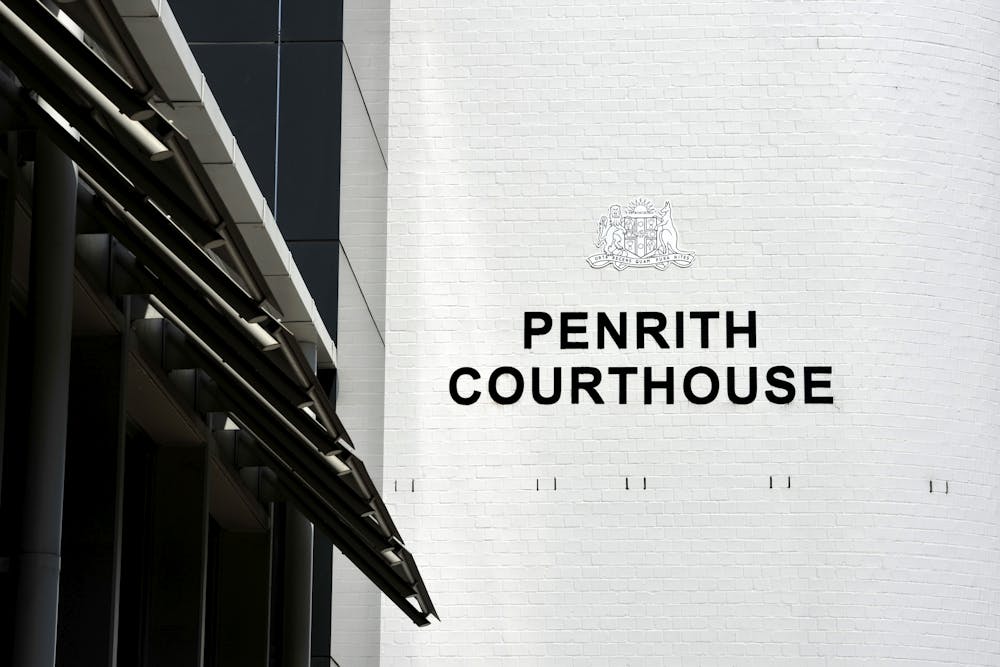
The District Court
The next section up the pyramid represents the District Court.
They deal with more serious crime such as sexual assault, major drug supply and high-level violence.
If the person on trial doesn’t plead guilty, there is a jury to determine guilt or innocence.
The district court also deals with serious civil disputes, generally where the amount is up to $750,000.
The Supreme Court
The Supreme Court is the next layer of the pyramid. It deals with the most serious civil and criminal cases, such as murder. They mostly have a jury in criminal cases.
They also deal with some specialty areas such as defamation.
The Courts of Appeal
Finally, there is the Courts of Appeal, which are part of the Supreme Court, but sit above it.
They hear appeals from lower courts, and there are usually three judges sitting on each matter.
The really interesting aspect of the pyramid is that it represents not just more seriousness and less volume as you go up, but also the appeal process.
So, if you want to appeal from the Local Court, then you go the District Court, then from the District to the Supreme Court and so on.
The “doctrine of precedent” means rulings from higher courts are binding on lower ones.
The High Court and the umbrella model
But what if you want to appeal from the Court of Appeal? That’s where the umbrella comes in.
That appeal is to the High Court, which you can imagine as an umbrella that sits over each of the state or territory pyramids.
There is one High Court, based in Canberra, and its decisions are final, and binding throughout all parts of Australia.
Fun fact: up until the 1980s the highest court for Australia was in England! Called the Privy Council, it was possible to appeal from state and federal courts and let English law lords be the final decider. But Australia got rid of that system and now the highest court in the land is the High Court.
 The highest court in the land.
AAP Image/Mick Tsikas
The highest court in the land.
AAP Image/Mick Tsikas
Some state-based variations
Is it all that simple? Not really.
First, in Tasmania the Australian Capital Territory and the Northern Territory there is no District Court level at all. These are small states and territories, with not enough people to necessitate this level of the pyramid.
Second, sometimes appeals jump a level. For example, they may go straight from the Local Court to the Supreme Court. And in some states, there are different names for each level. In Victoria the District Court is called the County Court, and in some places like the Northern Territory, magistrates are called judges.
Finally, there are some specialty courts like the NSW Land and Environment Court that sit at Supreme Court level.
Hang on, what about federal courts?
Just when you thought you had your pyramids in a row, along comes another complication: the federal system.
The Constitution divides up powers between the states and the Commonwealth.
The best example is family law, which is allocated to the Commonwealth and so the Federal Court system deals with divorce and related matters.
And so there is another pyramid which works across the whole country only this time it has two levels.
The lowest and biggest level is the Federal Circuit and Family Court of Australia, dealing mostly with family law (but also other federal matters such as immigration and welfare law).
The next level up is the Federal Court, which deals mainly with corporations law, bankruptcy and trade practices as well as hearing appeals from the lower court.
Don’t forget the umbrella, the High Court, which also hears appeals from the Federal Court.
 So many courts.
AP Photo/Mark Baker
So many courts.
AP Photo/Mark Baker
A whole myriad of tribunals
I’m sorry to have to tell you it gets even more complex from there. There are also tribunals.
Sitting beneath the state, territory and federal court systems is a whole myriad of tribunals which deal with non-criminal matters.
New South Wales, for example, has the New South Wales Civil and Administrative Tribunal (NCAT), which deals with tenancy, consumer, guardianship, strata and licensing matters. It even has its own appeal panel as well (and if people still aren’t happy, they can then appeal to the courts).
The members of the tribunal are not judicial officers and are appointed for fixed periods.
Of course, if you were to strike out centuries of history and start afresh, you would likely just have one multilayered pyramid across the country with a single tribunal at the foot, and the High Court at the top.
We can live in hope.
Authors: David Heilpern, Associate Professor and Chair of Discipline (Law), Southern Cross University


 Daily Bulletin


