

Meet the eastern bristlebird: tragically under-appreciated, and one fire away from local extinction
- Written by: Dominique Potvin, Senior Lecturer in Animal Ecology, University of the Sunshine Coast
Am I not pretty enough? This article is part of The Conversation’s series introducing you to unloved Australian animals that need our help.
In 1962, renowned American conservationist Rachel Carson wrote a book entitled “Silent Spring” after she noticed the birdsong she used to wake up to as a child had been thinning. Its eventual absence had become almost deafening.
This deep dive into one of the tragedies of biodiversity loss eventually became one of the most influential works contributing to changes in legislation and practices surrounding the use of pesticides in the United States, and worldwide.
Its title, however, continues to resonate with many of us: birds (and frogs, insects, and many other animals) seem to announce their arrivals with songs and calls. Their absence becomes notable when the singing stops, and silence takes over.
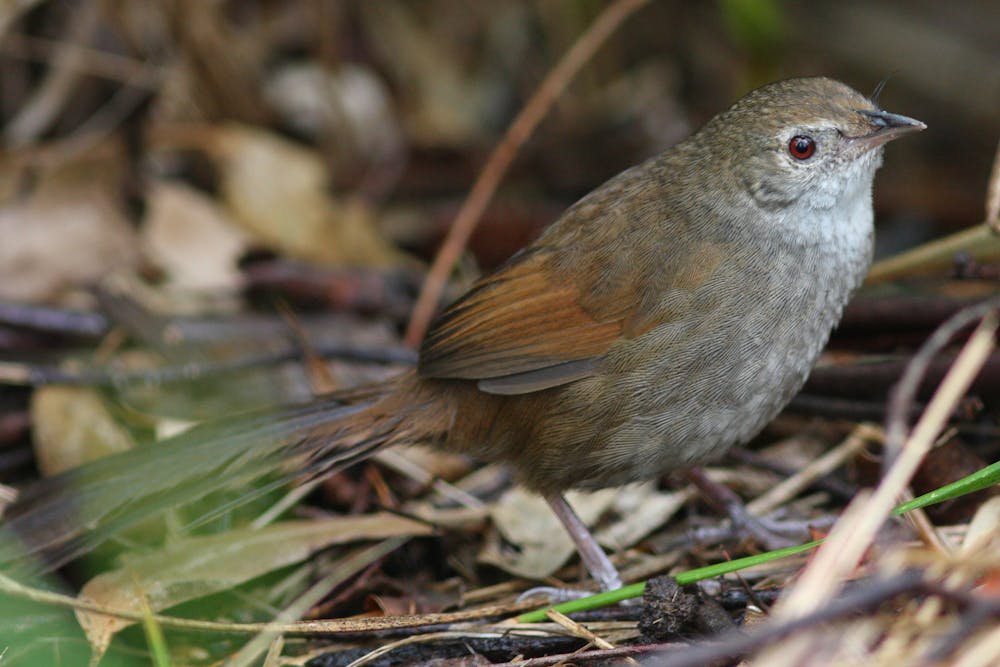
Such has been the case in Australia for the under-appreciated, endangered eastern bristlebird (Dasyornis brachypterus).
Once common, its numbers have declined so dramatically in the past 40 years that only three populations remain in the central east coast of Australia. The northernmost population, found in southeast Queensland, has as few as 70 birds.
So why should we care about one more, seemingly unremarkable little brown bird in the forest?
Read more: Clicks, bonks and dripping taps: listen to the calls of 6 frogs out and about this summer
Australia’s canary in a coal mine
At first glance, the eastern bristlebird doesn’t seem like a vulnerable bird. There is nothing too unique about its propensity to nest in clumped grasses or its territorial behaviours. Its song, while beautiful, doesn’t stand out in a typical Australian forest or heathland soundscape.
But this small, unassuming bird may be Australia’s canary in the coal mine when it comes to fire.
Since the 1980s, researchers have been trying to understand why the eastern bristlebird has seen such rapid decline. Time and again, fire regimes come up as the main factor predicting whether an eastern bristlebird population is stable or under threat. Fire regimes refer to the periods between fires, and their relative intensity and coverage.
While Australian landscapes are generally well adapted to fire, not all fires are created equal. Burn offs often take place without adequate research or knowledge, and at the wrong times. This – along with the increase in fire frequency, climate change and habitat loss – has contributed to dramatic losses of this species.
Fire can be devastating for many wild animals, but there is something special about the bristlebird that makes it particularly vulnerable to large, frequent fires.
Its greatest threats
Eastern bristlebirds, despite being able to fly, appear not to appreciate the view of a top story dwelling. They don’t choose to live in the canopy, or even on lower branches of trees. Over millennia, the bristlebird has evolved a strong, almost exclusive preference for low, dense vegetation.
This habitat structure is important for many invertebrates and other small animals even less noticeable than the bristlebird, such as spiders, beetles and worms. This means the bristlebird can act like an indicator for how the entire understory ecosystem is doing.
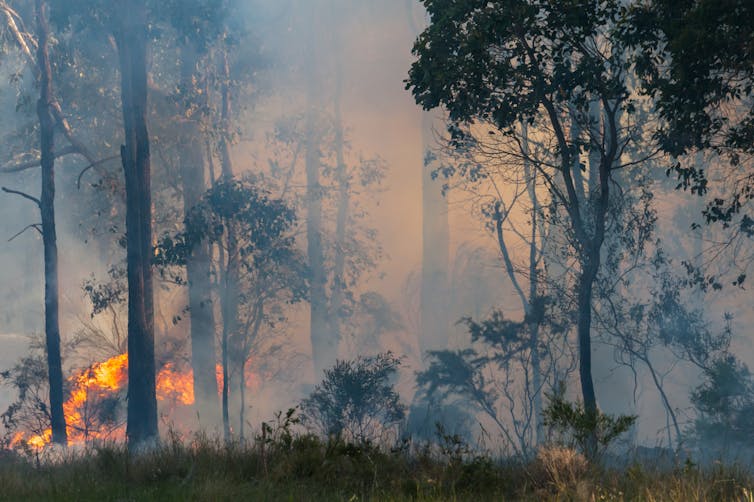
Unfortunately, low, dense vegetation is often the first thing to burn and disappear during a fire. It also appears to take quite some time for bristlebirds to establish themselves again in an area, once a fire has come and gone.
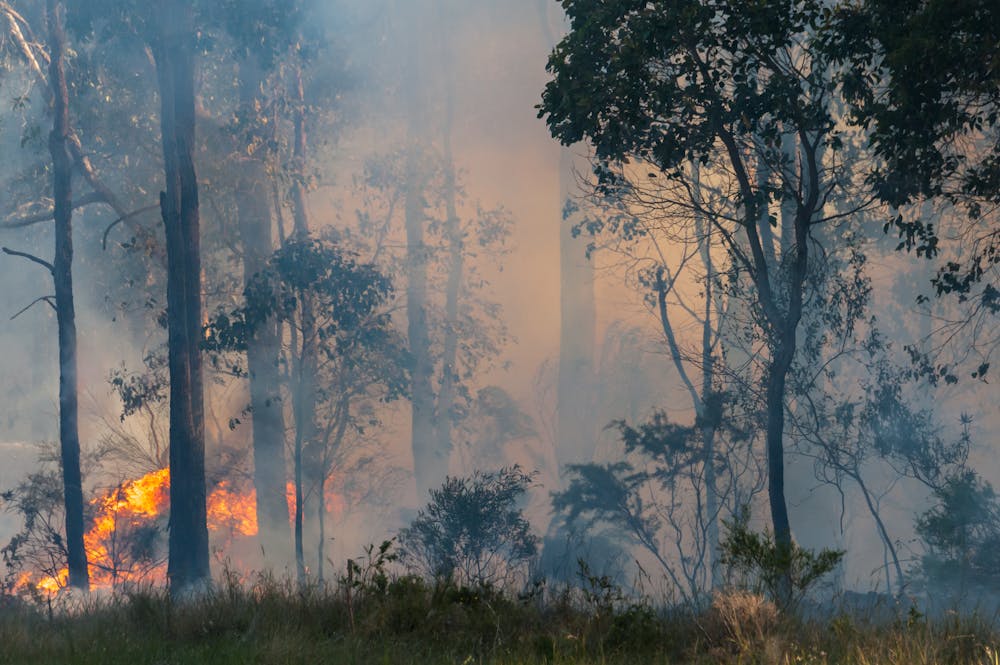 The understory of a forest burns and disappears during bushfires.
Shutterstock
The understory of a forest burns and disappears during bushfires.
Shutterstock
While we often see fire recovery as being green and lush, it can take years for an understory to recover fully and thus support its full community, including bristlebirds.
If fire was the only issue, it might be easy (or, at least, straightforward) to help this species recover. However, because of the distances between populations, the eastern bristlebird also suffers from genetic isolation. This means small populations can be more susceptible to inbreeding, and thus disease or general ill health.
We then compound the inbreeding effects with introduced predators such as cats and foxes, invasive weeds, habitat loss due to agriculture, and general roadkill, and we have a perfect storm of threats.
Read more: Our helicopter rescue may seem a lot of effort for a plain little bird, but it was worth it
Isolated, vulnerable populations may only be one fire away from local extinction, signalling a potential collapse of their ground-level ecosystem.
This knowledge prompted emergency helicopter rescues of bristlebirds in Victoria to captivity at the height of the horror 2019-2020 bushfire season. This likely saved the species in the state.
In Queensland and New South Wales, the release of captive birds from breeding programs to recovering areas helped bring the species back from the brink.
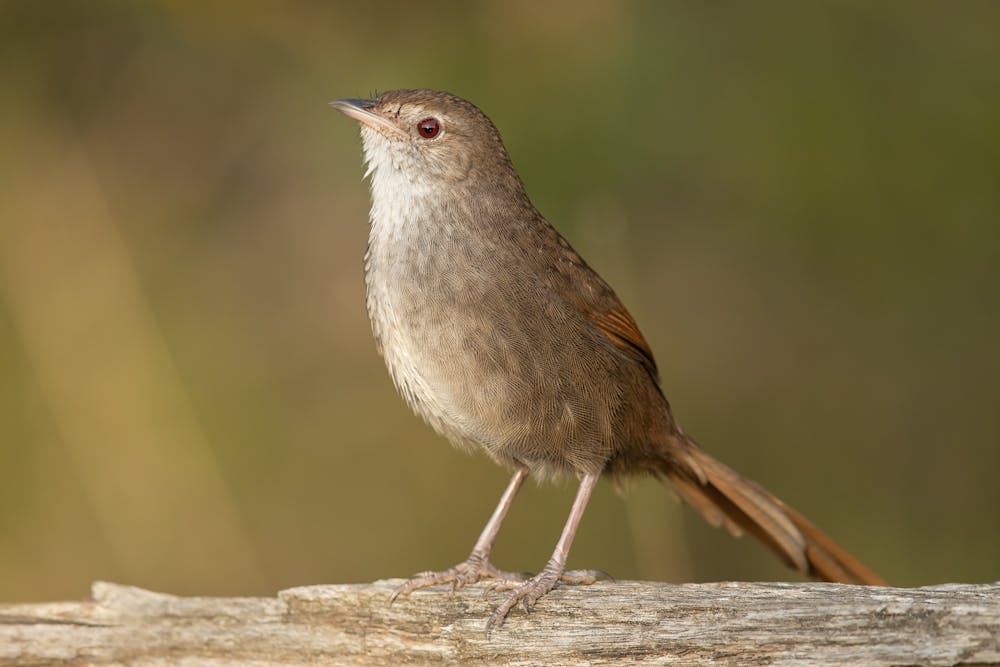 Inbreeding is another big threat to eastern bristlebirds.
JJ Harrison/Wikimedia, CC BY-SA
Inbreeding is another big threat to eastern bristlebirds.
JJ Harrison/Wikimedia, CC BY-SA
But we have reason to hope
All is not lost, however. Captive breeding and translocation (moving individual animals from one population to another, to help boost genetic diversity) programs are in place for this little unassuming bird.
It’s important these programs are put in place alongside habitat-based strategies to ensure their success. This includes keeping feral animals away from where birds are released back into the wild, removing weeds and, perhaps most important, slowing fire regimes in certain areas.
Removing invasive species and recovering habitat are important strategies for saving just about every vulnerable native Australian species, from plants, to invertebrates, to charismatic larger animals such as koalas.
The eastern bristlebird may therefore be the little brown bird that could save entire ecosystems. Move over, canaries.
Authors: Dominique Potvin, Senior Lecturer in Animal Ecology, University of the Sunshine Coast


 Daily Bulletin


