

Chubb review of Australia's carbon credit scheme falls short – and problems will continue to fester
- Written by: Andrew Macintosh, Professor and Director of Research, ANU Law School, Australian National University
An independent review of Australia’s controversial carbon credit system released today concluded the scheme is essentially sound. But key questions remain unaddressed – a fact that will continue to undermine confidence in Australia’s central climate policy.
The review, led by former chief scientist Ian Chubb, followed concerns raised by our research team that the scheme lacked integrity and was not delivering genuine reductions in greenhouses gas emissions. The review panel, however, says it does “not share this view”.
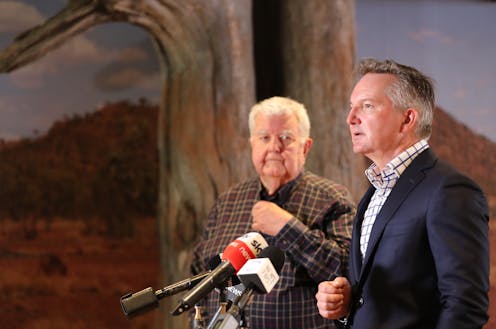
Climate Change and Energy Minister Chris Bowen on Monday said the government accepted all 16 of the review panel’s recommendations.
But more must be done to ensure the Albanese government truly delivers the emissions reductions it has promised.
Carbon credits underpin our climate policy
Australia’s carbon credit system is central to reaching the federal government goal of 43% emissions reduction by 2030 and net-zero by 2050.
The scheme provides carbon credits to projects that reduce greenhouse gas emissions using a number of approved methods, such as avoiding deforestation. These credits can be sold on the carbon market to entities that want to offset their emissions.
In March last year, our research team raised serious concerns about the scheme. In a series of papers, we outlined systemic flaws in the way carbon credits were issued.
We concluded Australia’s Emissions Reduction Fund – under which the scheme operates – has serious governance flaws, has issued a large number of low integrity credits and is wasting billions of dollars in taxpayers’ money.
Our analysis focused on three of the fund’s most popular methods – avoiding deforestation, human-induced regeneration of native forests and combusting methane from landfills. These account for 75% of the credits issued under the scheme.
We found that more than 70% of the credits issued under these methods do not represent genuine emissions abatement.
Following that criticism, in July last year, the Albanese government commissioned an independent review of the scheme. Those findings were released today.
A ‘bewildering’ assessment
The panel concluded the carbon credit arrangements are largely sound. How the panel reached this conclusion is hard to fathom.
Discussion of the rules governing human-induced regeneration, landfill gas and avoided deforestation projects spans less than six pages.
The report does not contain references to the evidence relied upon to reach its conclusions, and includes very little analysis to support its findings. And importantly, the panel does not address key questions around the integrity of the scheme’s rules.
Bewilderingly, in its assessment of the methods, the panel does not refer to the findings of a review it commissioned from the Australian Academy of Science to inform its considerations.
The academy reviewed the three main methods my research team analysed and a fourth, concerning carbon capture and storage.
It found numerous flaws in the methods and the associated governance processes. For example, consistent with our analysis, it found a risk the human-induced regeneration method is crediting vegetation change brought on by rainfall, rather than project activities.
The academy also found problems with the landfill gas method – namely, that so-called “baselines” used to calculate carbon abatement don’t adequately account for other financial and regulatory incentives offered to operators for capturing and combusting methane.
This means credits are sometimes issued for actions the industry would take anyway. As I wrote in The Conversation in September last year, so great are the problems with the landfill gas method that several large companies profiting from it have called for changes to the system.
The academy is not alone in recognising these problems. The CSIRO and Wentworth Group of Concerned Scientists also found problems with the rules governing the issuance of credits.
The review panel acknowledged the scientific evidence criticising the carbon credit scheme, but says “it was also provided with evidence to the contrary”. Yet it did not disclose what that evidence was or what it relates to. The public is simply expected to trust that the evidence exists.
Read more: 'Untenable': even companies profiting from Australia's carbon market say the system must change
Integrity is essential
The panel recommended significant changes to governance arrangements under the carbon credits scheme. It’s hard to understand the need for such changes if there are no material problems with the credits.
Nonetheless, most recommended governance changes are welcome, including:
reducing the roles performed by the Clean Energy Regulator, to “enhance confidence and transparency” and reduce potential conflicts of interest
amend the scheme’s legislation to improve transparency to support greater public trust and confidence in the scheme.
But these governance changes are not enough. Measures should be taken to prevent low-integrity credits being issued to existing projects. And polluting facilities should not be allowed to use low-integrity credits to meet their emission reduction obligations.
Without these changes, problems with the scheme will continue to fester, jeopardising the operation of the government’s climate policy.
Authors: Andrew Macintosh, Professor and Director of Research, ANU Law School, Australian National University


 Daily Bulletin


