

How to treat scars at home – and hopefully make them disappear
- Written by: Michael Freeman, Associate Professor of Dermatology, Bond University
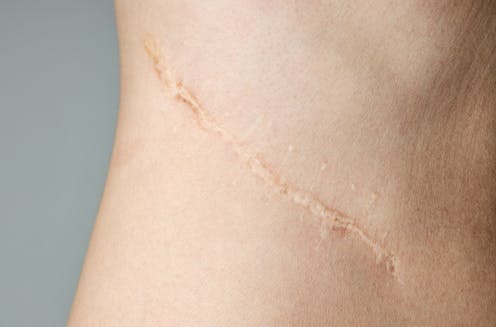
Maybe you’ve had a skin cancer removed from your face or body. Perhaps you had an injury or accident and needed stitches. However you came by a cut on your skin, you probably want to make it appear as small as possible as quickly as possible and avoid a longer-lasting scar.
In order to minimise scar formation we need to address wound healing, which is a complex process.
It has three major phases: inflammation, proliferation and remodelling. These are orchestrated by special body signalling chemicals acting on the skin’s layers. The majority of scar formation occurs within the first six months after an injury.
So, what can you do to assist this process and support healing?
The inflammation phase
The inflammation phase occurs immediately to remove bacteria and bring in the blood supply.
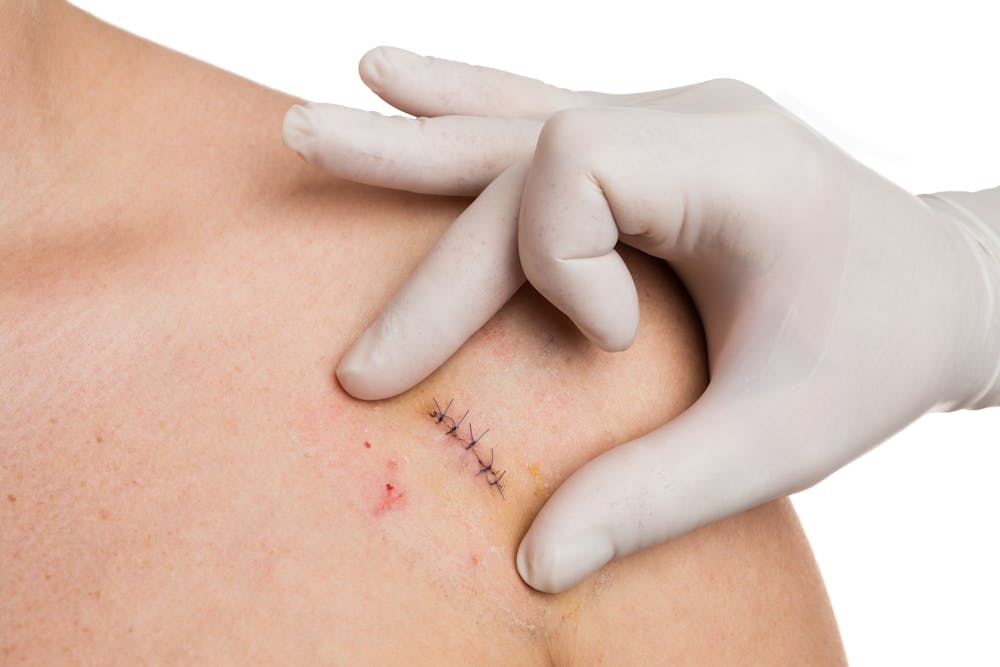
The first goal of wound care is to avoid bacteria coming into contact with the body’s insides, because these will impair normal wound healing. So keep it clean.
Ideally bacteria will be removed from the skin if a wound is anticipated, such as before surgery. Cleaning the wound to remove bacteria and bacterial spores is critical to good healing and should be done within two hours of any injury.
Don’t let any dirt remain in a wound even if that means scrubbing with soap and water after a fall on the ground. A one-off application of povidone-iodine (sold in Australia as Betadine) will help lessen the chance of bacterial spore activation.
Your body’s natural reaction includes the formation of hydrogen peroxide. Unfortunately external application of this natural antiseptic can slow wound healing. Only weak antiseptic solutions containing silver (with proper advice from your doctor or pharmacist) can improve scar formation.
Read more: Health Check: do we have to clean out our pores?
The proliferation phase
During this phase, the blood vessel cells, the epidermal cells and the fibroblasts multiply.
The fibroblasts (a type of cell that helps makes collagen to support connective tisues) cause scar contraction, which can “pucker” the skin. Scars tend to be white and a little shiny once the redness dies down.
Collagen, the body’s most abundant protein that helps makes skin strong, is continuously produced and broken down by the body. This can have an ongoing effect on the appearance of the mature wound for at least a further six months after scar formation.
The remodelling phase
The formation of hypertrophic scars (which are raised above the skin level but regress slowly) or keloid scars (which spread beyond the injury site and don’t regress later) is often genetically determined. It’s also partially related to the type of injury and care of the wound.
In people who develop these scars during the remodelling phase, the signal to stop the production of collagen within the wound is disrupted.
Read more: Why do older people heal more slowly?
Try a gel or dressing
For clean, non-infected wounds, the application of a hydrogel (a polymer that retains moisture and doesn’t disolve) can actually speed healing, provided there is no infection. Use one that is suitable for application to the eye, such as Refresh Liquigel.
By keeping the wound moist, the proliferation of the surface skin cells is enhanced. When they grow out under a hard scab, it’s slowed down.
Wound gels that contain antiseptics and preservatives are best avoided in case of allergy and because antiseptics can slow down healing.
There is an intimate relationship between blood vessels and the fibroblasts. Red and itchy scars are likely to be growing, which will ultimately result in a larger scar. This is when keeping the scar covered to improve hydration can make a big difference.
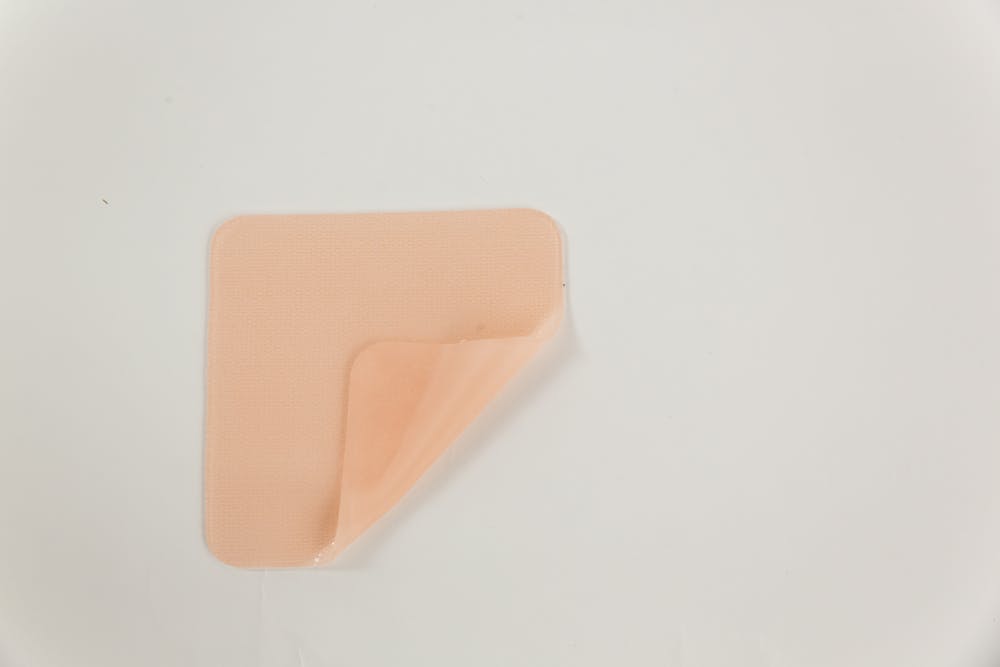 Silicone dressings help wound management and prevent scarring.
Shutterstock
Silicone dressings help wound management and prevent scarring.
Shutterstock
Cover the scar with a silicone dressing and either a gel or a sheet for as many hours as possible.
For those prone to scarring, your pharmacist can show you an over-the-counter formulation of Zatamil Hydrogel you can use once a day for one week on and one week off. Use this under the silicone to help further reduce the scar. They might also suggest a fading cream.
A dermatologist with a vascular laser (which targets abnormal blood vessels in the skin to reduce redness) can also help, especially in the early stages of a scar.
Some final tips
Keeping the scar moist with oils is more difficult than with the silicone, but can reduce excess scarring, sometimes called “over-scarring”.
Finally, avoid overexposing the scar to sunlight. Scars can become very dark in comparison to the rest of person’s skin and ultraviolet light is the major preventable factor.
Wound healing is complex. Doctors, pharmacists and dermatologists can help advise on which of these tips will help with your specific wound.
Authors: Michael Freeman, Associate Professor of Dermatology, Bond University
Read more https://theconversation.com/how-to-treat-scars-at-home-and-hopefully-make-them-disappear-193948


 Daily Bulletin


