

Could feral animals in Australia become distinct species? It's possible – and we're seeing some early signs
- Written by: Bill Bateman, Associate professor, Curtin University
You might think evolution is glacially slow. At a species level, that’s true. But evolution happens every time organisms produce offspring. The everyday mixing of genes – combined with mutations – throws up new generations upon which “selection pressure” will act.
This pressure is popularly known as survival of the fittest, where fittest means “best adapted” individuals. Tiger snakes with a mutation for a larger head can eat larger prey. Evolution is the zoomed-out version, where species change – or evolve into new ones, better adapted to the environment they find themselves in.
Evolution acts over millennia. But given the right conditions, it can also work surprisingly rapidly. Australia’s isolation produced our distinctive animals. But until recently in a geological sense, it had no camels, cats, toads and dogs. Now it does. Millions of feral animals, birds and amphibians now call Australia home. And their new home is beginning to change them in turn.
Can evolution run fast?
We’ve long thought evolution grinds slowly. But given the right conditions, pressure can bring change much faster. A recent study found evolution acting up to four times faster than previous estimates. On average, species in the study saw an 18.5% increase per generation in their ability to survive and reproduce. This remarkably rapid change suggests many species (not all) may be well able to adapt to rapid environmental changes.
Australia’s feral animal species all arrived through human efforts. Dogs came first through by contact between First Nations peoples and traders from what is now Indonesia. Cats came next, accompanying European colonists in the 1700s (and maybe earlier). Camels in the 1840s. Cane toads came in the 1930s. That’s to say nothing of deer, horses, goats, pigs, water buffalo, mynahs, foxes and rabbits.
Once here, dogs, camels and cats rapidly gave up domestication, becoming dingoes, feral camels and feral cats. With each generation, these animals have become better adapted to their new environments. They are now evolving in Australia.
Read more: So you want to cat-proof a bettong: how living with predators could help native species survive
Dog or dingo?
The status of the dingo has been heavily contested and we even argue about what to call it. Given it can interbreed with domestic dogs, it’s not a separate species. Recent research suggests it’s an intermediary between wolves and domestic dogs. Dingoes have been implicated in the thylacine’s extinction on the mainland.
Given the dingo’s closest relative is the New Guinea singing dog, which howls like a wolf with overtones of whalesong, the dingo may have already evolved away from its ancestors. There’s certainly evidence of unique selection pressures but nowhere near enough to be considered a separate species. Similarly, dingoes tend to have broader heads than domestic dogs and more flexible joints. They don’t woof but howl.
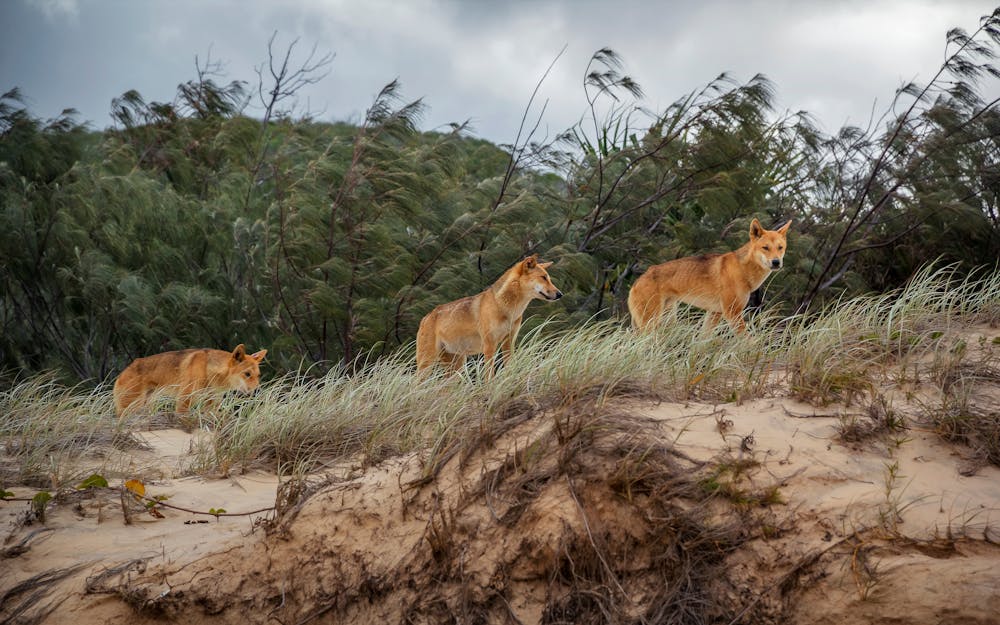 The last pure dingo population lives on Fraser Island. Dingoes elsewhere have some degree of interbreeding with domestic dogs.
Shutterstock
The last pure dingo population lives on Fraser Island. Dingoes elsewhere have some degree of interbreeding with domestic dogs.
Shutterstock
An Australian camel?
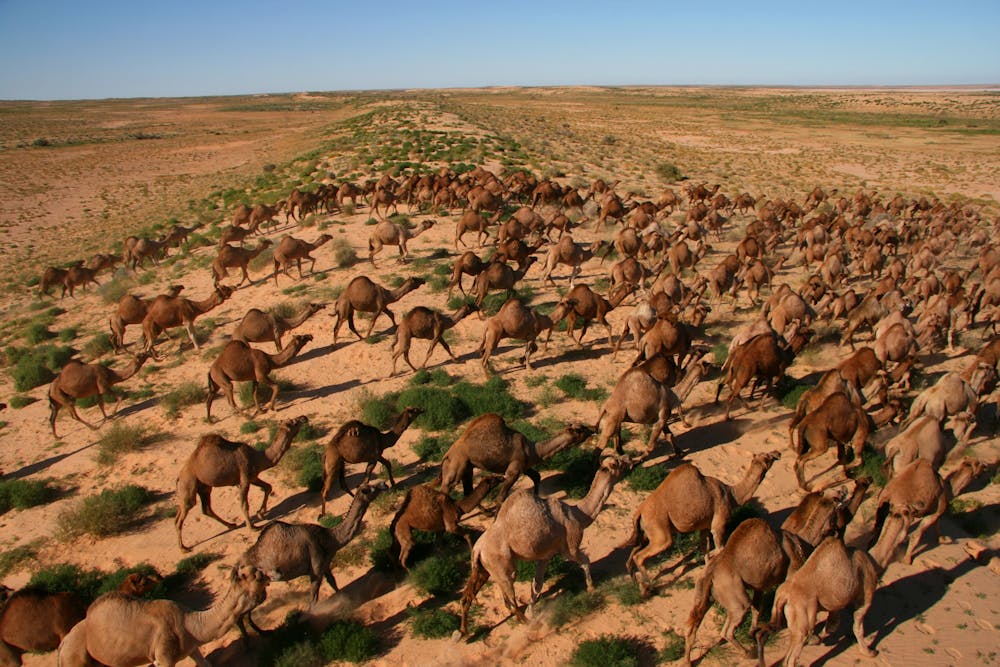
It’s a similar story for camels. Australia’s one-humped dromedaries were imported from Afghanistan and Pakistan because of their ability to live in arid environments. It’s no surprise they have thrived. Hundreds of thousands now roam the Red Centre. We may now have the largest wild population of dromedaries in the world. Given their numbers, in time, we may have a uniquely Australian camel.
Though we have a huge population of camels, they have low genetic diversity as they came from a small original population. Low diversity usually means a species is less able to adapt to changes in the environment.
Read more: Wild animals are evolving faster than anybody thought
Cats are getting larger
Domestication sits lightly on cats, with the difference between a pet cat and a feral just a couple of missed meals.
Cats are one of the most invasive species globally. In Australia, they have done the worst damage, killing everything from native mice to wallabies with abandon and pushing many to the brink of extinction.
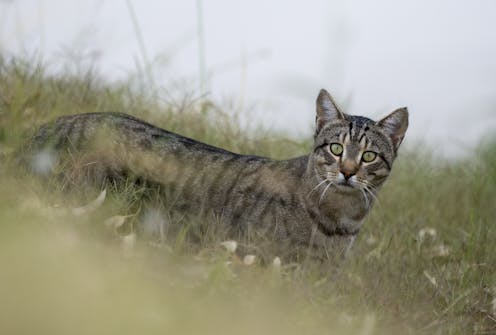
Ferals are getting bigger, with reports of 7 kilogram cats now common, well up from their domestic range of 4–5kg. Tales of panther-like felines may well be huge feral cats. Some have been estimated at 12–15kg. Take the estimated 1.5 metre feral killed in 2005 – double the nose-to-tail length of a domestic cat.
What’s going on? One reason is feral cats aren’t desexed, meaning toms can grow as large as a small dingo. But it also seems selection pressures are favouring larger cats. We don’t know if it’s due to genetic changes or the rich diet of endangered animals. Normally, gigantism – where species grow to larger than usual sizes – is associated with islands. Think of the giant Komodo dragon, or of the extinct dodo – in reality, a giant pigeon.
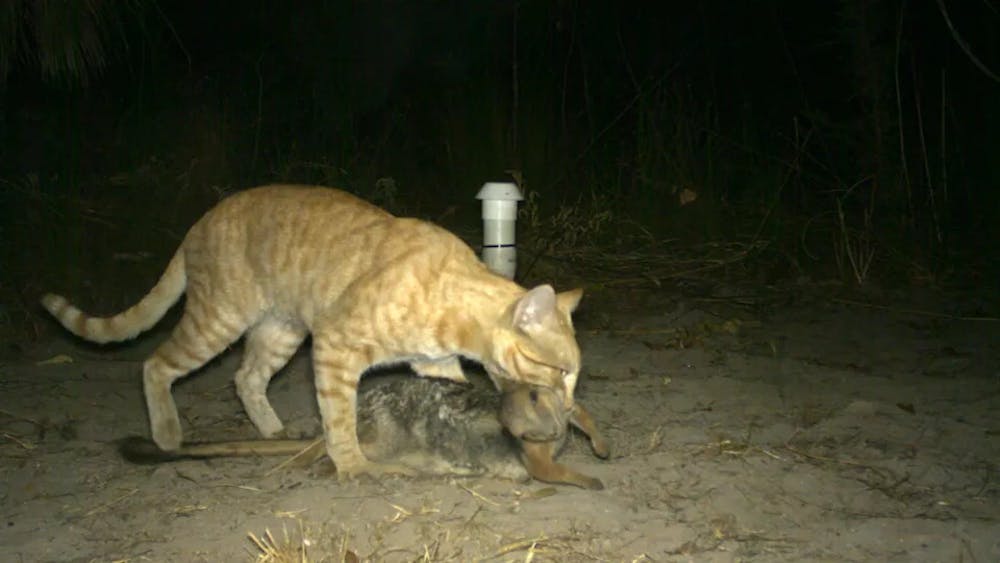 Cats can even kill wallabies, as this image shows.
Northern Territory Department of Environment and Natural Resources, CC BY
Cats can even kill wallabies, as this image shows.
Northern Territory Department of Environment and Natural Resources, CC BY
Cane toads: phase shifters with longer legs
In 1935, the infamous cane toad was brought in to eat the cane beetles plaguing sugar plantations. As we know, cane toads soon figured out there was a lot more to eat. Protected by poisonous glands on their back, they have spread across the tropical north to the Kimberley and down the east coast approaching Sydney.
Toads at the front of the invasion have developed longer legs, making faster travel possible. Remarkably, in some shady gorges in the Kimberley, some have switched from being nocturnal to diurnal.
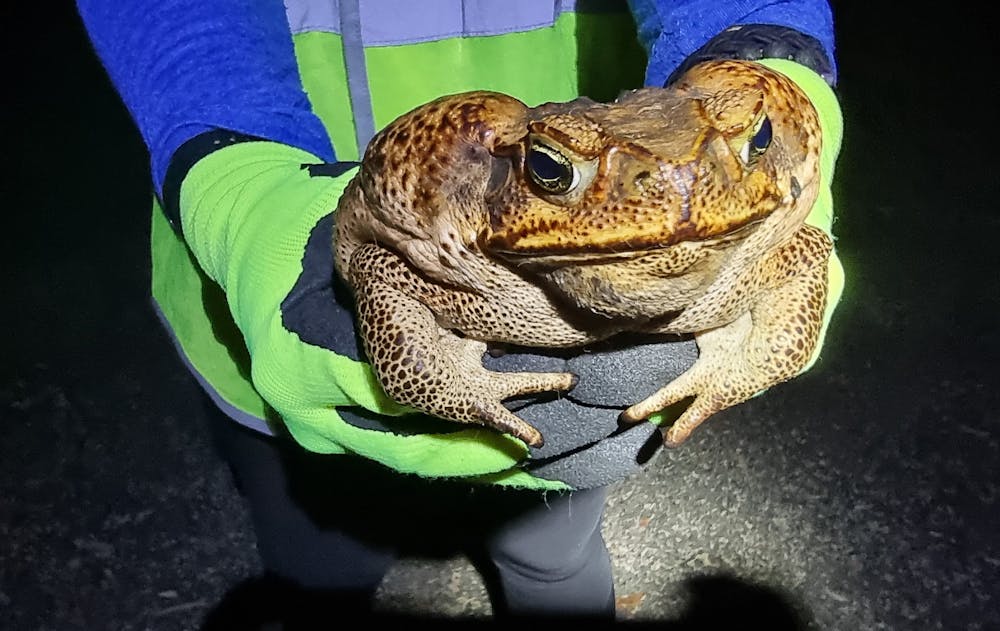 The first wave of cane toads reaching new areas tend to have longer legs to cover more distance.
AAP
The first wave of cane toads reaching new areas tend to have longer legs to cover more distance.
AAP
Adaptation is under way – but will we actually see new species?
Consider too Darwin’s famous Galápagos finches. On these isolated islands, finches calved off into separate species. Seed-eaters evolved thicker beaks, while the vampire finch evolved to drink blood from larger birds.
So could it happen here? Yes – if conditions are right. Let’s speculate that natural selection keeps pushing feral cats to get larger and larger.
Eventually, these giant cats would see any domestic cats fleeing from farms or homes not as mates – but as prey. Once the gene flow from smaller cats was cut off, the gene pool would be limited – and we would be on track for a new species. Perhaps one day, we will have a uniquely Australian cat alongside our uniquely Australian dog.
Read more: Let's give feral cats their citizenship
Authors: Bill Bateman, Associate professor, Curtin University


 Daily Bulletin


