

8 everyday foods you might not realise are ultra processed – and how to spot them
- Written by: Sarah Dickie, PhD Candidate in Public Health Nutrition, Deakin University

For years, the term “junk food” has been used to refer to foods considered bad for you, and not very nutritious. But junk can mean different things to different people.
Official dietary guidelines have used more palatable terms such as “discretionary foods”, “sometimes foods” and “foods high in sugar, salt and fat”. But these labels haven’t always made the task of identifying nutritious foods much easier. After all, many fresh fruits are high in sugar and some salad vegetables are low in nutrients – but that doesn’t make them unhealthy. And food products such as soft drinks with “no added sugar” and muesli bars fortified with nutrient additives aren’t necessarily healthy.
In 2009, experts proposed using the extent and purpose of industrial food processing as a key indicator of nutrition problems.
The theory acknowledged some food processing helps make foods more convenient, safer and tastier. But it also nominated a class of foods – called “ultra-processed foods” – as unhealthy, based on more than the content of salt, fat and sugar.
A large body of evidence now shows ultra-processed food consumption is associated with poorer human health (including rates of heart diseases, diabetes and obesity) and planetary health (plastic pollution, excessive energy and land use, biodiversity loss).
But how can you spot those foods when you’re planning what to buy or eat?
Read more: Ultra-processed foods are trashing our health – and the planet
What counts as an ultra-processed food?
Ultra-processed foods are made using industrial processing methods and contain ingredients you wouldn’t usually find in your home pantry.
Processing methods used may include extrusion, moulding, chemical modification and hydrogenation (which can turn liquid unsaturated fat into a more solid form). But manufacturers don’t need to state the processes foods undergo on the label, so it can be challenging to identify ultra-processed foods. The best place to start is the ingredients list.
There are two types of ingredients that classify ultra-processed foods: industrial food substances and cosmetic additives. Food substances include processed versions of protein and fibre (such as whey powder or inulin), maltodextrin (an intensely processed carbohydrate), fructose or glucose syrups, and hydrogenated oils.
Cosmetic additives are used to improve the texture, taste or colour of foods. They make ultra-processed foods more attractive and irresistibly tasty (contributing to their over-consumption). Examples are colours and flavours (including those listed as “natural”), non-caloric sweeteners (including stevia), flavour enhancers (such as yeast extract and MSG), and thickeners and emulsifiers (which modify a food’s texture).
8 foods you might not realise are ultra-processed
Ultra-processed is not just another name for junk – although foods like soft drinks, confectionery and chips are ultra-processed. There are many packaged foods we’d normally consider healthy that are ultra-processed.
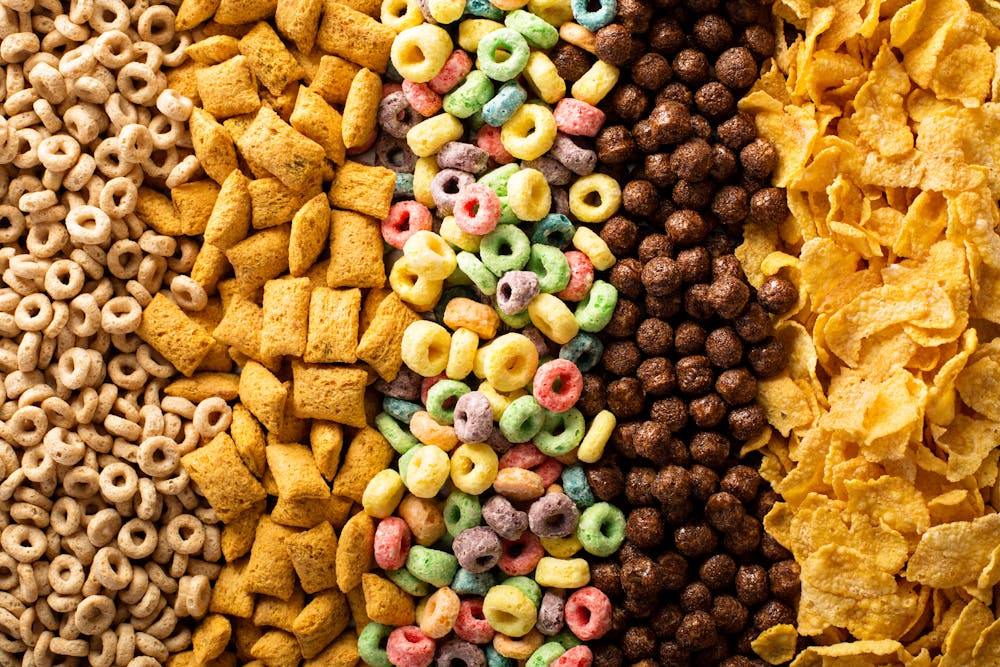
1. Breakfast cereals
Many cereals and breakfast drinks marketed as healthy are ultra-processed. They can contain maltodextrins, processed proteins and fibres, and colours. Oats, on the other hand, contain just one ingredient: oats!
2. Protein and muesli bars and balls
Despite the healthy hype, many of these are ultra-processed, containing processed fibres and proteins, invert sugars (sugars modified through an industrial process) and non-caloric sweeteners.
3. Plant-based ‘milks’
Many dairy alternatives contain emulsifiers, vegetable gums and flavours. Not all brands are ultra-processed so check the ingredients list. Some soy milks only contain water, soybeans, oil and salt.
Read more: Food and drinks are getting sweeter. Even if it's not all sugar, it's bad for our health
4. Breads
Some packaged breads contain emulsifiers, modified starches (starches altered through industrial methods) and vegetable gums – they’re usually the plastic wrapped, sliced and cheaper breads. Fresh bakery breads, on the other hand, are rarely ultra-processed.
5. Yogurts
Flavoured yogurts often contain additives like thickeners, non-caloric sweeteners or flavours. Choose plain yogurts instead.
6. Meal bases and sauces
Pre-prepared pasta and stir-fry sauces typically contain ingredients such as thickeners, flavour enhancers and colours. But simple sauces you can make at home with ingredients like canned tomatoes, vegetables, garlic and herbs are minimally processed.
7. Processed meats
Packaged cold meats may have emulsifiers, modified starches, thickeners and added fibres – making them ultra-processed. Replace packaged processed meats with alternatives such as cold roast meats or chicken instead.
8. Margarine
The way margarines and non-dairy spreads are made (by hydrogenating the vegetable oils) and the additives they contain, such as emulsifiers and colours, make them an ultra-processed food – unlike butter, which is essentially cream and some salt.
 Ultra-processed foods dominate supermarket shelves. But it’s worth checking the ingredients list.
Shutterstock
Ultra-processed foods dominate supermarket shelves. But it’s worth checking the ingredients list.
Shutterstock
But are all ultra-processed foods bad?
Some types of ultra-processed foods may look healthier than others, having fewer industrial ingredients or being lower in sugar. But these are not necessarily less harmful to our health. We know Australians consume up to 42% of their energy from ultra-processed foods and the cumulative effect of industrial ingredients over the whole diet is unknown.
Also, when you consume an ultra-processed food, you may be displacing a nutritious fresh food or dish from your diet. So, reducing ultra-processed foods as much as possible is a way to move to a healthier and more sustainable diet. Though not exhaustive, there are online databases that rate specific products to guide food choices.
Supermarkets are dominated by ultra-processed foods, so it can be difficult to avoid them entirely. And sometimes choices are limited by availability, allergies or dietary intolerance. We can all make positive changes to our diet by choosing less processed foods. But governments can also legislate to make minimally processed foods more available and affordable, while discouraging the purchase and consumption of ultra-processed foods.
Authors: Sarah Dickie, PhD Candidate in Public Health Nutrition, Deakin University


 Daily Bulletin


