

Read The Times Australia

Daily Bulletin

Win-win: how solar farms can double as havens for our wildlife

  • Written by: Eric Nordberg, Senior Lecturer (Applied Ecology and Landscape Management), University of New England
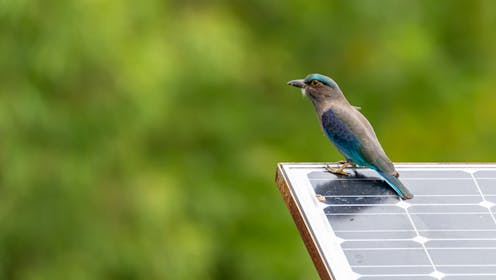
Win-win: how solar farms can double as havens for our wildlife

Australia’s renewable energy transition has prompted the construction of dozens of large-scale solar farms. The boom helps reduce Australia’s reliance on fossil fuels, but requires large areas of land to be converted to host solar infrastructure.

Solar farms are mostly built in rural areas. This has raised concerns about a potential decline in both agricultural production – as arable land is used for solar energy production – and wildlife habitat.

But there are ways to expand solar infrastructure so both nature and people win. We’ve already seen this in so called “agrivoltaics”, where land under and around solar panels is used to grow crops and graze livestock. But what about “conservoltaics”, combing conservation and solar energy?

My new research examines whether solar farms could also be used to help conserve native species. I found solar panels can provide valuable habitat for wildlife – and potentially benefit both the land and farmers.

sheep graze among solar panels
‘Agrivoltaics’ involves combining solar generation with agriculture – but what about ‘conservoltaics’? Shutterstock

A new place to call home

Our wild landscapes are diminishing and protected areas, such as national parks, cover only about 9% of Australia.

Many agricultural landscapes have been cleared of trees to provide pasture for livestock. It means wildlife that rely on trees have lost vast tracts of habitat.

So we must find new places for wildlife to forage, rest, shelter and breed.

My work examines how solar parks on agricultural land can double as wildlife habitat. It involves surveys and trapping to identify what plants and animals occupy solar farms, how long they take to recolonise, and how we can promote even more biodiversity.

My new paper coins a new term for this dual land-use: conservoltaics. I highlight research from overseas into how solar parks can bring conservation benefits, and describe the research still needed.

Solar panels add three-dimensional structure and complexity to an environment. They can provide animals shelter from predators and the elements, much like artificial reefs in lakes and oceans. They can also act as perch or nesting structures.

Solar infrastructure also creates a mosaic of sun and shade patches – and so provide many “micro-habitats” for plants and animals.

Research from Europe has shown large solar farms can enhance the diversity and abundance of plants, grasses, butterflies, bees and birds.

What’s more, vegetation between solar panel rows can also provide travel corridors, nesting sites and shelter for wildlife.

Read more: Why Queensland is still ground zero for Australian deforestation

butterfly on plant in front of solar panel
Research shows solar arrays can increase the presence of pollinators such as butterflies. Shutterstock

Management is key

Research suggests several management strategies that can maximise the benefits of solar farms for wildlife.

Land managers should provide a diverse mix of flowering plant species to encourage pollinators. And grass between solar panels should not be mowed too short or too often. Pollinators prefer tall vegetation where they can forage – though vegetation should not be so tall that it shades the solar panels.

The use of herbicides and other chemicals should be avoided where possible. And solar farms should be connected to other vegetated areas, using features such as hedgerows and wildflower strips, so wildlife can move between the solar farm and other habitats.

Landholders who combine solar farms with wildlife habitat may reap several benefits.

They could receive financial returns by earning environmental credits through schemes that reward carbon sequestration and biodiversity improvements.

They may also improve the health of their land by, for example, increasing pollination or providing habitat for predators such as raptor perches or nest boxes – which in turn could help control pests.

Much work remains, however, to understand these opportunities.

small frog on human hand in front of solar panels
Farm management strategies can maximise the benefits of solar farms for wildlife. Eric Nordberg

Looking ahead

The benefit of renewable energy in reducing carbon emissions is well known. But more work is needed to understand how solar farms can benefit wildlife.

Research is also lacking on how to locate, configure and manage solar farms to best enhance biodiversity. Collaboration between industry, land managers and researchers is needed so clean energy production and conservation can go hand-in-hand.

Read more: Australia needs much more solar and wind power, but where are the best sites? We mapped them all

Authors: Eric Nordberg, Senior Lecturer (Applied Ecology and Landscape Management), University of New England

Read more https://theconversation.com/win-win-how-solar-farms-can-double-as-havens-for-our-wildlife-194920

Business News

Designing Eco-Friendly Custom Water Bottles for Your Next Event

The Evolution of Sustainable Event Merchandise Event planning has undergone a massive transformation over the last decade. Gone are the days when organizers could hand out cheap, single use plastic...

Daily Bulletin - avatar Daily Bulletin

Why Choosing a Professional Florist Melbourne Makes Flower Delivery Impactful

Flowers have a great power to speak when humans cannot express their feelings with right words. Flowers are the best gifts when you are celebrating a birthday or welcoming a newborn child into your fa...

Daily Bulletin - avatar Daily Bulletin

The Business Case for Choosing Australian Fabricators Over Imported Alternatives

For a long time, you might have defaulted to overseas suppliers when sourcing fabricated metal components for a project. The unit price was lower on paper, and the maths seemed straightforward. That...

Daily Bulletin - avatar Daily Bulletin

Australian organisations are relying on business continuity plans built for a far more predictable world

Tariff escalations, supply chain fragility, geopolitical events, and the ongoing threat of cyber disruption have reshaped the risk environment facing Australian organisations. The problem is that ma...

Daily Bulletin - avatar Daily Bulletin

How to Rent a Car for Uber in Melbourne: What Every New Driver Needs to Know

Starting out as an Uber driver in Melbourne is not as complicated as it sounds but getting the vehicle right is where most new drivers get stuck. Uber has strict requirements around vehicle age, condi...

Daily Bulletin - avatar Daily Bulletin

When Should You Speak to a Lawyer About a Legal Issue?

Legal issues can begin with a simple question, then become harder to manage once formal steps are involved. Many people wait until a matter feels urgent before seeking guidance, even though earlier ...

Daily Bulletin - avatar Daily Bulletin

The strategic rise of Bali as Australia’s next essential healthcare support hub

As Australian healthcare providers grapple with unprecedented operational bottlenecks, a new nearshore model is quietly transforming patient care delivery. Forward-thinking organisations,  including...

Daily Bulletin - avatar Daily Bulletin

Cost Savings and Benefits of Using Used Pallets in Logistics

In today’s competitive logistics and supply chain industry, businesses are constantly looking for ways to reduce operational costs without compromising efficiency and reliability. One of the most prac...

Daily Bulletin - avatar Daily Bulletin

How Fulfilment Services in Australia Help Businesses Scale Efficiently

The growth of e-commerce and modern retail has transformed customer expectations. Consumers now expect fast shipping, accurate order processing, and seamless delivery experiences regardless of where...

Daily Bulletin - avatar Daily Bulletin

The Daily Magazine

Moving Out of a Rental in Melbourne? A Practical Moving Checklist

Moving out of a rental in Melbourne is one of those things that always feels further away than it ...

Why a Cordless Rebar Tying Machine Is a Smart Investment for Australian Construction Projects

Tying reinforcing steel by hand means spending hours bent over while making the same twisting moti...

How to Get a Document Notarised in Sydney: What to Bring, What It Costs and How Long It Takes

If an overseas bank, embassy, university, employer or land registry has asked you for a notarised ...

The 2026 Used-Car Market

For a few strange years, the used-car market rewrote its own rules. Supply shortages sent second-h...

Why CCTV Alone Is Not Enough for Modern Business Security

Cameras are usually the initial step that companies take to strengthen their physical security. If...

Why Every Workplace Should Take Emergency Preparedness Seriously

Emergency planning is one of those things many workplaces know they should think about, but it oft...

Why Clearer Communication Still Matters in a Digital-First Business

It’s never been easier for businesses to communicate, but that doesn’t mean they’re always communica...

What Happens After You Lodge a BYDA Enquiry? The Step Most Excavation Projects Miss

Every excavation project in Australia — from a backyard deck footing to a multi-storey commercial bu...

How to Choose the Right Dentist on the Gold Coast

Finding a dentist you trust is one of those decisions that quietly affects your health for years, ye...