

We can't keep putting apartment residents' waste in the too hard basket
- Written by: Bhavna Middha, Research Fellow, Centre for Urban Research, RMIT University
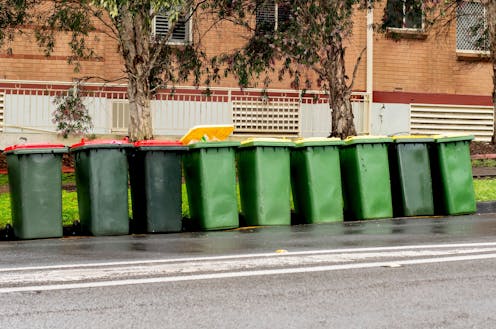
The harsh realities of managing the waste we produce are in the news: councils shunning new glass bins, more plastic being produced per person in the world and Sydney bins overflowing. And the growth in apartment living in Australia threatens to add to these problems. Apartments worldwide have lower recycling rates than standalone houses.
Our research on apartments and plastic use in four cities – Melbourne, London, Barcelona and Perth – found apartments present extra challenges for waste production, collection, sorting and disposal. Our ongoing research project is exploring ways to minimise kerbside waste and maximise recycling. The problems with apartments arise from issues of space, design, infrastructure (such as bins, chutes and pick-ups of bins and hard waste) and the resources put into managing their waste.
However, there are examples in cities in Australia and overseas of schemes that have improved apartment waste recycling so it matches, if not exceeds, that of standalone houses.
Read more: Households find low-waste living challenging. Here's what needs to change
What is being done about these problems?
In Victoria, the state government has mandated a new, separate bin to collect waste glass from households. Glass is a high-impact packaging material, due to the energy and water used in both its production and recycling.
Broken glass is also a major contaminant for paper and cardboard in current mixed waste streams. The container deposit scheme being introduced in Victoria, along with glass bins, will help separate glass from this recycling stream.
However, challenges lie ahead. Some local councils are showing signs of refusing to provide bins for glass. Lack of space for multiple bins is one key reason. Multi-unit developments and apartments are just not designed for such infrastructure.
COVID-19 led to an explosion in the quantity of packaging waste because of online orders and deliveries. Plastic waste in particular appears to be largely out of control, despite growing angst and even bans on the use of some plastics.
Read more: REDcycle's collapse is more proof that plastic recycling is a broken system
But waste management has been a problem for apartment buildings around the world since long before the pandemic.
For example, 30 apartment buildings in Seattle are exempted from providing recycling bins due to a lack of space. And in Sydney, residents of the Waterloo public housing estate have been surprised to be entirely excluded from the city’s recycling scheme due to contamination of recycled waste streams.
Research in the United States found a gap in recycling between apartments of different socioeconomic status was due to lower service levels (caretaking and janitorial) in low-income buildings.
It’s not just an individual responsibility
Thus far, action on waste production and prevention is limited to voluntary covenants for producers of packaging, and programs promoting changes in individual behaviour.
Households bear the brunt of responsibility – especially in apartments, where space to manage different bins, their smells and aesthetics is at a premium. Yet it is manufacturers and retailers who design and make highly packaged and non-recyclable materials.
While the rubbish keeps piling up, producers’ mostly ineffectual voluntary agreements lie on virtual shelves. A case in point is Sydney council blaming worker shortages and COVID-19 overflow for the rubbish piling up, rather than the original producers of waste.
Our continuing research is exploring the issues associated with apartments. These issues include how waste is produced – for example, through the demand created for packaging – and available space, as well as how policymakers, architects, builders and householders conceive of everyday apartment living.
In the shared spaces of apartments, waste production, collection, sorting and disposal depend on the design of these spaces and the organisation of infrastructure for collection and disposal.
Read more: Four bins might help, but to solve our waste crisis we need a strong market for recycled products
What more can be done?
We are exploring examples that try to break free of blaming individual choices and behaviours. The latter approach might produce short-term gains but fails to embed long-term changes – as this project in London showed. It’s possible, though, to design circular economy systems for apartments that match or even exceed waste recycling for detached suburban houses.
For example, in the City of Melbourne’s trial of dehydrators in apartment buildings food waste is collected and processed on the premises. It recognises that individual apartments often lack space for composting.
In South Korea, apartments are an integral part of the recycling regime. Some have recycling bin space, including food waste bins, on every floor.
The city of New York has developed “zero waste” guidelines based on case studies in organic waste management and disposal in apartment buildings. The program includes retrofitting buildings.
To improve the recycling of waste from apartments, research points to the need to take into account all relevant factors, including the chemical properties of the waste, household practices and business models. We can apply what we know about apartment living to design better apartments and retrofit existing ones to reduce the waste they produce and manage it better.
With millions of Australians now living in apartments, we can’t keep putting their waste in the too hard basket.
Authors: Bhavna Middha, Research Fellow, Centre for Urban Research, RMIT University


 Daily Bulletin


