

Read The Times Australia

Daily Bulletin

Travelling overseas? Here's what the embassy will – and won't – do to help if you get in trouble

  • Written by: Ian Kemish, Adjunct Professor, School of Historical and Philosophical Inquiry, The University of Queensland
Travelling overseas? Here's what the embassy will – and won't – do to help if you get in trouble

Australians are jetting back out into the world again. The numbers are still below pre-pandemic levels, but almost 1.1 million Australians left the country in December last year – compared to 1.3 million in December 2019. According to information provided by the Department of Foreign Affairs and Trade, passport applications smashed records in 2022, averaging more than 250,000 each month in the second half of the year.

International travel is a safe, positive experience for most people, but unfortunately things do go wrong for some travellers. Trouble, when it comes, can involve anything from lost passports and small-scale theft to serious welfare problems, hospitalisation and arrests.

In these cases, DFAT’s consular service will be expected to do what it can to assist. But where does personal responsibility begin and end when we leave our shores? What should we expect from our government, and what can we do ourselves to minimise the risks?

Travellers behaving badly

As a former head of the consular service in the early 2000s, I know the caseload involving overseas Australians is not limited to major, news-grabbing situations, like the recent kidnapping of an Australia-based academic by a criminal gang in Papua New Guinea, or the impact of the devastating earthquake in Turkey and Syria on Australians and their families.

These were serious situations requiring intensive work from our diplomats, but there is much more to the job than that.

From June 2021-22, an average of four Australians died overseas every day, while an average of two Australians were arrested every day - on matters ranging from immigration breaches to drugs crime, theft and fraud.

In total, nearly 16,000 Australians turned to their local Australian overseas mission that year for help in “crisis cases” – more than triple the number in 2018-19 before the pandemic. COVID-related repatriations arranged by DFAT were counted separately – there were more than 62,000 of these in the past three years.

Carrying an Australian passport means we can rely on a consular service to provide support in these situations. But expectations have grown among travellers in recent decades, partly because of the speed of our communications and the instant public feedback we receive via social media.

Australian citizens line up as they wait for a government repatriation flight at Bali’s airport during the pandemic in August 2021. Made Nagi/EPA

While most Australians are self-reliant travellers, there are still many not living up to their side of the bargain. Most importantly, there are still too many not taking out appropriate travel insurance. Others disregard official travel warnings and then turn to the government for help when things go wrong.

Then there are those whose expectations are just inappropriate – asking officials to arrange opera tickets or look after their pets, for example.

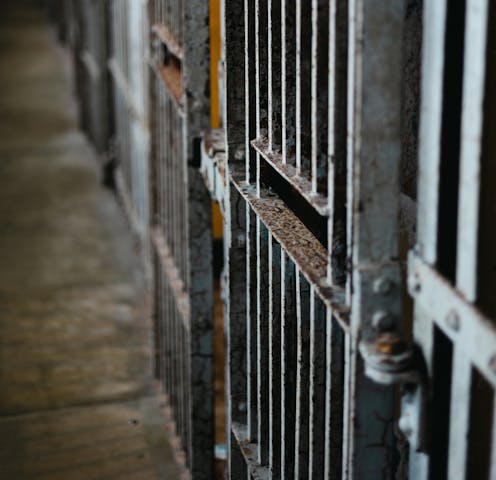
More seriously, expectations can be very hard to manage in arrest cases overseas. Some Australians are shocked their citizenship doesn’t come with a “get out of jail free card”. But we are all subject to local laws and authority, no matter what notions we might have about the standards of justice that apply in some countries.

At any given time, there are between 300 and 400 Australians imprisoned overseas. Under the Vienna Convention on Consular Relations, there are real limits to what the Australian consular service can do in these cases.

The service will check periodically on the welfare of prisoners overseas, guide them towards local legal representation and monitor their trials. But that’s about it. This applies to foreigners imprisoned in Australia, too.

To be sure, there is occasionally a case that is clearly so arbitrary or unjust, our government calls for the release of the individual. This was the case for Sean Turnell, who was imprisoned in Myanmar for political reasons until being released last year. But unlike Turnell, most Australian prisoners overseas probably have a case to answer.

Three ways to stay safe

1) Be informed about where you are going

Australians have a responsibility to know what’s happening at their planned destinations. The conflicts in Ukraine and elsewhere have impacted many travellers, as have major weather events and natural disasters.

With international flights returning to normality over the last year, DFAT’s COVID repatriation program has largely wound up. Travellers once again need to look to their own resources – or their travel insurance policies – to ensure they get home.

The government’s Smartraveller website is a reliable source of up-to-date information on everything from emerging health risks to cultural and legal issues in specific countries to the local security situation. They have recently launched a fresh advertising campaign in an effort to highlight the importance of avoiding trouble in the first place.

2) Stay in touch with family back home

The consular service deals with hundreds of “whereabouts” inquiries each year. And if disaster strikes when you are travelling somewhere, your family and friends will be worried.

In each of the major consular disaster responses I was involved in, including the September 11 attacks and the 2002 Bali bombings, there were people who caused their loved ones untold grief by not letting them know they were safe.

In my recent book, The Consul, I recount the story of one Australian who worked on an upper floor of the World Trade Center in New York, but took ten days to let his family know he had actually been in London when the attacks took place.

University of Queensland Press, FAL 3) Buy good travel insurance If there’s one thing travellers really should do, it’s to take out travel insurance. Most people think about insurance as a way of covering themselves for flight cancellations or for the theft of personal items. But if you get sick or are injured overseas – or even in the case of a death – insurance is critical. The Australian government cannot just step in and pay for a medical evacuation. From my time as consular chief, I know that some Australians were forced to sell their homes to cover their medical costs overseas. People also often find themselves under-insured, or are surprised to learn that certain activities, such as adventure sports, are not covered. Young people are the least likely to take out insurance. Travel industry surveys indicate about 12% of travellers below the age of 30 do not intend to take out insurance, and the number is higher for those heading to destinations in the developed world regarded as “safe”. It really doesn’t work like that though - hospitalisation in the United States without insurance can mean financial disaster. It doesn’t take much to minimise the risk of difficulties turning into disasters overseas. Read more: Relief as Australian Sean Turnell to be released from prison in Myanmar, but more needs to be done

Authors: Ian Kemish, Adjunct Professor, School of Historical and Philosophical Inquiry, The University of Queensland

Read more https://theconversation.com/travelling-overseas-heres-what-the-embassy-will-and-wont-do-to-help-if-you-get-in-trouble-198589

Business News

How Telematics Helps Australian Companies Improve Productivity

Operating a commercial fleet in Australia is a uniquely demanding endeavour. Between the sprawling urban sprawl of cities like Sydney and Melbourne and the immense, unforgiving stretches of the Outb...

Daily Bulletin - avatar Daily Bulletin

Inside the Icon: The BridgeMuseum Officially Opens at the Sydney Harbour Bridge

A bold new way to experience one of Australia’s most recognisable landmarks has arrived, with BridgeClimb Sydney officially opening the all-new BridgeMuseum.  Located inside the Sydney Harbour Brid...

Daily Bulletin - avatar Daily Bulletin

Is Your Brand Showing Up in AI Search? Most Melbourne Brands Aren't.

The New Front Door Nobody Told You About Something changed. Quietly. Without a press release. The way buyers find businesses in Australia has been rewired. Not replaced, rewired. Google isn't dead...

Daily Bulletin - avatar Daily Bulletin

How Australian Businesses Can Measure SEO ROI

SEO can feel vague when you are staring at a dashboard full of numbers that do not clearly connect to revenue. The key is to measure the right signals in the right order, then tie them back to outcome...

Daily Bulletin - avatar Daily Bulletin

How Commercial Roller Shutters Improve Site Security Without Slowing Operations

Security upgrades can be frustrating when they make everyday work harder. A door that takes too long to open, creates bottlenecks at shift change, or fails at the worst time can turn “better protectio...

Daily Bulletin - avatar Daily Bulletin

Why a Document Destruction Service Still Matters for Modern Businesses

Businesses generate large volumes of information every day, from staff records and contracts to invoices, reports and customer files. While attention often focuses on how documents are stored, the way...

Daily Bulletin - avatar Daily Bulletin

Bicycle Rack Safety and Space-Smart Storage

Bike storage problems usually show up as small annoyances first: tangled handlebars, scratched frames, and bikes that topple when you pull one out. Over time, those issues become safety risks, especia...

Daily Bulletin - avatar Daily Bulletin

How to Tell if a Childcare Centre Is a Good Fit for Your Child

Choosing childcare can feel like you’re making a huge decision with limited information. Tours are short, centres are often on their best behaviour, and your child might act differently in a new space...

Daily Bulletin - avatar Daily Bulletin

Car Import Timeline: What Usually Happens at Each Stage

Importing a car into Australia can feel confusing because multiple agencies and checkpoints are involved, and the timeline is shaped as much by paperwork quality as it is by shipping speed. The most u...

Daily Bulletin - avatar Daily Bulletin

The Daily Magazine

Gold Migration Lawyers in Liquidation: How the Closure Affects Your ART Appeal

If your appeal was with Gold Migration Lawyers, a recent change to how the Tribunal decides cases ...

The pressure cooker: life in urban Australia in 2026

Australian cities have always been demanding. Long commutes, rising housing costs, busy schedules a...

What Actually Makes a Good Criminal Lawyer in Melbourne

Most people only think about this question once. That is usually too late. Most people charged wi...

Why Working With A Chatswood Tutor Can Improve Academic Performance

Academic expectations continue increasing for students across primary school, high school, and senio...

Is It Worth Getting Solar Panels in Melbourne?

The real question is not whether solar works in Melbourne. It works. The question is what it is co...

How A Diploma Of Project Management Builds Practical Skills For Modern Work Environments

Developing the ability to plan, execute, and deliver outcomes efficiently is a key requirement in to...

How to Choose the Right Football for Every Level

Choosing a football may seem straightforward, but the right option depends on who will be using it a...

What to Ask a Wedding Photographer Before You Book

Booking a wedding photographer can feel deceptively simple: you like the photos, you like the vibe...

Why Stress Relief For Dogs Is Essential For Emotional Balance And Long-Term Wellbeing

Managing emotional health is just as important as physical care when it comes to pets, which is why ...