

What do the different colours of mould mean in my house?
- Written by: Michael Taylor, Adjunct academic, Flinders University
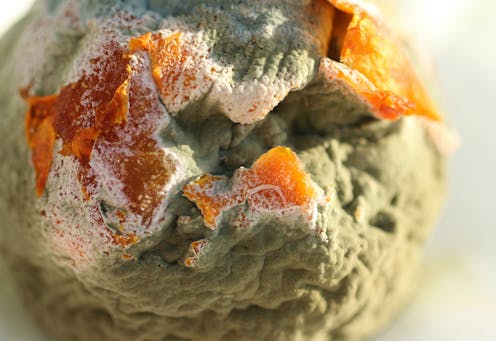
You may be interested (or possibly horrified) to discover you ingest and inhale thousands of tiny life forms on a daily basis.
The air and surfaces around you are home to multitudes of bacteria, fungi, viruses, mites, algae and protozoa. Your skin isn’t much better, with a complex ecosystem of organisms called commensals which aren’t necessarily good or bad, but will shift in their composition depending on where you live, the products you use and the pets you have.
Most of these creatures are generally undetectable due to their microscopic size and low concentrations. But when they find a niche they can exploit, you might notice them by their smell, or the appearance of unwanted staining and colour changes. A lot of this fungal growth is what we call mould.
We’ve all been disappointed in ourselves at one time or another, lifting a neglected orange out of the fruit bowl to discover the bottom half is covered in a velvety blue-green growth.
But what do the myriad colours that appear on our stuff tell us about the world we try not to think about?
Black
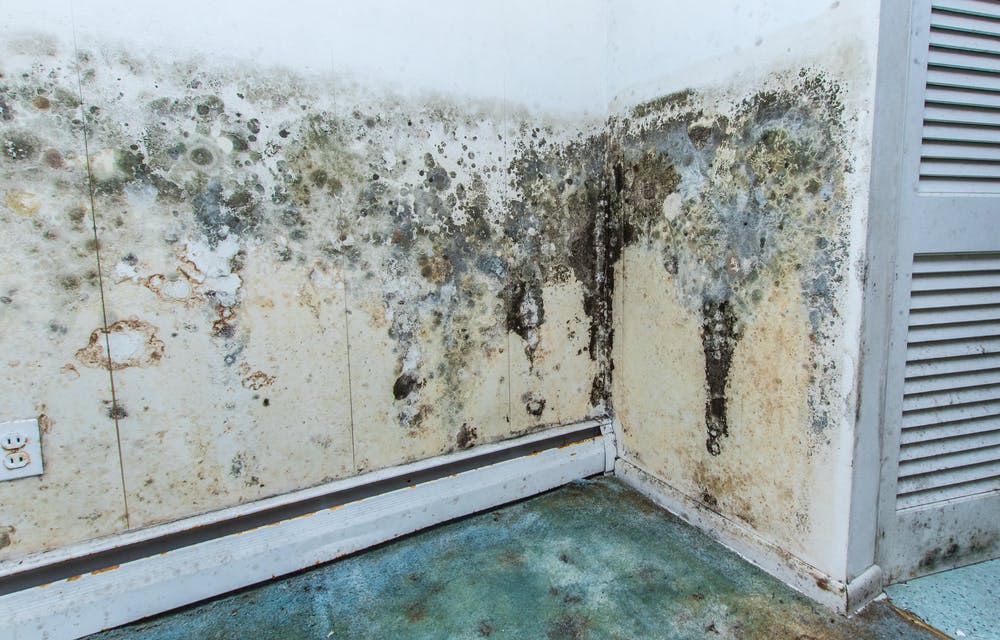
Often black staining is quite a disturbing occurrence. The concept of toxic black mould is one many people have become aware of due to flood impacts.
A quick online search will likely terrify you, but not all black discolouration is due to the same organisms, and almost none of it will outright cause you harm.
Stachybotrys is the one known as toxic black mould. It often turns up on building materials that have been wet for a long time.
Read more: Health Check: how does household mould affect your health?
When the grout in your shower turns black though, that’s a different fungus called Aureobasidium. It’s slimy, sticky and somewhere between a filamentous mould, which grows threadlike roots through whatever it’s eating, and a yeast, which prefer a free-floating, single-celled style of life.
Bleaching will often kill Aureobasidium, but the dark pigmentation will likely hang around – harmlessly, but stubbornly.
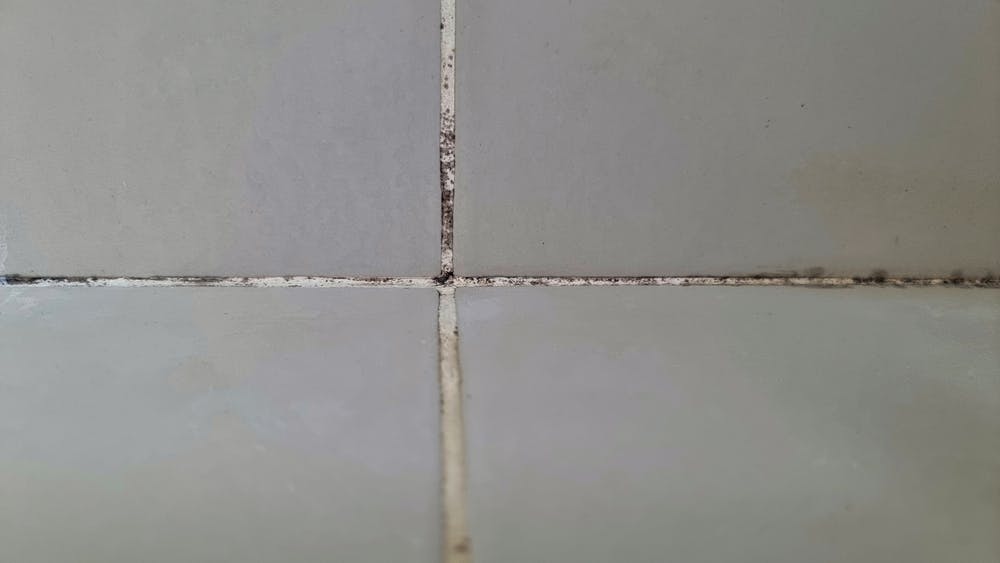 The mould colonising the grout in your shower is unlikely to be toxic. In fact, you can kill it with bleach, but the harmless pigment may linger behind.
Shutterstock
The mould colonising the grout in your shower is unlikely to be toxic. In fact, you can kill it with bleach, but the harmless pigment may linger behind.
Shutterstock
Blue
That blue orange I mentioned before, you can thank Penicillium for that. The organism that gives us blue cheese and the antibiotic penicillin is also responsible for producing a dense growth of mould that almost looks like smoke when disturbed, spreading millions of spores onto the rest of your fruit bowl.
Penicillium is a big group with hundreds of species, ranging from recognised pathogens to species yet to be named. However, the ones that turn up in our homes are generally the same “weed” species that simply cause food spoilage or grow in soil.
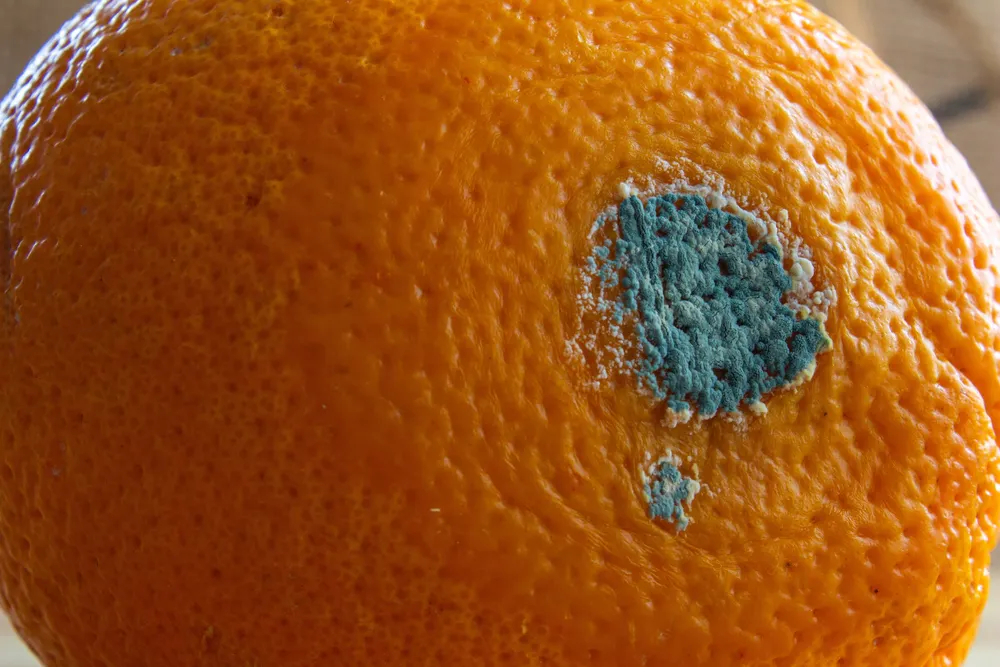 Mould growing in your fruit bowl is related to the one that gave us penicillin. The dusty appearance are spores waiting to be disturbed and spread all over your other fruit.
Shutterstock
Mould growing in your fruit bowl is related to the one that gave us penicillin. The dusty appearance are spores waiting to be disturbed and spread all over your other fruit.
Shutterstock
Yellow and orange
We often think of fungi as organisms that thrive in the dark, but that’s not always true. In fact, some need exposure to light – and ultraviolet (UV) light in particular – to complete their life cycle.
Many plant pathogens use UV light exposure as a trigger to produce their spores, and then protect their DNA by hiding it behind melanin-containing shells.
Stemphylium and Epicoccum turn up in our homes from time to time, often hitching a ride on natural fibres such as jute, hemp and hessian. They produce a spectrum of staining that can often turn damp items yellow, brown or orange.
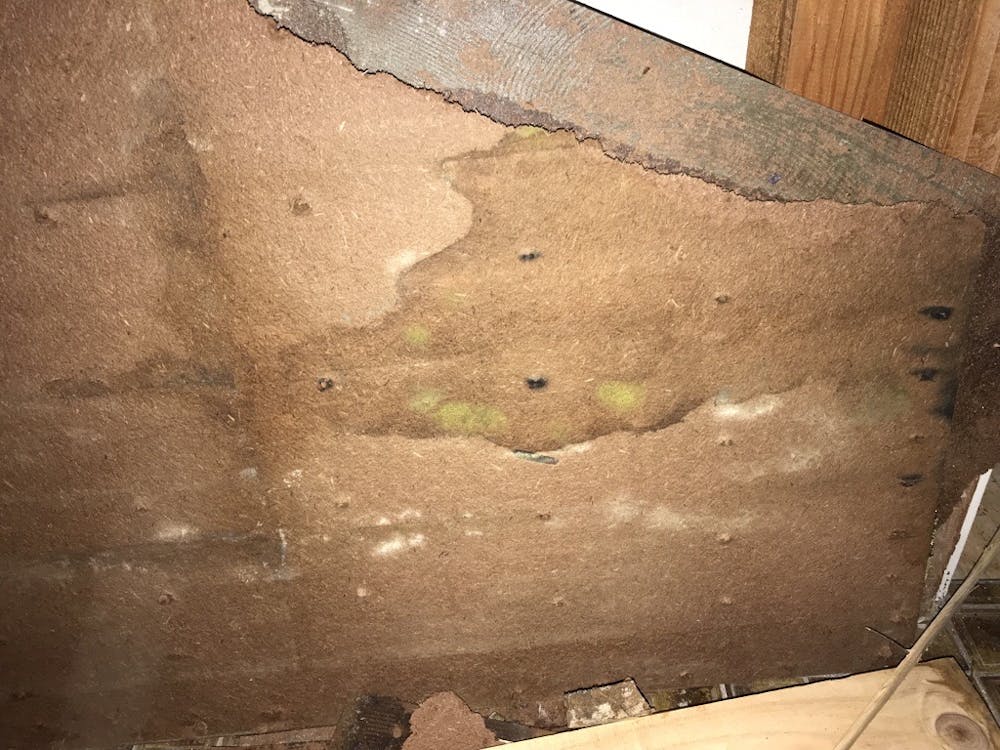 Yellow moulds can leave a stain behind even once the spores are gone.
Michael Taylor, Author provided
Yellow moulds can leave a stain behind even once the spores are gone.
Michael Taylor, Author provided
Green
We’re all fairly familiar with the green spots that turn up on mouldy bread, cake and other food items. Often we try to convince ourselves if we just cut off the bad bit, we can still salvage lunch.
Sadly that’s not the case, as the roots of the fungi – collectively called mycelium – spread through the food, digesting and collecting sufficient nutrients to pop out a series of tiny fruiting bodies which produce the coloured spores you see.
Read more: Health Check: is it safe to cut mould off food?
The green tuft is often from a group of fungi called Aspergillus. Under the microscope they look rather like the puffy top of a dandelion gone to seed.
Like Penicillium, Aspergillus is another big fungal group with lots of species that turn up virtually in every environment. Some are heat tolerant, some love acid and some will happily produce spores that stay airborne for days to months at a time.
In the green gang is also a fungus called Trichoderma, which is Latin for “hairy skin”. Trichoderma produces masses of forest-green, spherical spores which tend to grow on wet cardboard or dirty carpet.
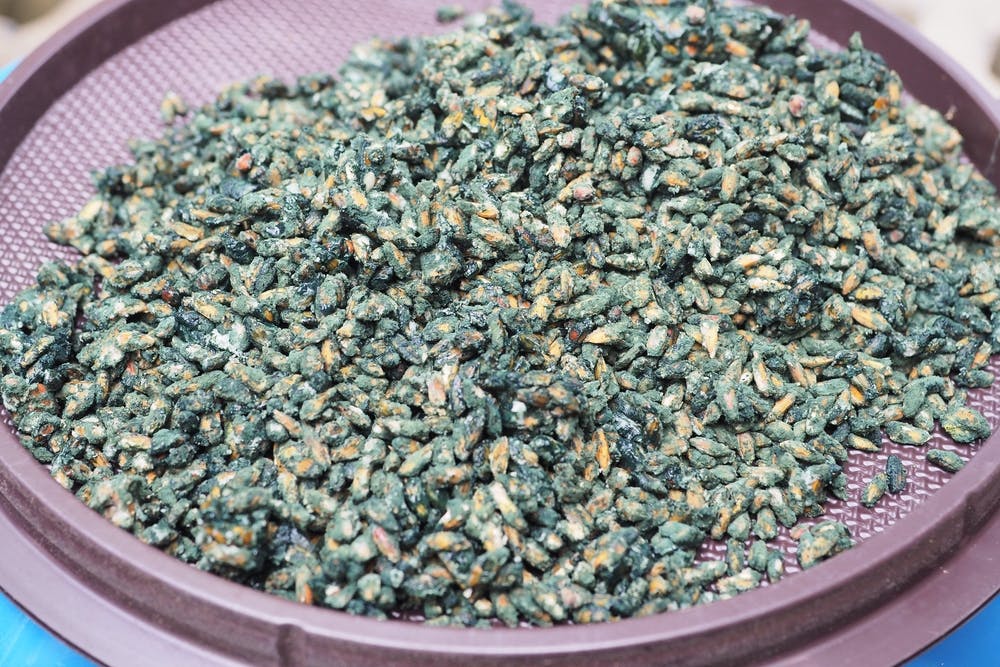 Trichoderma is present in all soils, and will grow fast if the conditions are right.
Shutterstock
Trichoderma is present in all soils, and will grow fast if the conditions are right.
Shutterstock
Pink, purple and red
There are plenty to speak of in this category. And there is also a common bacterium that makes the list.
Neurospora, also known as the red bread mould, is one of the most studied fungi in scientific literature. It’s another common, non-hazardous one that has been used as a model organism to observe fungal genetics, evolution and growth.
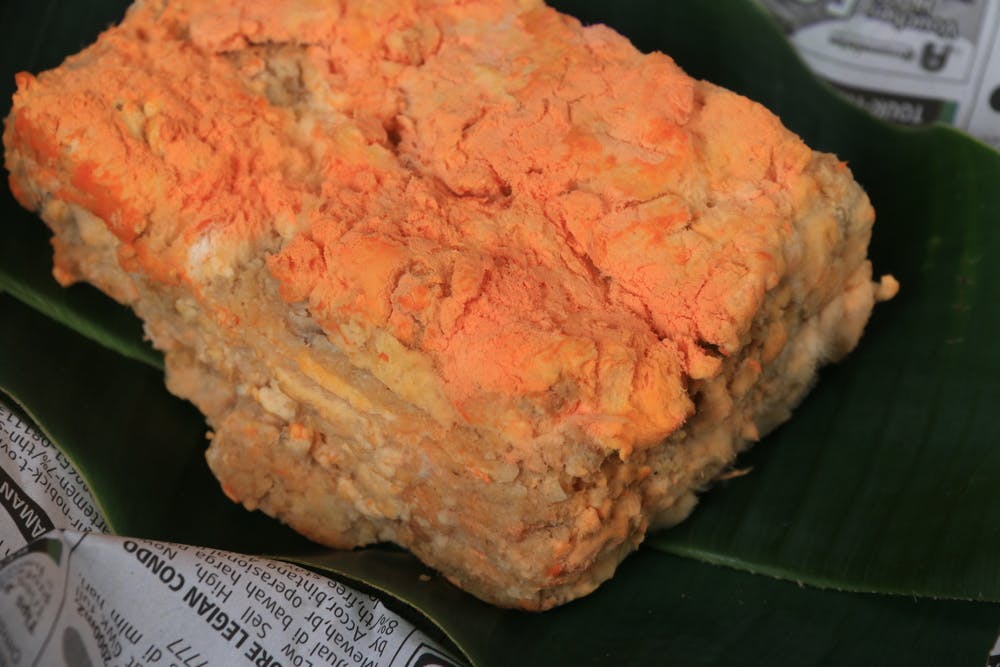 Red oncom, a traditional staple food in West Java, Indonesia, is made with Neurospora.
Shutterstock
Red oncom, a traditional staple food in West Java, Indonesia, is made with Neurospora.
Shutterstock
Fusarium is less common indoors, being an important crop pathogen, but will sometimes turn spoiled rice purple. It also occasionally turns up on wet cement sheet, causing splotchy violet patches. Fusarium makes large, sticky, moon-shaped spores that have evolved to spread by rain splashes and hang onto plants. However, it is fairly bad at getting airborne and so doesn’t tend to spread very far from where it’s growing.
Finally in this category, that pink scum that turns up around bathroom taps or in the shower? It’s actually a bacterium called Serratia. It will happily chew up the soap scum residue left over in bathrooms, and has been shown to survive in liquid soaps and handwash.
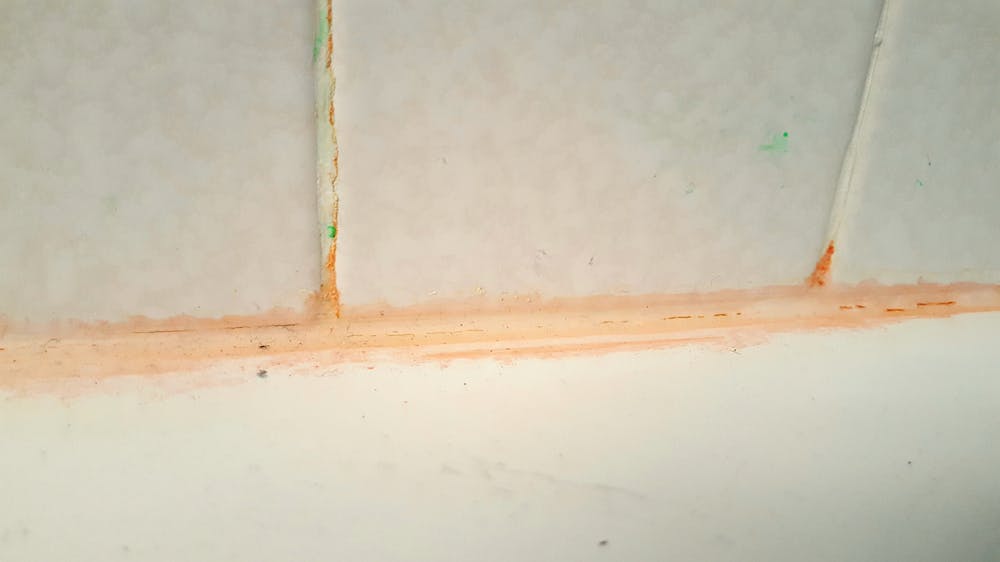 Some of the pink stuff in your bathroom isn’t even mould – it’s bacteria.
Shutterstock
Some of the pink stuff in your bathroom isn’t even mould – it’s bacteria.
Shutterstock
White
When fungi were first being classified and were eventually given their own phylogenetic kingdom, there were lots of wonderful and not strictly categorical ways we tried to split them up. One of these was hyaline and non-hyaline, essentially referring to transparent and coloured, respectively.
One of the interesting non-pigmented moulds you may well catch sight of is a thing called Isaria farinosa (“farinosa” being Latin for “floury”). This fungus is a parasite of some moths and cicadas and is visible as brilliant white, tree-shaped growths on their unfortunate hosts.
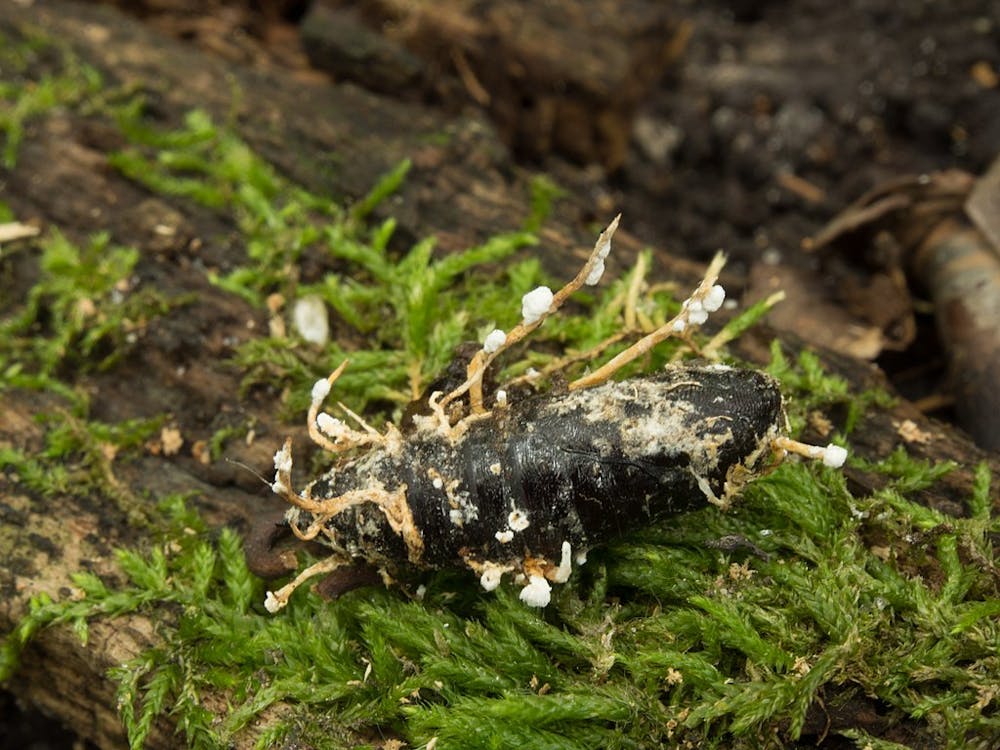 A example of Isaria farinosa growing out of its host.
Wikimedia Commons, CC BY-SA
A example of Isaria farinosa growing out of its host.
Wikimedia Commons, CC BY-SA
So when you notice the world around you changing colour, you can marvel with your newfound knowledge at the microscopic wonders that live complex lives alongside yours. Then maybe clean it up, and give the fruit bowl a wash.
Read more: Hidden housemates: meet the moulds growing in your home
Authors: Michael Taylor, Adjunct academic, Flinders University
Read more https://theconversation.com/what-do-the-different-colours-of-mould-mean-in-my-house-207737


 Daily Bulletin


