

Read The Times Australia

Daily Bulletin

Two new Australian mammal species just dropped – and they are very small

  • Written by: Linette Umbrello, Postdoctoral research associate, Queensland University of Technology
Two new Australian mammal species just dropped – and they are very small

You probably know about the Tasmanian devil. You might even know about its smaller, less-famous relative, the spotted-tailed quoll.

But these are far from the only meat-eating marsupials. Australia is home to a suite of other carnivorous and insectivorous pouched mammals as well, some of them the size of a mouse or smaller.

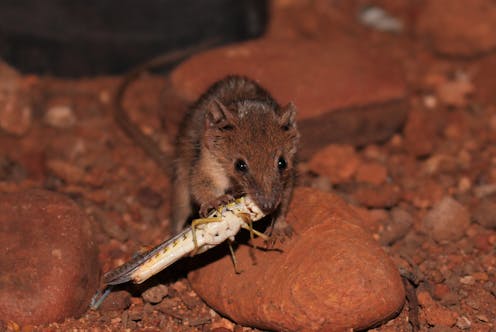
Tiniest of all are the planigales, some of which weigh less than a teaspoonful of water. Despite their size, these fierce predators often take on prey as big as themselves.

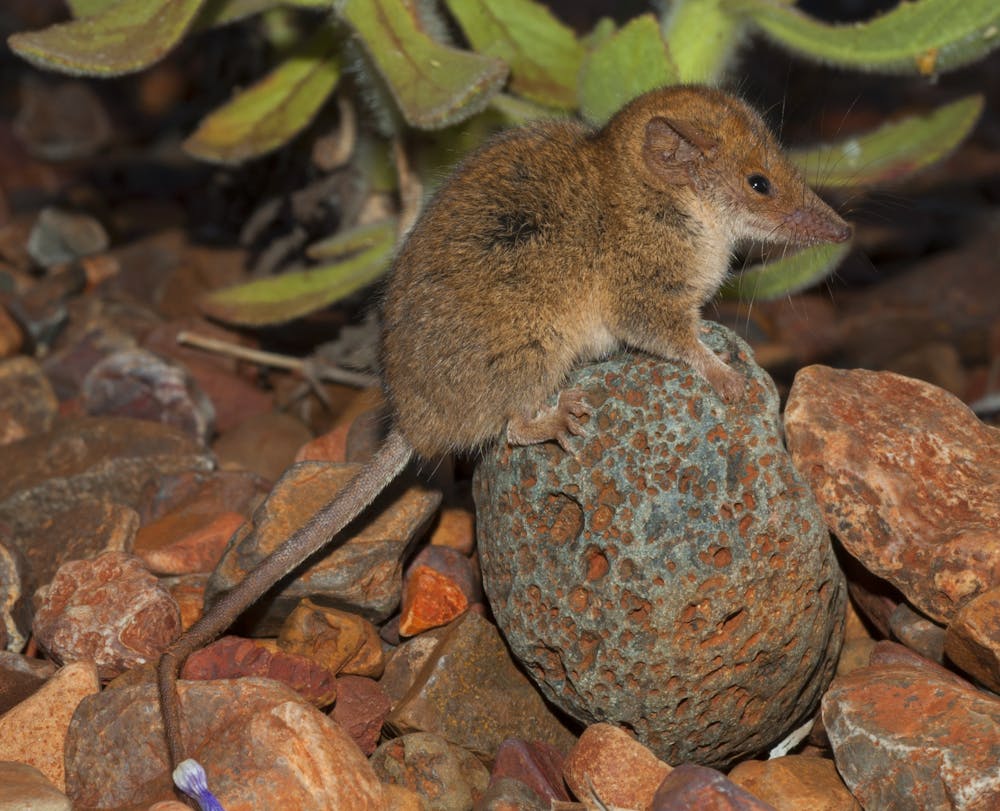
To date, there are four known species of planigale found across Australia. We have recently discovered another two species, both inhabitants of the Pilbara region of northwest Western Australia: the orange-headed Pilbara planigale (Planigale kendricki) and the cracking-clay Pilbara planigale (P. tealei).
A small mouse-like mammal sitting on a small rock with a plant in the background
The orange-headed Pilbara planigale (Planigale kendricki). Roy Teale, Author provided (no reuse)

How many kinds of planigale are there?

The name planigale translates to “flat weasel”, an allusion to their extremely flat heads, which allow them to shelter in small cracks in rocks and clay soils. Planigales are among Australia’s smallest mammals, with some weighing an average of 4–6 grams (and measuring around 11cm in length), and other species a bit larger at 8–17 grams (and 13cm long).

Scientific studies from the late 1970s onward using body-shape and DNA data have suggested there are many more planigale species than we think.

We put these theories to the test, and found that planigales in the Pilbara display unique body shapes and are genetically unrelated to any of the four known planigale species.

Why have these species only been described now?

The process of describing these two new species was actually started more than 20 years ago, by scientists who were working at the Western Australian Museum at the time.

Their work began after ecologists conducting surveys for developing mines in the Pilbara were capturing planigales that didn’t really fit the descriptions of the known species. For want of a better option, they were still usually identified as either the common planigale (P. maculata) or the long-tailed planigale (P. ingrami).

Read more: Australia has hundreds of mammal species. We want to find them all – before they're gone

Scientists led by taxonomist Ken Aplin began examining specimens held in the WA Museum and sequencing their DNA. These studies helped to confirm the discovery of two new species.

Sadly, Ken fell ill and passed away in 2019. This is where we stepped in.

Through support from the Australian Biological Resources Study and the Queensland University of Technology we were able to finish off Ken’s species descriptions and submit the research for publication. This is a crucial step in taxonomy – the species description has to be published before the new name can be considered official.

What do we know about the new species?

Both new species occur in the Pilbara and surrounding areas. The orange-headed Pilbara planigale is the larger of the two, weighing an average of 7g (up to 12g for large males) with a longer, pointier snout and bright orange colouring on the head.
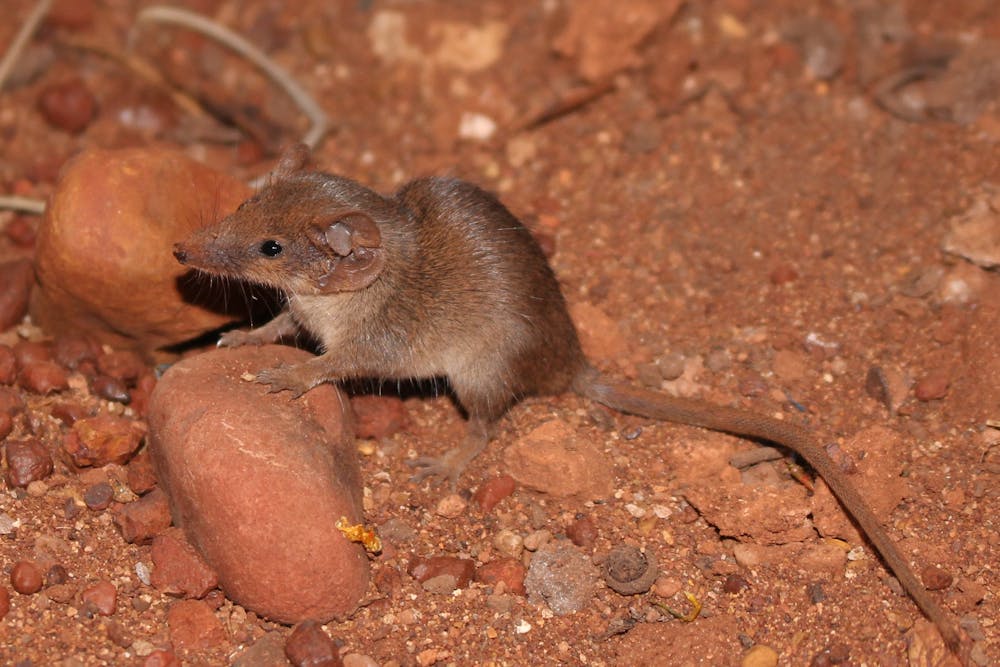
A small brown mouse-like marsupial sitting among reddish soil. The cracking-clay Pilbara planigale (P. tealei) has only been found on cracking-clay soils. Linette Umbrello, CC BY-SA

The cracking-clay Pilbara planigale is much smaller, averaging just 4g with darker colouration and a shorter face. It has only been found on cracking clay soils, hence its name.

The orange-headed Pilbara planigale has been found on rocky and sandy soils as well, but both species require a dense cover of native grasses to persist. Both species actively forage during the night, while taking shelter during the day.

Read more: A 140-year-old Tassie tiger brain sample survived two world wars and made it to our lab. Here's what we found

This means the two widespread species, the common planigale and the long-tailed planigale, do not occur in the Pilbara or on neighbouring Barrow Island, as was previously thought.

There is still a lot more work for us to do as there remain two “species complexes” of planigales. These are groups where genetic data suggests a species is comprised of multiple different forms.

We’ll be following up on this with more analysis to define more of Australia’s tiniest mammals.

Authors: Linette Umbrello, Postdoctoral research associate, Queensland University of Technology

Read more https://theconversation.com/two-new-australian-mammal-species-just-dropped-and-they-are-very-small-210386

Business News

The Rise of Digital Marketplaces in the Australian Trade Sector

For decades, the Australian trade and construction sector operated almost entirely on word-of-mouth recommendations and local community networks. Small business owners typically relied on local newspa...

Daily Bulletin - avatar Daily Bulletin

How Immigration Lawyers Can Help

Introduction Visa decisions can shape employment, family life, study plans, travel, and future residence. A small omission can lead to delay, added expense, or refusal. Immigration lawyers assess l...

Daily Bulletin - avatar Daily Bulletin

How Industrial Drying Equipment Supports Efficient Processing

Many industrial processes require moisture to be removed from compressed air, products or process materials before they move to the next stage. Excess moisture can affect equipment performance, produc...

Daily Bulletin - avatar Daily Bulletin

Practical Ways a Whiteboard Can Improve Workplace Communication

Effective communication helps teams stay organised, share ideas and keep track of important information. While digital tools are now common in many workplaces, a whiteboard continues to provide a simp...

Daily Bulletin - avatar Daily Bulletin

Designing Eco-Friendly Custom Water Bottles for Your Next Event

The Evolution of Sustainable Event Merchandise Event planning has undergone a massive transformation over the last decade. Gone are the days when organizers could hand out cheap, single use plastic...

Daily Bulletin - avatar Daily Bulletin

Why Choosing a Professional Florist Melbourne Makes Flower Delivery Impactful

Flowers have a great power to speak when humans cannot express their feelings with right words. Flowers are the best gifts when you are celebrating a birthday or welcoming a newborn child into your fa...

Daily Bulletin - avatar Daily Bulletin

The Business Case for Choosing Australian Fabricators Over Imported Alternatives

For a long time, you might have defaulted to overseas suppliers when sourcing fabricated metal components for a project. The unit price was lower on paper, and the maths seemed straightforward. That...

Daily Bulletin - avatar Daily Bulletin

Australian organisations are relying on business continuity plans built for a far more predictable world

Tariff escalations, supply chain fragility, geopolitical events, and the ongoing threat of cyber disruption have reshaped the risk environment facing Australian organisations. The problem is that ma...

Daily Bulletin - avatar Daily Bulletin

How to Rent a Car for Uber in Melbourne: What Every New Driver Needs to Know

Starting out as an Uber driver in Melbourne is not as complicated as it sounds but getting the vehicle right is where most new drivers get stuck. Uber has strict requirements around vehicle age, condi...

Daily Bulletin - avatar Daily Bulletin

The Daily Magazine

Critical Structural Checks to Prioritise Before Renovating an Older Property

The Australian home renovation market is experiencing unprecedented growth. The total value of thi...

Why Regular Gutter Cleaning Northern Beaches Is Important

Living in the Northern Beaches offers beautiful coastal scenery, fresh air, and leafy surroundings...

Double Glazed Sliding Doors vs Standard Sliding Doors: Key Differences

Sliding doors are a popular choice in modern homes due to their space-saving design and ability to...

How to Plan a Bathroom Renovation Timeline (Without Surprises)

A bathroom renovation rarely feels “small” once work begins. Even modest updates involve multiple ...

What “Extraction Facial” Actually Means (And When It Helps)

“Extraction facial” is one of those skincare terms people use as if it’s one standard treatment, b...

How Compounded Medicines Support Individual Health Needs

Not every patient responds to medicine in the same way. Age, allergies, dosage requirements and sw...

How Live Comedy Can Shape the Mood of an Event

The mood of an event is shaped by more than the venue, food, music, or schedule. Entertainment can...

Why Home Gym Mats Are Becoming a Must-Have

Building a dedicated workout space at home has become increasingly common across Australia. Many p...

Choosing an ELISA Format That Matches Your Target

A colorimetric ELISA ends with a plate that has developed color, and the instinct is to read more ...