

'The boss of Country', not wild dogs to kill: living with dingoes can unite communities
- Written by: Euan Ritchie, Professor in Wildlife Ecology and Conservation, School of Life & Environmental Sciences, Deakin University
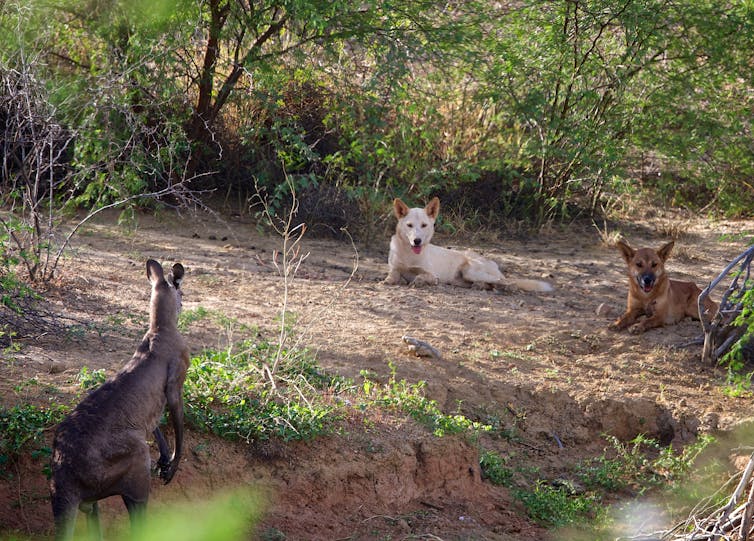
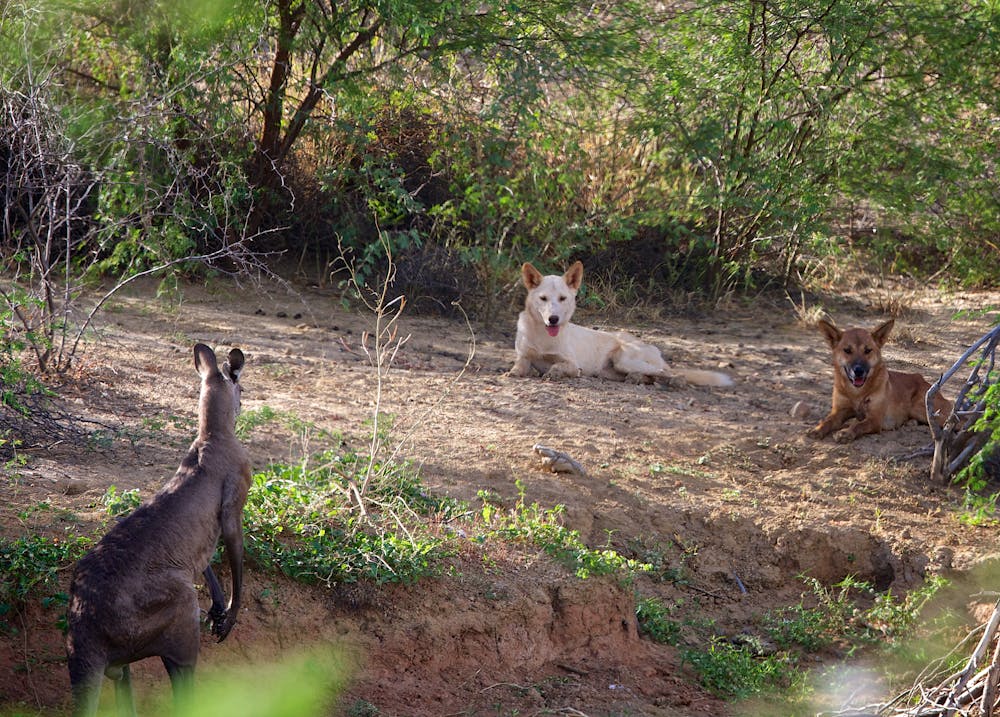
Aside from humans, dingoes are Australia’s largest land-based predator. They are arguably our most maligned, misunderstood, and mismanaged native species.
But evidence suggests this iconic canine helps maintain healthy ecosystems. They’re also a tourist draw-card. And they hold deep values for First Nations peoples.
Since colonisation, Australian governments and land managers have trapped, shot, poisoned and excluded dingoes from large parts of their Country. Policy and practices have frequently overlooked First Nations’ perspectives.
It doesn’t have to be this way. We can hear the diverse voices and values of First Nations peoples, livestock producers, ecologists, and others as we shape future policy and practices. By collaborating and drawing from both Indigenous and Western knowledge, we can find ways to live in harmony with our apex predator.
Read more: The dingo is a true-blue, native Australian species
How are dingoes currently treated?
Under federal environmental law, any species present in Australia before AD 1400, such as the dingo, is classified as native. However, dingoes are not listed nationally as a threatened species. So individual state governments make their own decisions about how to treat them.
In the Northern Territory, Queensland and Victoria, dingoes are managed as protected wildlife in National Parks and conservation areas but they’re unprotected on private land.
In Western Australia, South Australia, the Australian Capital Territory and New South Wales, dingoes are unprotected wildlife. That means they are afforded no protection, even in conservation areas.
But state governments also list “wild dogs” as a priority pest species. That allows – even requires – them to be killed on public and private land.
Some states, such as Victoria, have “wild dog” bounties where landholders can turn in wild dog (but more likely dingo) body parts for money.
The state definitions of “wild dogs” includes dingoes and dingo-dog hybrids. This is based on the mistaken belief that interbreeding between dingoes and dogs was widespread across Australia.
But recent DNA research shows dingo-dog hybrids are rare. Most wild dingoes have little to no dog ancestry. This has led scientists, conservationists, and First Nations peoples to call on state governments to change dingo policies.
 Macabre scenes such as this are not uncommon across rural Australia.
Angus Emmott
Macabre scenes such as this are not uncommon across rural Australia.
Angus Emmott
Read more: New DNA testing shatters 'wild dog' myth: most dingoes are pure
Stark contrasts in dingo management
Stretching more than 5,600km across Australia, the dingo barrier fence is the longest continuous artificial environmental barrier in the world. It was designed to keep dingoes out of the more productive sheep grazing areas in southeastern Australia.
In South Australia, dingoes south of the “dingo fence” are declared “wild dogs” and subject to an eradication policy. North of the “dingo fence” they are unprotected wildlife.
In contrast, dingoes are listed as threatened throughout Victoria. They are protected on public land (if more than 3 km from a private land boundary).
The existence of an isolated and threatened “Big Desert” wilkerr (dingo) population on the border between these two states highlights their differing approaches.
While the Victorian population is partially protected in the Big Desert-Wyperfeld conservation reserve complex, the South Australian wilkerr population is poisoned four times a year inside Ngarkat Conservation Area.
 Dingoes are regarded as pests by some and ecologically essential by others.
Angus Emmott
Dingoes are regarded as pests by some and ecologically essential by others.
Angus Emmott
Read more: Killing dingoes is the only way to protect livestock, right? Nope
What do dingoes mean to First Nations peoples?
Dingoes hold strong cultural significance for First Nations peoples across Australia. They are considered loved and respected family members that have always been by their sides. A healthy dingo population is seen as essential for healthy Country and healthy people.
Despite the harms of colonisation on dingoes and First Nations, Indigenous people continue to feel and nurture this connection to dingoes. Maintaining their culture means fulfilling the general cultural obligation and rights of First Nations peoples to protect this sacred animal.
This was reinforced at the National Inaugural First Nations Dingo Forum in Cairns last month (September 15–16). The forum produced a powerful statement signed by more than 20 Nations.
The national dingo declaration is clear: First Nations peoples want an immediate end to the “genocide” (deliberate killing) of dingoes on Country. Lethal control of dingoes is not acceptable, nor justified.
We join the call for an end to the use of the term “wild dog”, because it’s misleading and disrespectful. Pure dingoes, not feral or hybrid wild dogs, are predominately being killed.
First Nations people want to see the dingo reinstated as “the boss of Country”. They call on governments at all levels to involve First Nations peoples in decisions relating to dingo management, to implement and support educational programs across a variety of platforms and organisations, and to see dingoes protected under legislation.
The recent Victorian decision to maintain lethal control of dingo populations against the wishes of First Nations peoples is extremely disappointing.
Non-lethal ways to protect livestock
While lethal methods have historically been used to protect livestock from dingoes, there is growing awareness of their limitations.
Firstly, these methods have not been consistently effective in eliminating livestock losses. In some cases they have exacerbated the problem, possibly due to killing and loss of older individuals, which can change the social cohesion of dingo populations, breeding, their movements and how territorial they are. It may also alter how successful they are at hunting kangaroos, causing more attacks on livestock.
Secondly, they have been associated with adverse consequences for biodiversity. In some cases, having dingoes around can be beneficial for graziers by reducing the total grazing pressure of kangaroos, feral goats, and other herbivores, and in some cases the impacts of feral pigs too. Increasing numbers of landholders are recognising this.
Lastly, there is growing consensus these lethal approaches are not aligned with the values of the general public, particularly First Nations peoples.
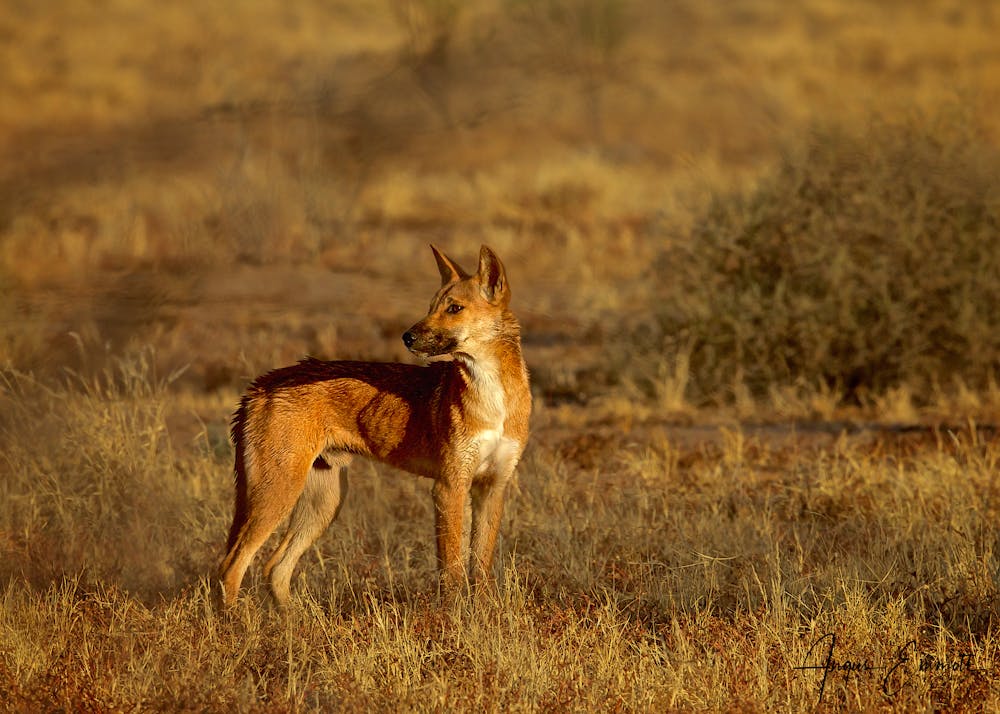 Healthy Country and people requires dingoes.
Angus Emmott
Healthy Country and people requires dingoes.
Angus Emmott
Non-lethal approaches to managing dingoes are gaining prominence as they are more environmentally sustainable and compassionate. These approaches prioritise coexistence by reducing conflict between dingoes and human interests while allowing dingoes to persist in landscapes.
One of the most promising non-lethal methods involves guardian animals, such as livestock-guarding dogs, llamas, and donkeys. These guardian animals establish protective bonds with livestock and effectively deter dingoes from approaching, reducing livestock losses for graziers.
 Livestock grazing and dingoes are not incompatible.
Angus Emmott
Livestock grazing and dingoes are not incompatible.
Angus Emmott
Additionally, there is growing interest in developing innovative dingo deterrents, such as electric fencing and devices that emit loud noises, smells or visual stimuli, to discourage interaction between livestock and dingoes.
Initiatives promoting best practices for animal husbandry, including secure fencing, corralling, shepherding, and reducing access to resources (such as water and carcasses), play a crucial role in diminishing the attractiveness of livestock as prey to dingoes.
Working and walking together
By promoting coexistence and exploring and investing in innovative non-lethal solutions, we can strike a balance between safeguarding human interests, preserving the vital ecological role that dingoes perform, and respecting First Nations’ culture. In doing so, it is our hope that communities will be more united than divided.
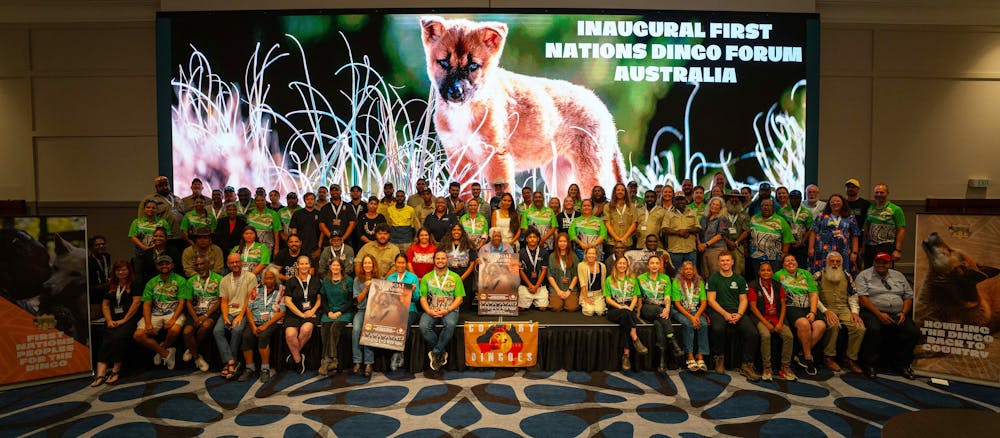 First Nations peoples, graziers, ecologists, conservation organisations, and government coming together at the Inaugural National First Nations Dingo Forum in Cairns, 2023.
Gus Burrows
First Nations peoples, graziers, ecologists, conservation organisations, and government coming together at the Inaugural National First Nations Dingo Forum in Cairns, 2023.
Gus Burrows
We would like to acknowledge retired graziers Angus and Karen Emmott and family from far North Queensland. Their personal story about dingoes at Noonbah Station in Queensland’s Channel Country helped inform our article, and we consider Angus a co-author.
Authors: Euan Ritchie, Professor in Wildlife Ecology and Conservation, School of Life & Environmental Sciences, Deakin University


 Daily Bulletin


