

The brumby debate will never be settled until we face the role horses played in colonisation
- Written by: Isa Menzies, Visiting Fellow, Research School of Humanities and the Arts , Australian National University
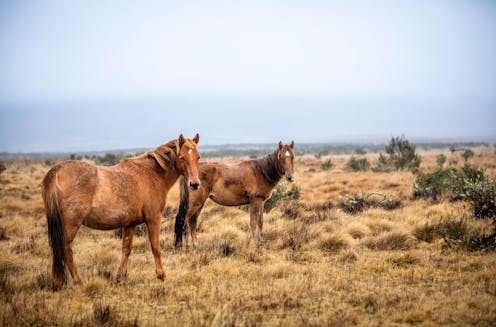
The brumby debate refuses to go away. Nothing seems able to settle this matter.
Neither a heritage listing in 2018 nor the 2021 Management Plan brought the issue to a close. Last week, the report of the Senate Inquiry into the impacts of feral horses on the Australian Alps recommended state and territory cooperation to urgently manage the numbers of feral horses in the Australian Alps.
The horse-human partnership has existed for around 4,000 years, and humans and horses share a co-evolutionary history. Given this, it’s unsurprising the horse has a high emotional impact.
Tensions around wild horse management also exist in other countries, particularly around mustangs in the United States, which are a federally protected species. However, the Australian context retains a unique flavour: the brumby has become a focus for concerns around what it means to belong in Australia for settler-colonial Australians.
Horses, we are often told, have a special connection with the Australian character and are part of our national psyche.
But too often our discussions of brumbies and Australia’s “special” relationship with the horse don’t consider the darker aspects of the horse’s role in Australian history.
Read more: Why do brumbies evoke such passion? It's all down to the high country's cultural myth-makers
Horses and colonisation
Sociologist Catriona Elder has argued ideas about being Australian are fundamentally tied to
a desire for the land, a fear of others who may claim the land and, as a result of this, a deep ambivalence about belonging to this space.
Horses were crucial to the colonisation of this land.
They increased settler mobility in both speed and range. Being mounted offered improved field of vision when deploying a firearm. Even the body of the horse could act as a weapon, particularly when attacking camps. Taken together, the horse represented a devastating tactical advantage to settlers. They proved integral to the frontier violence that created modern-day Australia.
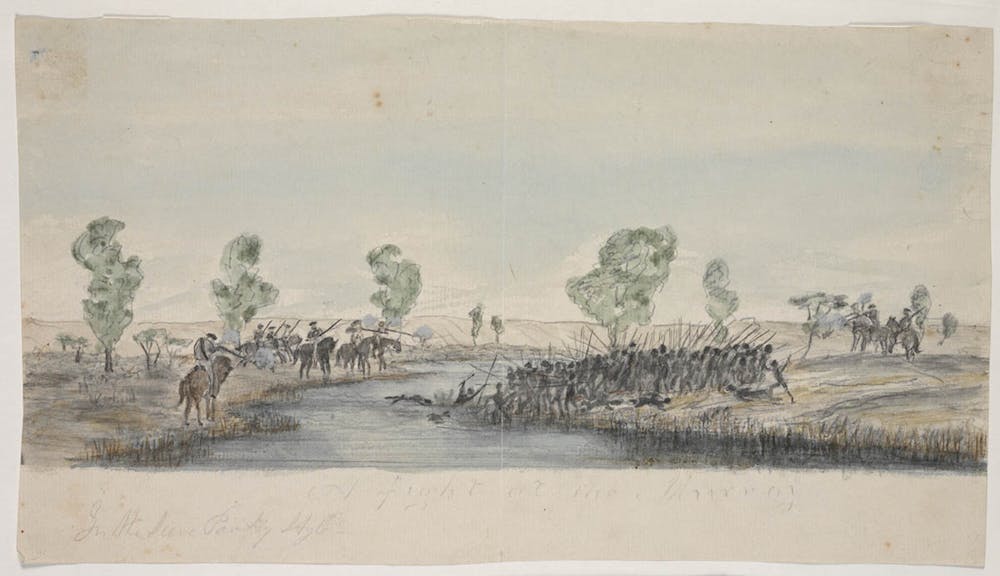
Historian Nanette Mantle argues the figure of the stockman is a celebratory story that evolved to mask the dark truth of Aboriginal dispossession.
Richard Swain (Wiradjuri) is an ambassador for the Invasive Species Council and a founding member of Reclaim Kosci, an organisation that seeks to raise awareness about the impacts of feral horses and create support for their humane reduction.
He has been targeted in racist attacks from the pro-horse lobby, including being threatened with the “colonial experience”.
This reference, wielded as a threat, is fitting.
 Tom Roberts, Dorchester, England 1856–Kallista, Victoria, Australia 1931. In a corner on the Macintyre (The bushranger), 1895. oil on canvas canvas. National Gallery of Australia, Canberra Purchased 1971.
As Tim Flannery writes, The Man from Snowy River is “an archetypal Australian hero – one of the brave Aussies who tamed the rugged land”.
It was these stockmen mounted on horseback, Flannery writes, who were “the shock-troops in our Aboriginal wars”.
A symbol of belonging
Horses also represent a particular identity associated with Britain and Europe.
Compare horses with camels. Camels were integral to the exploration and opening up of inland Australia and, like horses, were used in the battle of Beersheba in the Sinai and Palestine campaign of the first world war. Like brumbies, Australia also has the largest feral camel population in the world.
Camels are culturally and historically significant for Arab peoples, yet here they are routinely culled without a second thought.
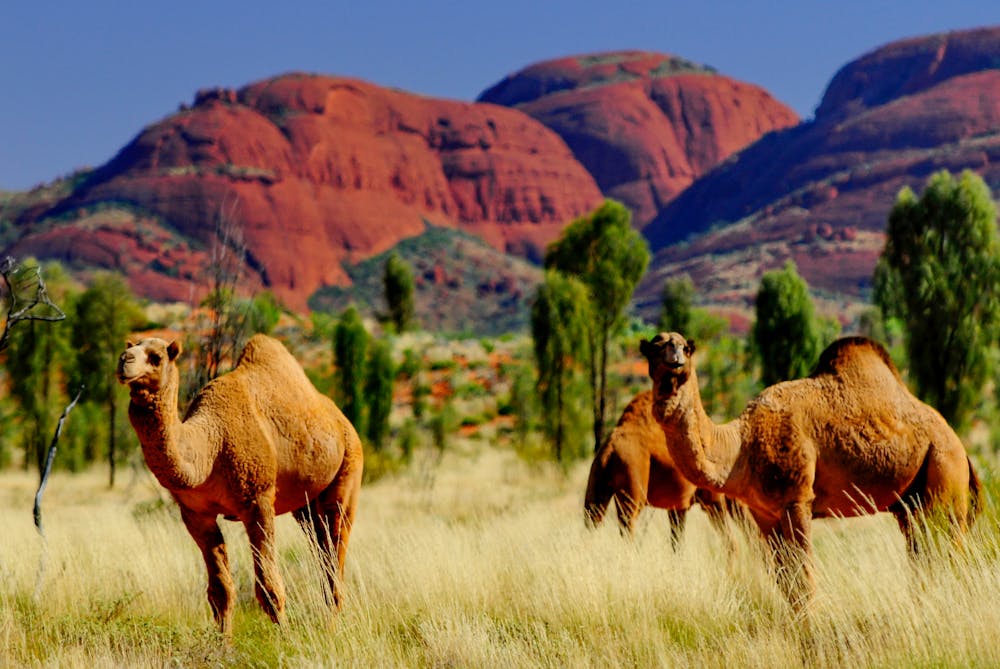 Australia has the largest feral camel population in the world.
Shutterstock
Australia has the largest feral camel population in the world.
Shutterstock
Despite their long history in Australia, camels are associated with Asia and the Middle East and seen as exotic and foreign. Horses, on the other hand, have Anglo-European connotations that fit comfortably within Australia’s white identity.
As horses that have successfully adapted to Australia’s extreme conditions, brumbies are used to justify the coloniser’s presence on the land: if horses belong, surely we do too.
An evolving conversation
Our thinking about brumbies has evolved in recent years. The debate has moved from uncritically accepting stories of wild horses as part of Australian culture, through debates focused primarily on management, to the current recognition of the role these animals play as cultural markers.
If we can look beyond the celebratory stories and accept the role the horse has played as a highly effective tool of dispossession, we can more readily accept the truth of Australia’s colonisation. From there, we will be better positioned to resolve the brumby debate, able to move forward as a society on a mutually-agreed rather than deeply contested pathway.
Beyond the wild horses, an understanding and acceptance of this element of our dark colonial history may also better enable us to embrace reconciliation.
Read more: If The Man from Snowy River is Indigenous, what does that mean for our national myth-making?
Authors: Isa Menzies, Visiting Fellow, Research School of Humanities and the Arts , Australian National University


 Daily Bulletin


