

Someone has told you they're self-harming. Now what?
- Written by: Penelope Hasking, Professor of Psychology, Curtin University

For many people, self-harm can be a difficult behaviour to understand. It also comes with a lot of stigma.
This can make talking about it difficult as people who self-harm often anticipate negative responses and judgement.
But if someone tells you they’re self-harming, how you respond is critical to their health and wellbeing.
What is self-harm? Why do people do it?
The term self-harm could mean someone’s intentional damage to their body as a way of coping or an attempt to end their life. But we think these are very different behaviours.
So we prefer the term self-injury to describe the range of non-suicidal behaviours people use mostly to cope with difficult feelings (such as intense distress or anxiety) and thinking styles (for instance, self-criticism).
Self-injury is common. About one in six adolescents report having self-injured at some point in the past.
But no two people’s experiences are alike. And people self-injure for many reasons other than to cope. This includes to punish themselves or to feel something when feeling emotionally numb.
So, if someone tells you they self-injure, it is critical to avoid assuming why they do it.
Telling someone is a big step
Given its associated stigma, many people who self-injure do not tell anyone. When they disclose, it is usually to friends or family.
When disclosing to friends or family, someone values the quality of the relationship, disclosing to people they trust. They may not be seeking tangible aid (for instance, professional support). Instead, they are looking for social support, understanding, and a safe space to talk about their experiences.
Someone with more severe self-injury, or who also has suicidal thoughts or behaviours, is more likely to disclose their self-injury, perhaps as a way of accessing professional or medical support.
Read more: It's RUOK Day – but 'how can I help?' might be a better question to ask
What not to do
When someone tells you they self-injure, you may feel concerned about their safety and wellbeing. You might be upset someone you care about appears to be struggling. You might feel overwhelmed and unsure how to respond. These and other reactions are understandable and expected.
But it is important not to over-react or respond with high-intensity emotions. This can signal you are uncomfortable, which may make the person less likely to talk.
It is also not advised to ask a large number of questions (such as, what they do, when they do it) as this can seem like an interrogation.
Another common reaction is to stress the importance of stopping self-injury. Although this is usually because they care for the person and want them to be safe, a problem-solving approach may not be what people need. The person disclosing may simply want a chance to share their experience.
Many people have mixed feelings about stopping – wanting to stop self-injury, but also wanting to hold onto a trusted coping strategy.
Read more: Why do people intentionally injure themselves?
What to do
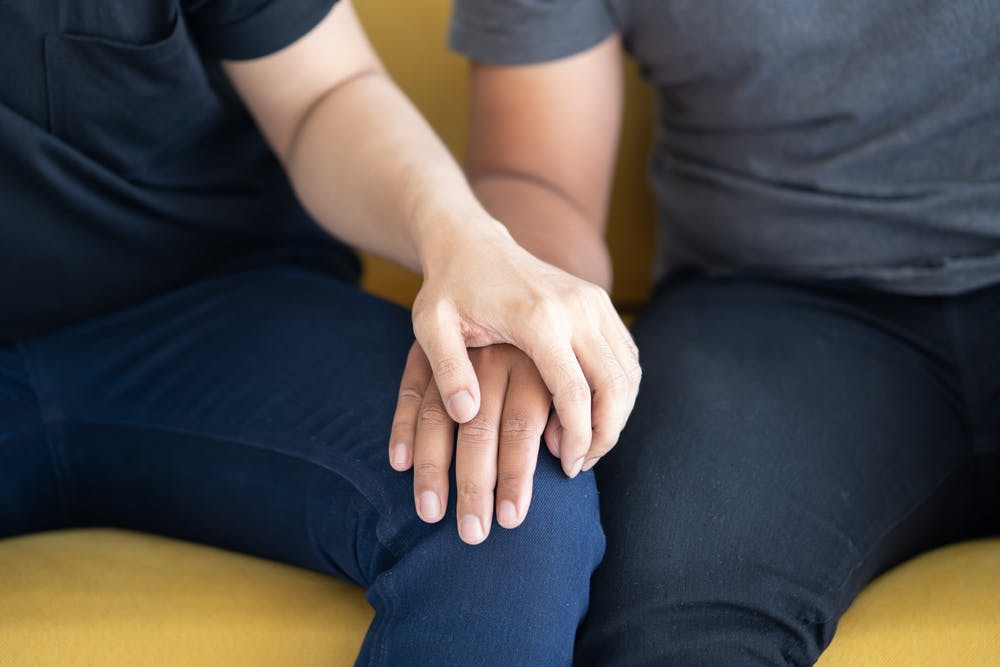
If someone discloses they self-injure, it is important to respond supportively, with compassion, and without judgement. It is important to give the person space to share what they want in their own words, to actively listen, and to validate this is likely a difficult conversation for them.
It is also important to recognise someone may share a bit about their experience now but may not be ready to talk about everything yet. Being patient is therefore important.
Telling someone you are there to listen and support them can go a long way in letting them know they can come to you again if they need to and they are not being rushed or pressured if they are not yet ready.
Read more: Teens with at least one close friend can better cope with stress than those without
What can I say?
To support someone who discloses they self-injure, we recommend using a low key, compassionate tone that communicates you are concerned and are there to listen without judgement.
This involves acknowledging self-injury can be a difficult topic to discuss. You can say:
I recognise this isn’t an easy conversation. However, I appreciate you’re willing to share and I’d like to understand what it’s been like for you lately.
Part of this can also involve a “respectful curiosity”. This involves communicating a genuine interest in a person’s experience. You can say:
I know people self-injure for different reasons. I’m wondering if you can help me understand what self-injury does for you?
Recognise self-injury is often not something someone can just stop. This can go a long way in making the person not feel judged and therefore more likely to talk about it. You can say:
I can appreciate self-injury has been helpful to you, which I can see would make it pretty difficult to stop right now.
Finally, it is important to take care of yourself. Supporting someone who self-injures can take its toll. Be sure to take notice of how you are feeling. It is OK to tell someone you need a break right now and to find some time to look after yourself.
Read more: Most people thinking about suicide don't tell anyone. Here's why and what we can do about it
What can I expect?
If a person discloses their self-injury, take the time to listen to what they are saying, and what support they need right now.
While learning someone self-injures can be challenging, you may find that not only can you support the person, it can bring you closer and strengthen your relationship.
People who self-injure and those who support them can find more information from the following resources: the book Understanding Self-Injury: A Person-Centered Approach; the Self-injury Outreach & Support website; and resources in 11 languages from the International Consortium on Self-Injury in Educational Settings. If this article has raised issues for you, or if you’re concerned about someone you know, call Lifeline on 13 11 14.
Authors: Penelope Hasking, Professor of Psychology, Curtin University
Read more https://theconversation.com/someone-has-told-you-theyre-self-harming-now-what-213983


 Daily Bulletin


