

Changes to free flu vaccine eligibility are a missed opportunity to close NZ’s health equity gap
- Written by: Elizabeth Fenton, Senior Lecturer in Bioethics, University of Otago
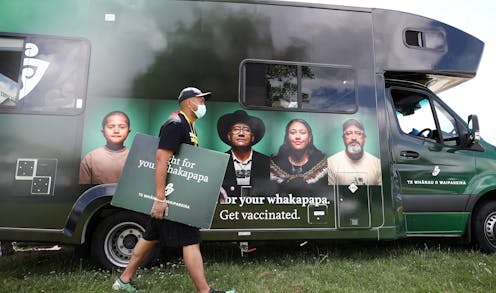
From this week, free influenza vaccination will be available to some New Zealanders (those over 65, with long-term conditions, pregnant or with specific mental health conditions), but Pharmac recently announced it will no longer be free for children under 12 and Māori and Pacific people aged between 55 and 64.
This is the most recent example of a missed opportunity for New Zealand’s health system to improve outcomes and close equity gaps.
We know that free flu vaccination for children is a crucial component of achieving health equity.
Not only is the burden of influenza high in children compared with other groups in the population, but children are also a major pathway for the virus to spread within their whānau and wider communities.
We also know poor-quality housing contributes to worse health outcomes, especially for Indigenous peoples, ethnic minorities and people with low incomes.
Children living in cold, damp houses, and Māori and Pacific children, are more likely to be hospitalised for acute respiratory conditions such as asthma, which are exacerbated by the flu.
Persistent life expectancy gap for Māori and Pacific adults
Māori and Pacific adults have a higher risk of dying from the flu and lower rates of flu vaccination than other groups in the population. A significant life expectancy gap persists between Māori and non-Māori New Zealanders (7.5 years for men, 7.3 years for women).
Even Pharmac’s own clinical advisors noted that wider criteria for free flu vaccination reduce access barriers for people at higher risk from this disease. The Whakamaua Māori Health Action Plan 2020-2025 states that:
achieving equitable Māori health outcomes requires initiatives to respond earlier to Māori health need.
Given the disproportionate burden of influenza on Māori and Pacific people, lower vaccination rates, greater exposure to risk factors for respiratory illness and persistent inequities in life expectancy, a lower age for free flu vaccination for Māori and Pacific adults is essential for achieving equity.
Why equity is different from equality
So why are we not funding free flu vaccinations for children under 12 and Māori and Pacific adults aged 55–64?
One reason is money. Pharmac receives a fixed budget from the government and has to make tough decisions about how to allocate its funding across a range of competing health priorities. In 2022 and 2023, Pharmac widened access to free flu vaccination with funding made available as part of the former government’s response to COVID, but says this funding has now ended.
The second reason is political will. The hard part about achieving equity is that it can mean doing things differently for different groups. This is what makes equity fundamentally different from equality. Sometimes we have to treat people differently to achieve equity.
Despite its apparent commitment to equity for all New Zealanders, our health system and political leaders often focus on “one-size-fits-all” approaches rather than recognising differences in need and access.
We don’t need to look far for examples of other missed opportunities to promote health equity.
When deciding whom to prioritise for COVID vaccination, the cabinet refused to include Māori in the high-risk group at 50 or 55 rather than 65, even though Māori were at greater risk of hospitalisation and have a lower life expectancy. Critics argued that inequity was “hard baked” into the vaccine rollout.
The National Bowel Cancer Screening Programme was initially criticised for adopting a blanket 60–74 age range, when at least half of Māori bowel cancer is diagnosed before age 60 (compared with 30% for non-Māori). Although the age range for this program has since been lowered to 50 for Māori and Pacific people, this has been rolled out in only three districts (Waikato, Tairāwhiti and MidCentral) with no clear commitment to do the same in the rest of the country.
In 2023, Shane Reti, who is now the health minister, described the introduction of an equity adjuster into prioritisation tools for planned surgery as offensive. David Seymour, now an associate health minister, described it as racial discrimination. Despite clear evidence that Māori have longer wait times for elective surgery than non-Māori, these criticisms claim that adjusting for ethnicity (among other factors) would give Māori an unfair advantage.
These examples show how difficult it is to introduce much-needed measures to achieve equity when they require a tailored approach for some groups – not to create an unfair advantage but to rectify an unfair disadvantage. Such measures depend on political courage and an appropriate budget.
But adjusting inclusion criteria for flu vaccination or bowel cancer screening are fairly cheap and simple interventions that can start saving lives immediately. What are we waiting for?
Authors: Elizabeth Fenton, Senior Lecturer in Bioethics, University of Otago


 Daily Bulletin


