

Despite improved WHO regulations, the world remains ill-prepared for the next pandemic
- Written by: Michael Baker, Professor of Public Health, University of Otago
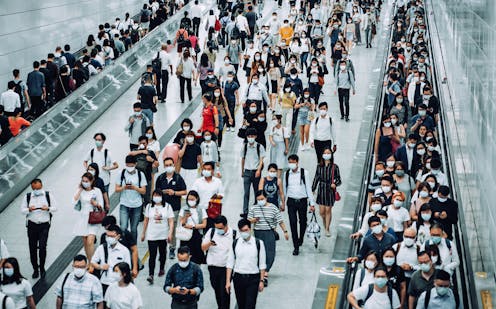
The international community’s recent failure to conclude a global pandemic agreement leaves large gaps in our capacity to deal with the next major infectious disease emergency.
The risk of another pandemic like COVID – the worst in a century – is increasing.
The World Health Organization (WHO) took an important step by adopting useful revisions to the existing legally-binding International Health Regulations.
But while this advance is something to celebrate, it is not enough. Even if governments approve the revised regulations, our best chance of preventing history repeating itself lies in a pandemic agreement.
Global responses to health hazards that cross borders date back to an international sanitary conference in 1851 which focused on measures to limit the spread of cholera. Since then, several initiatives have aimed to improve global health security, including the formation of the WHO itself in 1946.
The International Health Regulations of 2005 were a major step in this evolution. They ushered in the modern era of risk assessment and created a global surveillance system for public health emergencies of international concern.
Nonetheless, it was soon evident the new tools were limited in dealing with the increasingly complex and fast moving threat of zoonotic diseases (when an animal pathogen “spills over” to infect people).
Key changes to the International Health Regulations
Earlier this month, the 194 members of the WHO World Health Assembly passed by consensus several important amendments to the International Health Regulations, including:
adding a definition of a “pandemic emergency” to emphasise the importance of such events within the broader category of public health emergencies of international concern
increasing the focus on prevention with specific mention of “preparedness”
strengthening equitable access to medical products and finance, with specific mention of “equity and solidarity”, and a dedicated “coordinating financial mechanism”
requiring each state to establish a “national authority” to improve the implementation of the international health regulations within and among countries
requiring countries to build a core capacity for “risk communication including addressing misinformation and disinformation”
and modifying the “decision instrument” to enhance the detection of emerging respiratory infections with high pandemic potential.
The proposals that didn’t make it
Not all proposed amendment were achieved. Some commentators had advocated to incorporate the experience of countries in the Asia-Pacific region that used an elimination strategy to delay the spread of COVID, giving time to roll out vaccines and other interventions.
Such measures protected both high-income islands (Aotearoa New Zealand, Australia, Singapore, Taiwan) as well as low and middle-income countries in continental Asia (Vietnam, Thailand, Cambodia, Laos, Mongolia).
These nations generally achieved lower excess mortality than countries where the pandemic was less controlled. Similarly, the concept of elimination at source (sometimes called containment) wasn’t included in this revision.
A range of other potential improvements also failed to make it into the final text. These included an emphasis on preventing zoonotic spillovers from animals, enhanced sharing of scientific data and specimens, and strengthened accountability.
New Zealand now has 18 months to consider the proposed revisions. Along with other states, it may enter reservations to parts it disagrees with, even though this may weaken the coherence of the proposed amendments.
Why we need greater global cooperation
A pandemic agreement could address the many needed reforms that go beyond the International Health Regulations.
But the negotiations to reach global agreement are proving contentious. There have been deep divisions between rich and poorer countries over the sharing and affordable pricing of vaccines, treatments and diagnostics for developing states. The sharing of pathogen data has also proven problematic.
The negotiations have been further undermined by completely unfounded assertions that the WHO will be given power to impose restrictive measures such as lockdowns and vaccine mandates.
Due to these challenges, the international community has not yet agreed on a text for a pandemic agreement. The WHO has announced the next steps for further negotiations, which are already years past their start date.
From the threats of war to environmental devastation and pandemics, no country can unilaterally protect its citizens from the gravest shared threats to humanity. But while the need for global solidarity and cooperation is greater than ever, support for many of the key areas of international law is failing.
We owe it to the memory of the more than 27 million people estimated to have died so far from COVID, and the rising threats to future generations, to do the best we can to achieve a safer and more secure world.
Authors: Michael Baker, Professor of Public Health, University of Otago


 Daily Bulletin


