

Read The Times Australia

Daily Bulletin

How can you help your child tidy up their room (without having a massive fight every time)?

  • Written by: Elizabeth Westrupp, Associate Professor in Psychology, Deakin University
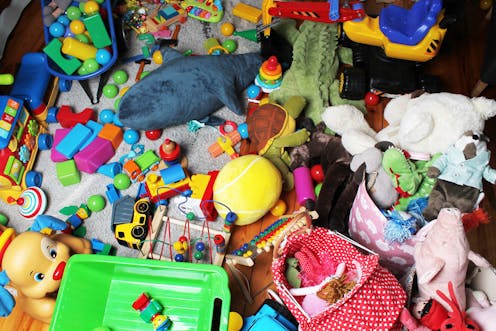
How can you help your child tidy up their room (without having a massive fight every time)?

If you’ve ever opened the door to your child’s room only to be greeted by a sea of clothes, toys and who knows what else, you’re not alone.

Among countless reminders, pleading and threats, parents often find themselves in battle with their children when it comes to tidying up. For so many of us, it is an endless cycle of “try and let it go” and then “triggered and explode”. The ongoing conflict this creates can be stressful for everyone.

But you are not doomed to live with piles of Lego, collected sticks and stones – or rooms full of old food and unwashed dishes until your children leave home. There is a different way to approach this.

Why are children and teens messy?

There are developmental reasons for children being messy.

Children and teens don’t fully develop the part of their brain needed for high-level organisation until adulthood, and can be easily overwhelmed by a tidying job.

This should not get them off the hook, though. Practising organisation skills is great for the brain. Research shows helping with tidying up from as early as 18 months is associated with improved prosocial skills (the ability to work with others).

It can also be hard to keep a room tidy if children have too many toys in their room. This means they have to riffle through things or tip out toy baskets to find a toy. Too much choice can also lead children to quickly move from one toy or activity to the next.

Clothes, papers and books on the floor, near a desk chair and shelves.
Even teenagers are still developing the part of the brain that helps with organisation (and tidying rooms). Delpixel/Shutterstock, CC BY

Why you shouldn’t just clear it up yourself

As a parent we can get caught in a cycle of feeling overwhelmed and frustrated and become disconnected from our child’s perspective. For younger children, play is work – much of their learning happens as they play.

When we interrupt their play and tidy up their masterpiece, or throw out a special object, it can break trust and feel devastating for them.

For teenagers (and even younger children), having personal space is important to develop a healthy identity and sense of control in their world.

So when parents barge into their room and move their things, this can feel like a violation.

How can make tidying up easier?

  • Make time to talk to your child about tidying up at a calm moment (when you’re not asking them to clean anything). Don’t make it a lecture – acknowledge how hard it is to keep their room tidy, ask for their ideas on what might help and decide together on a regular routine (perhaps they always give their room a quick tidy before TV, or it’s a job on a certain day). Discuss what could get in the way and how you will work together.

  • Have fewer toys in your child’s room and a special place for these. This can make the room more appealing and organised, inspire play and creativity, and make tidying up easier.

A bookshelf with neatly arranged toys and boxes.
Having fewer toys in a child’s room and designated spots can make it easier to keep rooms organised. Igisheva Maria/Shutterstock, CC BY
  • Notice moments when your children are doing any kind of cleaning up and acknowledge their efforts. Children love to feel noticed – we all do!

  • Break the task down into smaller parts for older kids. For example, you could suggest, “what about packing all the Lego into that box” rather than just saying “clean up your room”.

  • Be playful with younger children. Cleaning up can be a time for connection. Get them to find all the red toys first, then see how fast they can bring you any socks that need washing.

  • Notice the emotions your child feels when you are asking them to tidy up. See these emotions as an opportunity for connection and guidance. For example, “It’s hard to clean up this amazing fort, you worked so hard on this. I love how cosy it is”. And name emotions as you go. For example, “It’s overwhelming when there is so much to clean. Are you worried about where to start?” Or problem solve together: “What could we clean up first?”

  • With teenagers, use single word reminders, starting with just one thing that needs cleaning (for example, “washing?” Or “plates?”). Single word reminders allow a teen to save face and prevent battles. Watch your tone of voice and body language – try to stay warm, firm and kind.

Authors: Elizabeth Westrupp, Associate Professor in Psychology, Deakin University

Read more https://theconversation.com/how-can-you-help-your-child-tidy-up-their-room-without-having-a-massive-fight-every-time-235517

Business News

The Rise of Digital Marketplaces in the Australian Trade Sector

For decades, the Australian trade and construction sector operated almost entirely on word-of-mouth recommendations and local community networks. Small business owners typically relied on local newspa...

Daily Bulletin - avatar Daily Bulletin

How Immigration Lawyers Can Help

Introduction Visa decisions can shape employment, family life, study plans, travel, and future residence. A small omission can lead to delay, added expense, or refusal. Immigration lawyers assess l...

Daily Bulletin - avatar Daily Bulletin

How Industrial Drying Equipment Supports Efficient Processing

Many industrial processes require moisture to be removed from compressed air, products or process materials before they move to the next stage. Excess moisture can affect equipment performance, produc...

Daily Bulletin - avatar Daily Bulletin

Practical Ways a Whiteboard Can Improve Workplace Communication

Effective communication helps teams stay organised, share ideas and keep track of important information. While digital tools are now common in many workplaces, a whiteboard continues to provide a simp...

Daily Bulletin - avatar Daily Bulletin

Designing Eco-Friendly Custom Water Bottles for Your Next Event

The Evolution of Sustainable Event Merchandise Event planning has undergone a massive transformation over the last decade. Gone are the days when organizers could hand out cheap, single use plastic...

Daily Bulletin - avatar Daily Bulletin

Why Choosing a Professional Florist Melbourne Makes Flower Delivery Impactful

Flowers have a great power to speak when humans cannot express their feelings with right words. Flowers are the best gifts when you are celebrating a birthday or welcoming a newborn child into your fa...

Daily Bulletin - avatar Daily Bulletin

The Business Case for Choosing Australian Fabricators Over Imported Alternatives

For a long time, you might have defaulted to overseas suppliers when sourcing fabricated metal components for a project. The unit price was lower on paper, and the maths seemed straightforward. That...

Daily Bulletin - avatar Daily Bulletin

Australian organisations are relying on business continuity plans built for a far more predictable world

Tariff escalations, supply chain fragility, geopolitical events, and the ongoing threat of cyber disruption have reshaped the risk environment facing Australian organisations. The problem is that ma...

Daily Bulletin - avatar Daily Bulletin

How to Rent a Car for Uber in Melbourne: What Every New Driver Needs to Know

Starting out as an Uber driver in Melbourne is not as complicated as it sounds but getting the vehicle right is where most new drivers get stuck. Uber has strict requirements around vehicle age, condi...

Daily Bulletin - avatar Daily Bulletin

The Daily Magazine

Architectural Window Shading: Solutions for Triangle Blinds, Raked Glazing, and High Ceilings

Mastering Light and Privacy with Specialized Window Coverings Modern architectural de...

From Suburban Streets to Modern Events: Why Australians Still Love the Ice Cream Truck

Did you know Australia consistently ranks among the world's highest ice cream-consuming countries? ...

Will These Bloody Kids Ever Move Out? The Resurrection of the Duplex Says No

Whilst Baby Boomers and Gen Xer’s typically finished school, got a job and moved out of home relativ...

Critical Structural Checks to Prioritise Before Renovating an Older Property

The Australian home renovation market is experiencing unprecedented growth. The total value of thi...

Why Regular Gutter Cleaning Northern Beaches Is Important

Living in the Northern Beaches offers beautiful coastal scenery, fresh air, and leafy surroundings...

Double Glazed Sliding Doors vs Standard Sliding Doors: Key Differences

Sliding doors are a popular choice in modern homes due to their space-saving design and ability to...

How to Plan a Bathroom Renovation Timeline (Without Surprises)

A bathroom renovation rarely feels “small” once work begins. Even modest updates involve multiple ...

What “Extraction Facial” Actually Means (And When It Helps)

“Extraction facial” is one of those skincare terms people use as if it’s one standard treatment, b...

How Compounded Medicines Support Individual Health Needs

Not every patient responds to medicine in the same way. Age, allergies, dosage requirements and sw...