

Why do I get static shocks from everyday objects? Is it my shoes?
- Written by: Niusha Shafiabady, Associate Professor in Computational Intelligence, Australian Catholic University

Door handles, taps, playground slides, furry pets… Getting zapped by static electricity is a common experience. But the physics that causes the spark is surprisingly intricate.
If you’re getting zapped often, understanding the causes of static may help you avoid at least some of the shocks.
What is static electricity?
To understand static electricity, we have to peer inside the building blocks of matter: atoms.
Every atom has a heavy nucleus in the centre and several electrons that orbit this nucleus. The nucleus itself contains subatomic particles called protons and neutrons.
All subatomic particles have intrinsic physical properties, such as mass, spin and charge. Charge is what comes into play when we talk about static shocks. It is either positive or negative. Each electron has a negative charge (-1), while each proton has a positive charge (+1).
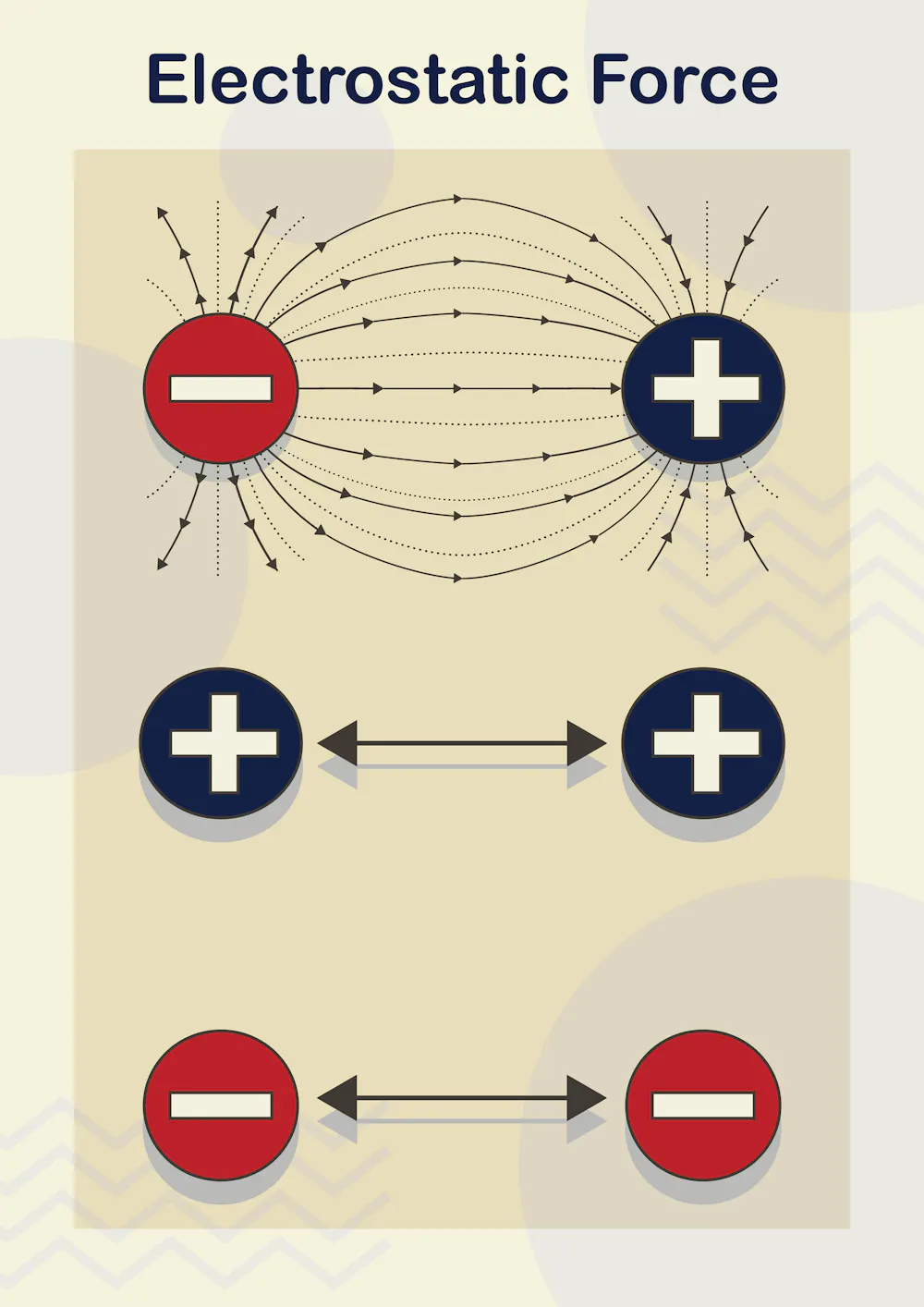
In normal conditions, the number of electrons and protons in an atom is equal. This makes the total electric charge of the atom neutral.
But charged particles exert a force on each other, known as electrostatic force. Opposite charges (positive and negative) attract each other, while charges of the same kind repel each other.
Within an atom, electrostatic force is what keeps electrons orbiting the nucleus. The ones farthest away from the nucleus can sometimes escape, leaving the atom positively charged (more protons than electrons). By contrast, other atoms can attract an electron and become negatively charged (more electrons than protons).
This imbalance is what we know as static electricity.
 Rubbing your hair with a balloon is a great way to demonstrate static electricity.
Yavdat/Shutterstock
Rubbing your hair with a balloon is a great way to demonstrate static electricity.
Yavdat/Shutterstock
From charge to discharge
Now, let’s take two surfaces with a difference in static charge. Say your hand has built up a negative charge by gathering additional electrons. As you reach for a metal object, the electrons hop across, forming a tiny, short-lived electric current.
That current is what’s known as an electrostatic discharge: electrons from a negatively charged object jump to a positively charged one if they’re close enough. The discharge is what you feel as the zap of a static shock.
So why do electrons build up on certain objects, like our own hands or the fur of a cat?
The answer lies with another physical force: friction.
At a microscopic level, even the smoothest surface isn’t perfectly smooth, but rather rough and irregular. When two surfaces slide across each other, all these irregularities cause friction as they “catch” on each other.
In certain materials (for example, copper), a small amount of energy is what makes those electrons jump ship from their atoms. This energy can be supplied by forces such as friction.
So why did the door handle zap me?
The last concept you need to keep in mind is to do with whether materials are good at letting electricity travel through them (conductors), or are good at blocking it (insulators).
The human body is a great conductor of electricity. All you need is some build-up of electrons on your skin from friction, and the next suitable thing you touch will cause a static discharge.
A typical example is if you wear rubber shoes and walk on carpet. The friction between the two materials will cause some of the electrons on the carpet’s surface to transfer to the rubber. Because rubber is an insulator, the additional static charge will be distributed over your body. The next time you touch another conductor – say, something metal – you get a static shock.
You can experience the same effect when taking off a jumper, or brushing your hair. Some dogs and cats may build up static in their fur, and you and your pet can both get a zap when you reach for a pat.
 Static electricity also causes static cling – cat fur builds up an electrostatic charge, and light, positively charged objects like foam peanuts can easily stick to it.
Sean McGrath/Wikimedia Commons, CC BY
Static electricity also causes static cling – cat fur builds up an electrostatic charge, and light, positively charged objects like foam peanuts can easily stick to it.
Sean McGrath/Wikimedia Commons, CC BY
What can I do to prevent static shocks?
Several factors contribute to the frequency and intensity of static shock, including sensitivity, body size, clothing material, temperature and air humidity.
Some people are more sensitive to static shock than others – they just feel it more. Also, a bigger body requires more charge, so smaller people may get zapped more often depending on their clothes, environment and what they touch or the surfaces they walk on.
Dry, cold air also increases the probability of static shock. This is because dry, cold air is a better conductor compared to humid, warm air.
While static shocks aren’t pleasant, they’re usually not harmful. However, they can create nuisance and even damage sensitive electronic devices. A static electricity spark can also ignite flammable gases, so it’s a risk factor for things such as oil and gas transportation.
People who need to avoid static electricity on the job – in computer repairs, for example – may even wear anti-static wrist or waist straps. This is a strip of conductive material connected to a wire on one end, while the other end of the wire is connected to a table leg or something else that transfers the extra electrons to the ground.
There are a few practical tips if you want to reduce static shocks:
use a humidifier to increase air humidity in your home
keep your skin moisturised to reduce friction between your body and clothes
be mindful of what type of sole your shoes have – these have a significant role in building up a static charge. Soles made out of insulating materials like rubber are worse for this than leather, for example.
You can also carry a small metal object in your pocket, like a coin or a key, and touch it to metal surfaces to discharge the electrons on purpose before the static has a chance to zap you.
Authors: Niusha Shafiabady, Associate Professor in Computational Intelligence, Australian Catholic University
Read more https://theconversation.com/why-do-i-get-static-shocks-from-everyday-objects-is-it-my-shoes-240554


 Daily Bulletin


