

The ‘anxiety economy’ is booming. But should companies be profiting from our fears?
- Written by: Paul Harrison, Director, Master of Business Administration Program (MBA); Co-Director, Better Consumption Lab, Deakin University
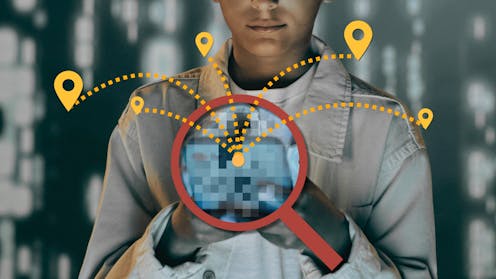
When the newly appointed chief executive of tracking app Life360 recently described the company as part of the “anxiety economy”, it sounded like a throwaway phrase. But it was also surprisingly candid.
The app, which allows families to track their children’s (or parent’s) whereabouts in real time, is on one in ten phones in the US, according to some reports. What began as a niche product has become part of everyday life for many households.
Life360, along with Snapchat’s Snap Map and Apple’s Find My Friends (or Stalk My Friends as it is called in my family) is promoted as a tool for safety and peace of mind.
But the fact its chief executive was comfortable to explicitly link the app to anxiety and its commercial exploitation highlights a much larger cultural phenomenon: we increasingly exist in a world where our unease, vigilance, and even our guilt is being used for profit.
Technology can prey on anxiety
From an evolutionary perspective, anxiety is mostly a good thing. It evolved to prepare us for potential threats – things like a rustle in the grass keeping us awake at night. This bias means negative or threatening information is more easily and quickly processed.
The difficulty is that the world we inhabit now is very different to the savannah. The same vigilance that once protected us from predators now keeps us refreshing apps, scrolling news feeds, and checking digital maps for reassurance.
But technology is not neutral. Indeed, it can serve to amplify this instinct. A tracking app like Life360 sells you peace of mind, but it can also create new anxieties. If your child’s location dot pauses for ten minutes, you might feel compelled to check, to call, or to worry. The reassurance is real, but so is the unease.
The illusion of control offered by these products gives us the sense that monitoring reduces risk, when in fact it can serve to increase our dependence on the technology. In fact, some research suggests that the harder we try to suppress anxiety, the worse it becomes.
Anxiety often presents as a vague unease. The genius of marketing lies in giving that unease a focus; for example, your home might not be safe, your child might not be learning enough, or your skin might not be radiant enough. Once the unease is named, a product can be offered as the solution. In the contemporary and commercial world, consumer products become the “fixes” that we use to defend ourselves from this constant instability.
The ‘guilty mum’ marketing ploy
Parenting is one area of life that marketers have been able to exploit with products to both relieve and reinforce those fears. The “guilty mum” trope captures the way marketing exploits the gap between the actual self (“I can’t always be there for my child”) and the ought/ideal self (“a good mum should always know and protect”).
That gap produces guilt, which ultimately creates demand for products such as baby monitors, organic snacks, and tracking apps. And while the relief is genuine, it is temporary, because the underlying self-discrepancy remains.
Marketers are able to prey on parents’ fears.This helps to explain why facts rarely calm us. Statistically, most children are safer today than at almost any time in history with lower mortality rates, less violence, and better health care. Yet we are drawn to extreme and noticeable events, a bias that makes threats stand out more vividly than the quieter, more ordinary evidence of safety. And because parents do not feel safer, marketers can take advantage of this gap between facts and feelings.
This is why calling it an “anxiety economy” is not hyperbole. Economies emerge when a resource can be cultivated, extracted, exchanged, and scaled. Companies identify new triggers for anxiety, create tools to manage them, and sustain the unease they claim to solve.
Algorithms then capitalise on this fear by testing millions of tiny interventions to determine which notifications, prompts and stories most effectively push our emotional buttons. By agreeing to the terms and conditions, we become part of a larger corporate consumer behaviour experiment.
The concern with these apps is not that they are inherently bad. In fact, they can and do provide a degree of comfort. However, the deeper issue is when the exploitation of anxiety becomes normalised. Once we believe in the necessity of monitoring, it becomes difficult to resist. These convictions are initially framed through the commercial lens built around personal choice, but bleed into daily routines, and eventually become part of the economy.
So, while the chief executive of Life360 may have been unusually unguarded, her statement raises a deeper question: do we want a society that commercialises fear? Anxiety is a universal human emotion, yet choosing to exploit it for profit is entirely cultural.
Markets do not care for us as people do. When even the financial press casually describes investment in a company like Life360 as a “lucrative roller-coaster”, it is worth pausing to ask whether we want investment markets and economies that reward the monetisation of anxiety.
Authors: Paul Harrison, Director, Master of Business Administration Program (MBA); Co-Director, Better Consumption Lab, Deakin University


 Daily Bulletin


