

NSW Police lost a huge strip search lawsuit. It has national implications
- Written by: Vicki Sentas, Senior Lecturer in Law, UNSW Sydney
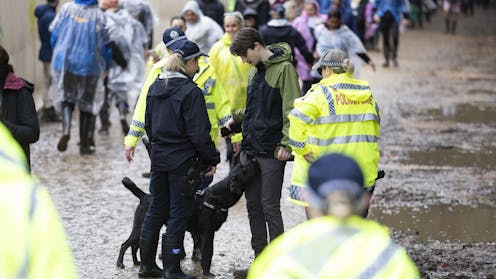
This week, the Supreme Court of New South Wales delivered a landmark judgment against the NSW Police Force for unlawful strip searches. The class action was brought by lead plaintiff Raya Meredith on behalf of all people unlawfully strip searched at music festivals between July 2016 and July 2022.
The court found Meredith’s strip search was unlawful. It also found there was “a gross failure” by police to follow the law, caused by “wholly inadequate” training and supervision of police in the exercise of strip search powers. This resulted in “a flagrant disregard of the rights of the plaintiff”.
With currently more than 3,000 people involved in the class action, this win is likely to have a significant impact on them too, including potential payouts.
This is the largest class action against police in Australia, and the first to clarify the law on strip searches. The findings apply to strip searches more broadly, beyond music festivals. While it’s about NSW law, it’s a lesson to police forces across Australia about what to stop doing now.
The rules of strip searches
In NSW, police can only strip search a person in the field if they suspect, on reasonable grounds, the strip search is “necessary for the purposes of the search” and that “serious and urgent” circumstances make it necessary.
But as my 2019 co-authored research and the Law Enforcement Conduct Commission’s 2020 report shows, rules weren’t always being followed.
Police have been improperly strip searching people for years on the basis that they were suspected of possessing a prohibited drug, or only because a drug dog showed interest.
The court unequivocally said this is unlawful. This is what happened to Raya Meredith at the Splendour in the Grass musical festival in 2018.
‘Total loss of liberty’
After a drug detection dog sniffed in her direction and then moved on, Meredith was taken to a makeshift cubicle.
A personal (pat) search found nothing, but police then directed her to remove her clothing and lift her breasts. Police also directed her to remove her tampon while a female officer inspected her vagina.
After being directed to bend over naked, a male officer entered the search cubicle without warning.
The court said this was an egregious harm to Meredith’s privacy, dignity and bodily integrity that caused her significant humiliation, degradation, fear, distress and a total loss of liberty.
Police broke mandatory safeguards to protect privacy, including to conduct the least invasive search possible and not question during the search. These rendered the strip search unlawful.
None of the officers who conducted strip searches that day made any record why the strip search was necessary, serious or urgent, or whether safeguards were complied with. Along with the drug dog detection sniff, one officer recorded that Meredith “had a smoke with a joint that morning”. Justice Yehia found Meredith never said this: it was likely a mistake by the officer.
For more than two years, the state denied Meredith’s account of what happened and insisted the search was lawful. Then just before the hearing, the position changed, with NSW Police admitting the search was unlawful on some grounds.
Yet the state maintained there were serious and urgent circumstances that justified it. For example, they relied on statistics about the number of hospitalisations for overdoses and deaths, arrests for drug offences and the fact music festivals are known locations for recreational drug use.
Justice Yehia rejected these grounds. These general police experiences and contexts don’t meet the “serious and urgent” tests. It could not be seriously suggested, the judge said, that smoking cannabis before the festival (which Meredith had not) justified a strip search to prevent drug-related harm to her.
Institutional failure
The judgment gives detailed evidence of the systemic failures of NSW Police. In sum, NSW Police’s education, training and monitoring of police conducting strip searches were “wholly insufficient”.
This case grew out of years of advocacy by Redfern Legal Centre for their clients, resulting in sustained criticism of police strip searches, including in academic research, the NSW State Coroners Court, and the Law Enforcement Conduct Commission’s inquiry.
The court also found “exemplary damages” should be awarded for systemic police failures, but deferred decision on the amount to a later date. This means hundreds of millions of damages could be paid out to those who signed up to the class action.
The NSW government ignored the commission’s 2020 recommendations for law reform, deferring to police. It now faces major legal and financial consequences.
For other Australian jurisdictions, the judgment should be a persuasive checklist for interrogating how their police forces are interpreting and following their own specific laws.
This class action forces public police accountability. The question though, is whether the state and NSW Police will simply see it as the cost of doing business.
Authors: Vicki Sentas, Senior Lecturer in Law, UNSW Sydney


 Daily Bulletin


