

Read The Times Australia

Daily Bulletin

What will happen to the Louvre jewellery after the heist? There are two likely scenarios

  • Written by: Andreas Schloenhardt, Professor of Criminal Law, The University of Queensland
What will happen to the Louvre jewellery after the heist? There are two likely scenarios

The spectacular heist of jewellery from the Louvre museum in Paris has many people wondering how a theft like this could occur in broad daylight and what might happen to the items that were stolen from the museum.

In a matter of minutes, four thieves were able to enter through a first-floor window, break into secure glass displays, and take nine items of jewellery of immeasurable value.

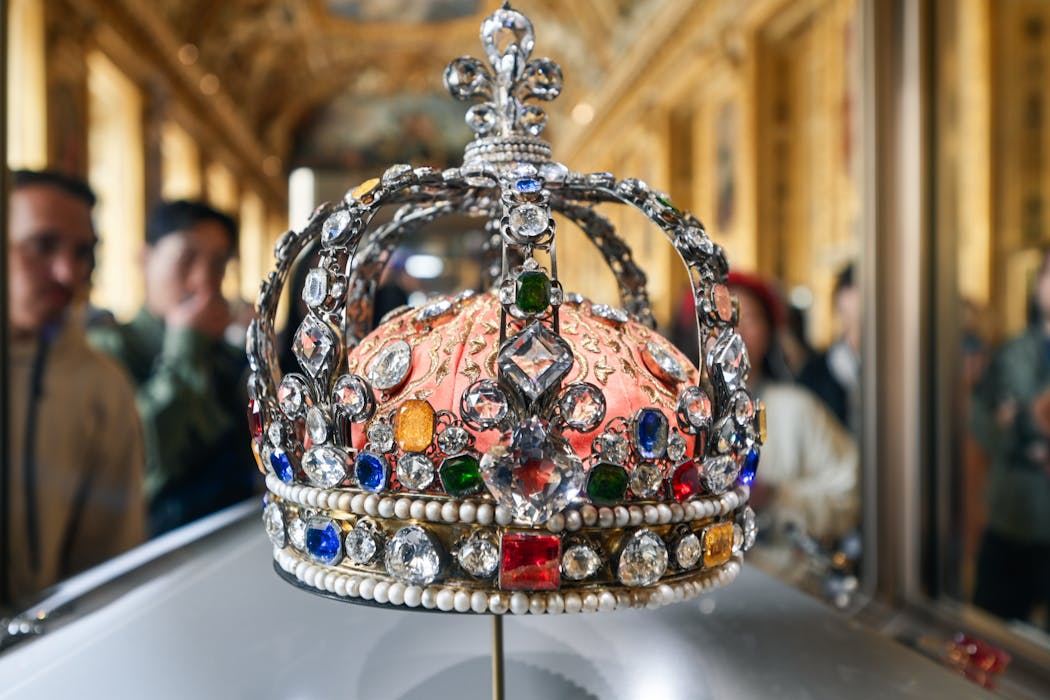
Although an alarm was set off and museum guards were nearby, the thieves were able to escape quickly, using motor bikes to get away. They dropped one stolen item, a diamond and emerald-encrusted royal crown that had belonged to Empress Eugénie, Napoleon III’s wife.

Their loot include jewellery from French imperial times – brooches, necklaces, earrings and a tiara. The French prosecutor’s office said the jewels were worth some 88 million euros (A$157 million), not including their historical value.

The speed and professionalism of the heist shows this was a well-planned crime, carried out by highly skilled perpetrators. That suggests they are linked to organised criminal groups.

Several media outlets reported a number of smaller thefts from French museums in recent weeks, including gold nuggets from the Paris Natural History Museum. There is no suggestion these thefts were linked to the Louvre heist.

What might happen to the loot?

The stolen jewellery includes well-known pieces that are easily recognisable. This will make it difficult, if not impossible, to sell them on the black market, even to well-heeled collectors and buyers.

This problem is well-known from other museum heists – such as the theft of the Canadian “Big Maple Leaf” giant gold coin from Berlin’s Bode Museum in 2017 or the famous heist of 13 masterpieces by Degas, Manet and Rembrandt from the Isabella Stewart Gardner Museum in Boston in 1990. Those paintings have never been recovered.

An empty frame in the Boston museum where Rembrandt's 'The Storm on the Sea of Galilee' used to hang.
Two visitors to the Gardner Museum, Boston, observe where a Rembrandt painting used to hang, before it was stolen. John Tlumacki/The Boston Globe via Getty Images

Instead, most experts believe one of two scenarios are more likely.

In the first, the jewellery would be broken down into smaller pieces. Diamonds and other gemstones may be taken out, altered and then offered for sale. Silver and gold may be used to manufacture other pieces or may be sold separately.

This scenario would make it easy to conceal the origin of the pieces and sell them openly or online. The combined value, however, would be significantly lower compared to leaving the pieces intact. It is thus doubtful the thieves targeted the specific jewellery for this purpose.

Scenario two would involve the thieves, or more likely the masterminds behind them, trying to sell the pieces back to the Louvre or trying to extort money from the French government for their return.

This may be done through brokers or other middlemen and may not happen for a while, until there is less public and media attention and the perpetrators feel sufficiently safe to contact – directly or indirectly – museum or state authorities.

Given the historical significance of the pieces coupled with the embarrassment caused by the heist, the Louvre and the French government would be keen to have the pieces returned as swiftly as possible and might be willing to negotiate, albeit secretively.

Much of this remains, however, speculation. Only a few days have passed since the heist occurred and many questions about the events, perpetrators and their motives remain unanswered. And just who may be behind this spectacular heist from France’s largest museum has everyone guessing.

Similarities with a Dresden museum heist

The Louvre theft brings to mind the jewellery heist at the Green Vault at the Zwinger Palace in Dresden, Germany, in 2019.

In this case, the perpetrators had closely examined the museum’s security system for many days and were able to enter the building without being caught on camera. They entered through a window on the first floor and within minutes stole 21 pieces of jewellery from several displays.

Unlike the Paris heist, the Dresden thieves entered at night and used brute force to damage the displays to take their loot.

An employee stands in the Jewel Room of the Historical Green Vault at the Zwinger Palace in Dresden
The Jewel Room of the historical Green Vault at the Zwinger Palace in Dresden, which was robbed in 2019. Sebastian Kahnert/picture alliance via Getty Images

Some years after the robbery, German authorities were able to identify and arrest the thieves involved in the heist – all five were members of a notorious Berlin-based crime family.

The perpetrators have since been tried and convicted and are serving long jail times. Most of the jewellery was retrieved and returned – unaltered – to its famous home.

It is hoped the French authorities will soon be similarly successful.

Authors: Andreas Schloenhardt, Professor of Criminal Law, The University of Queensland

Read more https://theconversation.com/what-will-happen-to-the-louvre-jewellery-after-the-heist-there-are-two-likely-scenarios-267966

Business News

How Businesses Can Prepare for Unexpected Power Outages

Power failures can occur quickly. The supply may be interrupted by bad weather, issues with the electricity network, damaged equipment or local construction work. This can be just a hassle for a fam...

Daily Bulletin - avatar Daily Bulletin

How Chatswood Tutoring Can Fit Into a Student’s Weekly Routine

Create a Predictable Weekly Structure A consistent weekly routine can make study easier to manage when students are balancing several subjects. Chatswood tutoring can provide a fixed learning point a...

Daily Bulletin - avatar Daily Bulletin

The Rise of Digital Marketplaces in the Australian Trade Sector

For decades, the Australian trade and construction sector operated almost entirely on word-of-mouth recommendations and local community networks. Small business owners typically relied on local newspa...

Daily Bulletin - avatar Daily Bulletin

How Immigration Lawyers Can Help

Introduction Visa decisions can shape employment, family life, study plans, travel, and future residence. A small omission can lead to delay, added expense, or refusal. Immigration lawyers assess l...

Daily Bulletin - avatar Daily Bulletin

How Industrial Drying Equipment Supports Efficient Processing

Many industrial processes require moisture to be removed from compressed air, products or process materials before they move to the next stage. Excess moisture can affect equipment performance, produc...

Daily Bulletin - avatar Daily Bulletin

Practical Ways a Whiteboard Can Improve Workplace Communication

Effective communication helps teams stay organised, share ideas and keep track of important information. While digital tools are now common in many workplaces, a whiteboard continues to provide a simp...

Daily Bulletin - avatar Daily Bulletin

Designing Eco-Friendly Custom Water Bottles for Your Next Event

The Evolution of Sustainable Event Merchandise Event planning has undergone a massive transformation over the last decade. Gone are the days when organizers could hand out cheap, single use plastic...

Daily Bulletin - avatar Daily Bulletin

Why Choosing a Professional Florist Melbourne Makes Flower Delivery Impactful

Flowers have a great power to speak when humans cannot express their feelings with right words. Flowers are the best gifts when you are celebrating a birthday or welcoming a newborn child into your fa...

Daily Bulletin - avatar Daily Bulletin

The Business Case for Choosing Australian Fabricators Over Imported Alternatives

For a long time, you might have defaulted to overseas suppliers when sourcing fabricated metal components for a project. The unit price was lower on paper, and the maths seemed straightforward. That...

Daily Bulletin - avatar Daily Bulletin

The Daily Magazine

Why European Vehicles Demand Specialised Maintenance on Australian Roads

European cars, encompassing premium brands like BMW, Audi, Mercedes, and Volkswagen, are highly soug...

How Melbourne Businesses Can Retain Top Talent Through Visa Sponsorship

Melbourne businesses are facing an increasingly complex hiring landscape. According to the Jobs and ...

Clever Ways to Combat Dampness and Maintain a Healthy Bathroom Environment

Australians currently spend more than 90 percent of their time indoors. This modern lifestyle heavil...

How Registering a Company in Singapore Can Support Business Growth

Choosing where to register a business can influence how easily it grows, attracts customers, and e...

What Business Owners Should Know About Company Registration in Hong Kong

Hong Kong is a popular location for entrepreneurs looking to establish businesses with internation...

What Entrepreneurs Should Know About the Benefits of Registering a Company in Australia

Starting a business involves more than finding customers and offering a good product or service.  ...

From Free-to-Air to Netflix: Where Australian Brands Are Spending Their TV Dollars Now

Not long ago, an ad break meant one thing in Australian homes: free-to-air television. Today it mi...

Why South Australia Leads the Country on Home Batteries

South Australia has long punched above its weight in renewable energy. The state has one of the hi...

Diagnosing Common Pool Problems in an Australian Summer

An Australian summer puts backyard pools under serious pressure. High temperatures, intense UV, he...