

Finally, Indigenous peoples have an influential voice at COP30. They’re speaking loud and clear
- Written by: Danilo Urzedo, Research fellow, The University of Western Australia
Indigenous peoples are on the vanguard of climate action. Longstanding relationships with land means they endure the direct consequences of climate change. And their unique knowledge offers effective solutions to climate problems.
But despite this, international climate policies have fallen short of encouraging Indigenous leadership. With the UN climate summit hosted in the Amazon for the first time, COP30 marks an unprecedented effort to elevate Indigenous voices.
Returning to Brazil again after the 1992 and 2012 Rio conferences, COP30 has the largest Indigenous delegation in the summit’s history. More than 3,000 Indigenous representatives from around the world are in the Amazonian city of Belém.
Inside and outside the negotiation rooms, Indigenous organisations and coalitions have brought an unprecedented agenda to the summit: pressure for climate justice centred on the recognition of land rights and fair financing mechanisms.
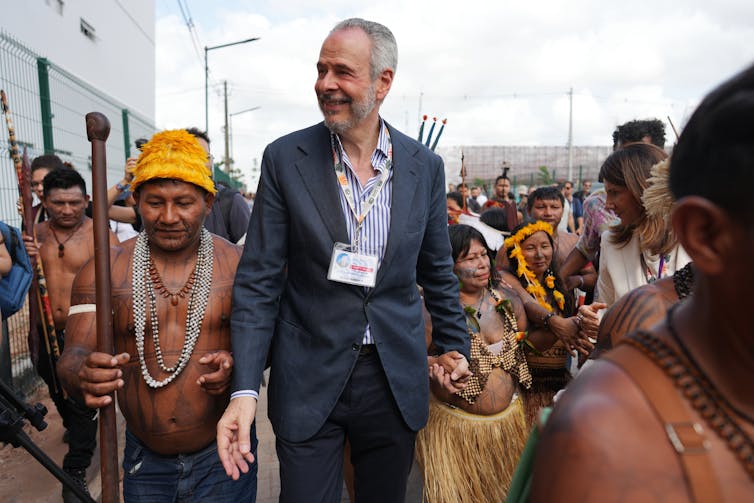
Indigenous voices in diplomacy
A new form of climate diplomacy is emerging. This shift marks the creation of space for Indigenous delegates to participate in formal discussions that were previously exclusive to government officials.
Since 2019, the UN’s Local Communities and Indigenous Peoples Platform has expanded the Indigenous role in official negotiations. At this year’s summit, more than 900 Indigenous delegates – a record number – are participating in official debates.
Led by Brazil’s Minister for Indigenous Peoples, Sônia Guajajara, the COP30 presidency has encouraged Indigenous leadership in decision-making. This includes giving Indigenous delegates seats in negotiation rooms and embedding their demands in climate pledges and finance mechanisms.
“Indigenous Peoples want to take part, not just show up”, said Guajajara. “We want to lead and be part of the solution. So far, the investments driven by COP decisions have failed to deliver results – the 1.5°C goal is slipping out of reach”.
But turning community participation into political influence requires more than participation. Initiatives such as Kuntari Katu in Brazil assist Indigenous leaders in connecting their priorities with broader climate policies. Such training provides modules on topics such as carbon market mechanisms and equips Indigenous representatives with tools to communicate their priorities in climate debates.
Indigenous influence at COP30 is not confined to formal diplomacy. Protests inside and outside the COP venue have amplified long-sidelined demands. Under the rallying cry “Our land is not for sale”, one of the demonstrations occupied areas of the COP30 venue with direct confrontation with the security staff.
Thousands of activists also joined a four-kilometre march in the host city of Belém to call for action from leaders to stop environmental destruction. These protests have brought global attention to injustices that climate politics have long tried to contain. They highlight unresolved land-tenure conflicts and the rising violence faced by Indigenous communities on the frontline of climate impacts.

Land rights as climate solutions
Indigenous territories deliver some of the world’s most effective responses to the climate crisis, from curbing deforestation to storing vast amounts of carbon. Yet much Indigenous land remains without formal recognition, leaving it exposed to invasions by illegal mining, agribusiness expansion, and land grabs, including for renewable energy projects.
COP30 has brought commitments to recognising Indigenous territories as climate solutions. During the opening ceremony, Brazil’s President Luiz Inácio Lula da Silva emphasised the centrality of Indigenous territories to promote effective climate action. World leaders pledged to secure 160 million hectares of Indigenous and community lands by 2030.
Indigenous organisations say pledges remain far from sufficient given the threats to their lands. The Munduruku Indigenous community, an indigenous people living in the Amazon River basin, made this clear with a major blockade at COP30. Their action created long queues at the summit entrance, delaying thousands of delegates. The disruption compelled the COP presidency to meet with Munduruku leaders, who pressed for the demarcation of their territories and the right to be consulted on development projects in their territory.
Fair climate finance
One of COP30’s major negotiation challenges is finalising the Baku-Belém Roadmap, which aims to unlock A$1.5 trillion in climate funding. Yet climate finance mechanisms have a long history of undervaluing Indigenous knowledge and governance. Indigenous organisations say that fairness must be central to these pledges.
At the Leaders’ Summit, a multilateral coalition launched the Tropical Forests Forever Fund. This commits A$7.6 billion to protect over one billion hectares of forests. With backing from 53 nations and 19 sovereign investors, the fund earmarks 20% of its finance for Indigenous projects. The Forest Tenure Funders Group also renewed its pledge, with a commitment of A$2.7 billion to secure Indigenous land rights.
Still, Indigenous advocates warn climate finance must go beyond dollar amounts. They want a shift in who controls the funding and how projects are governed. Placing Indigenous leadership at the centre of financing means making sure Indigenous communities can receive funding directly and have fair agreements that protect them from financial risks.
Transformative leadership
UN climate conferences have long been criticised for delivering incremental progress but little systemic change. Yet signs of political transformation are emerging.
Beyond climate debates, significant Indigenous leadership is gaining momentum across other international environmental policies. In 2024, the UN’s meeting to combat desertification formalised a new caucus for Indigenous Peoples, while the Convention on Biological Diversity established a permanent Indigenous subsidiary body.
These growing political shifts reveal that effective environmental actions depend on dismantling power inequalities in decisions. Inclusive leadership in policymaking may not completely address the environmental crisis, but it marks a turning point as historically silenced voices begin to lead from the centre.
Authors: Danilo Urzedo, Research fellow, The University of Western Australia


 Daily Bulletin


