

We can learn a lot from disasters, and we now know some areas don't recover
- Written by: Ed Blakely, Honorary Professor in Urban Policy, United States Study Centre, University of Sydney
Natural disasters were once regarded as a problem for the developing world, with reports of these rarely leading the news. Hurricanes Katrina and Sandy punctured that insularity in the US thanks to a malevolent combination of extreme weather events and population growth – especially in highly inappropriate places like storm-surge zones.
Elsewhere, seismic events struck the heart of major cities such as Christchurch and Kobe where the cities’ structures were woefully ill-prepared.
Away from the big cities, though, disasters can still be “over the horizon” events. Remoteness from centres of economic and political power impedes long-term recovery. Some towns never recover.
Rebuilding small communities on the same site in the same way seldom works. Instead, this lengthens the recovery or prevents it happening altogether.
Disasters hit rural, remote and small fringe communities particularly hard. The impacts range from property and infrastructural damage, deaths and injuries, stock, crop and other agricultural losses to destruction of wildlife habitats and even iconic landscapes.
In some places the local economy may consist of little more than one or two “industries”. Examples include Marysville in central Victoria (retail and hospitality and still not recovered from the Black Saturday bushfires of February 7, 2009), Wilcannia in western New South Wales (arts and crafts), and Malanda (timber) and Millaa Millaa (sugar) in north Queensland. The economic resilience of these towns is wafer-thin.
These small places are less able to respond quickly to disasters because they are not critical parts of the global economic infrastructure and have a less powerful political voice. They also have less capacity to tap into the human capital and material resources of larger, more recognised centres.
Living in the danger zones
The simple dichotomy between rural and city, though, is becoming muddied. Particularly in the developed world, once-isolated regions are undergoing urbanisation.
“Sea-changers” and “tree-changers” are moving in unprecedented numbers from cities in Australia and the western US to non-metro and peri-urban areas prone to storm surge and fire.
These are not “rural and remote areas” in a traditional sense; they are often closely connected with cities that can buffer them from the worst economic effects of a disaster. But fringe areas of major cities have poorer infrastructure, which hampers recovery. An example is the holiday location of Queens in New York, where one of the authors was engaged in the recovery program. The area has struggled after Sandy.
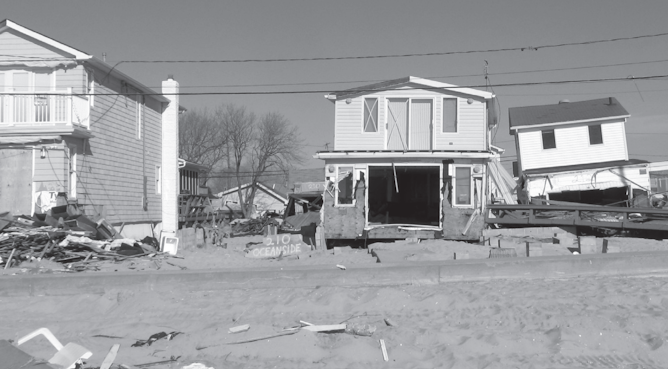 Seafront homes in Queens, New York, bore the brunt of the damage inflicted by Superstorm Sandy.
Ed Blakely, Author provided
Seafront homes in Queens, New York, bore the brunt of the damage inflicted by Superstorm Sandy.
Ed Blakely, Author provided
As well as not being as well resourced, these “wildland–urban interfaces” can be more hazardous places to live. In particular, the setting of new dwellings in treed landscapes creates a greater fire hazard. Residences are often located away from good roads, which hinders access and makes fires harder to deal with.
Being in city workplaces for much of the day, new inhabitants often have little feel for the local ecology. As a result, they may alter vegetation and wildlife patterns. This has marked impacts on the potential for fire and flooding.
City-siders may also import pets that endanger local flora and wildlife. They may even think they can “fight rather than flee”. They often do not know how or where to evacuate, which heightens the risks to fire and rescue personnel.
Response, recovery and rebuilding
There are two distinct post-disaster phases: first-response rescue and relief; and later recovery and rebuilding. Rebuilding clearly is an intrinsic part of recovery, but recovery also requires social and cultural rehabilitation.
Furthermore, the distinction between rescue/emergency/response and recovery/rebuilding depends on the area in question: the recovery phase in developed countries may not begin until the response phase has run its course. After the Black Saturday bushfires in Kinglake and Marysville, for example, the coroner first had to complete her work, which took several weeks.
 Learning from the pollution of Canberra’s dams following the 2003 bushfires, authorities acted to protect Melbourne’s water supply after Black Saturday.
Alan Porritt/AAP
Learning from the pollution of Canberra’s dams following the 2003 bushfires, authorities acted to protect Melbourne’s water supply after Black Saturday.
Alan Porritt/AAP
The impact of a single event may be compounded by the triggering of one or two further events. For instance, the January 2003 fires in Canberra led to pollution of the city’s water supply following torrential rain in the catchments.
Water authorities, made wiser by this event, acted to protect Melbourne’s drinking water after Black Saturday. They transferred water from dams in fire-affected catchments to unaffected reservoirs.
Can targets promote recovery?
The organisation of the recovery after the Kobe earthquake in Japan in 1995 provides a developmental model for measuring progress. In particular, Hyogo Prefecture was able to meet three key targets:
rebuild all damaged housing units in three years;
remove all temporary housing within five years; and
complete physical recovery in ten years.
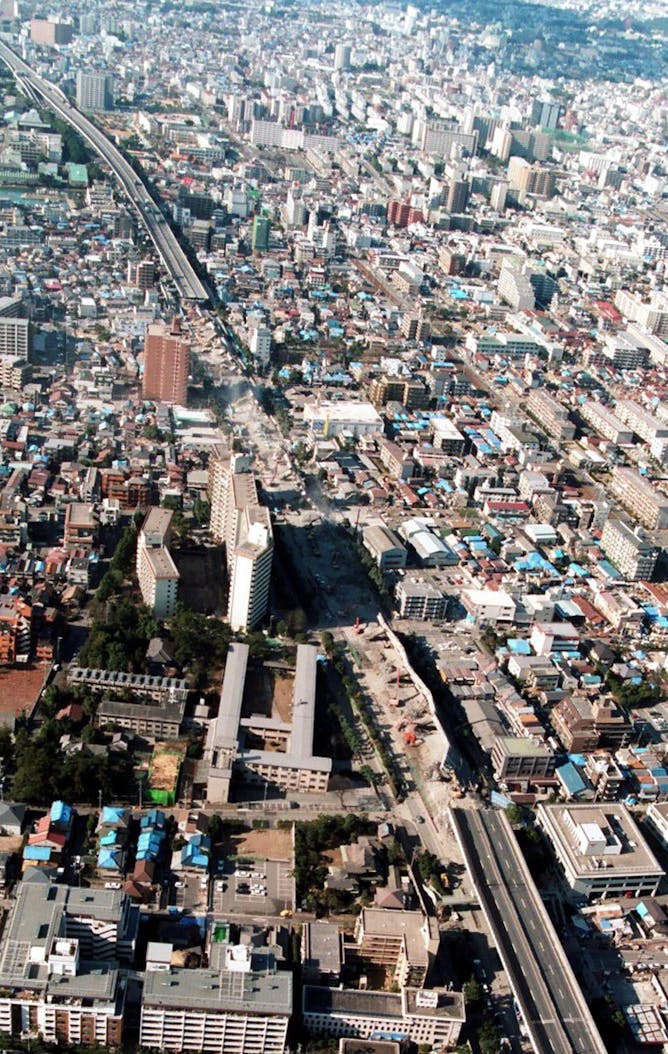 In 1995, Kobe was hit by one of the biggest earthquakes on record, but the city benefited from a highly structured approach to recovery.
Kobe City/EPA
In 1995, Kobe was hit by one of the biggest earthquakes on record, but the city benefited from a highly structured approach to recovery.
Kobe City/EPA
Having targets was critical to directing and motivating all the stakeholders, including the national government’s investment. This proved to be the foundation for Japan’s approach to recovery following the 1995 earthquake.
Unfortunately, it usually takes a string of major disasters for governments to start integrating disaster resilience and recovery into their legislative programs in any meaningful way. A rethink is overdue of where disaster response emphases should lie, especially in economically well-resourced countries given the rising incidence of major disasters within them.
Preparation aids recovery
A focus on hardening structures provides a better return in limiting damage. Italy has had at least eight devastating earthquakes in the past 40 years.
Despite this, less than 20% of renovated buildings comply with earthquake standards – even though it would add hardly anything to the final bill.
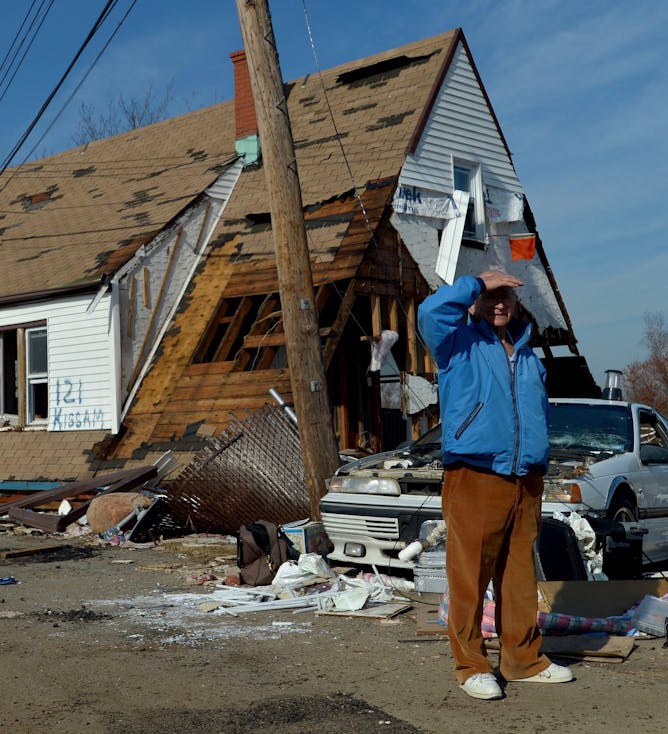 Hurricane Sandy’s impact focused attention on the resilience of emergency preparedness and response capabilities.
Justin Lane/EPA
Hurricane Sandy’s impact focused attention on the resilience of emergency preparedness and response capabilities.
Justin Lane/EPA
Preparedness for disaster improves economic recovery should such sites (or their like) fall victim to extreme events again. The NYS Respond Commission adopted measures focused on “improving the strength and resilience of New York State’s emergency preparedness and response capabilities” after Superstorm Sandy.
As the frequency of disasters rises, few countries in the developed world have chosen to establish standing national recovery programs or authorities. Authorities should also mandate shifting settlements away from high-risk zones, such as ridges, floodplains and shorefronts.
The costs of failing to act are likely to cripple future government budgets and seriously impact economic growth. Australia’s Productivity Commission has recommended:
Australian government post-disaster support to state and territory governments (states) should be reduced, and support for mitigation increased.
Don’t just rebuild, reposition!
Disasters offer a one-off opportunity for renewal of a different kind, rather than more of the same. Examples are Kobe’s repositioning from a port to a high-technology-oriented economy after the 1995 earthquake, or New Orleans reinventing itself as a centre for medical research after Hurricane Katrina in 2005.
In addition, disasters provide opportunities to toughen buildings and other infrastructure to withstand future events and even to embody low-carbon measures.
Recovery needs to be treated differently according to place, history and size. It’s not about getting back to where you were, but rather grasping a repositioning opportunity to create a better, more resilient place.
This article draws on the authors’ paper, Assessing non-metro recovery across two continents: issues and limitations, which appeared in the September 2016 issue of Disasters.
Authors: Ed Blakely, Honorary Professor in Urban Policy, United States Study Centre, University of Sydney


 Daily Bulletin


