

The concept of 'western civilisation' is past its use-by date in university humanities departments
- Written by: Catharine Coleborne, Dean of Arts/Head of School Humanities and Social Science, University of Newcastle
A number of NSW and ACT universities are vying for the opportunity to access funding from the Ramsay Centre for Western Civilisation, which aims to “revive” liberal arts and the humanities in university education in Australia.
 John Howard: launched the Ramsay Centre on Monday.
Dean Lewins/AAP
John Howard: launched the Ramsay Centre on Monday.
Dean Lewins/AAP
The centre, launched on Monday by former prime minister John Howard, has the support of former Labor leader Kim Beazley, and former prime minister Tony Abbott. The centre defines “western civilisation” through classical studies, including ancient Greek and Rome, the European renaissance and enlightenment, modernism, and Christian thought and philosophy. It seeks to put European cultural production at its heart.
The idea is to reform the current Bachelor of Arts degree in Australia by reinforcing the traditional western foundations of the degree. The centre will partner with universities to create the degree, and offer scholarships.
The announcement is a welcome endorsement of humanities disciplines such as literature, history, philosophy and classics. Yet the shaping of a Bachelor of Arts curriculum around western European concepts of knowledge should be viewed very carefully.
The concept of “civilisation”, and particularly “western civilisation”, rose to prominence in universities after World War II. However it quickly became outmoded. The Ramsay Centre announcement suggests a return to retrograde understandings of the arts at a time when we should be expanding our sense of the humanities to include the increasing number of students from diverse backgrounds.
For example, in 2016 nearly half of all preschool children in NSW came from language backgrounds other than English. Universities will eventually need to cater to these students as they make their way through the education system.
A hierarchical view
The “civilisation” model of history, which suggests peoples and empires existed separately from one another, and rose or fell over time, is now viewed as deeply flawed. The problem with this view of peoples and cultures as civilisations is that it is hierarchical, with some civilisations viewed as superior to others.
Such hierarchies of thought tend to inscribe inequalities between groups and peoples. The model is challenged by leading international scholars of world history.
Western civilisation is a concept partly based on the belief that the world can be divided neatly into west and east, for example, the ancient civilisations of Greece and Rome, and those of Asia and Islam. However this denies centuries of complex systems of trade, communication and cultural exchange between different peoples.
For instance, the 19th-century Ottoman empire, which included parts of western Asia, Africa, and eastern Europe, was seen as an eastern civilisation. But in fact, it was never separate from the west: its peoples and cultures interacted with western European peoples and cultures.
Immediately after WWII, it was important for historians to reassert the dominance of western nations because it allowed the Anglo-American victors of war to tell their story as having a longer history. This history tended to be written inside elite institutions, including English universities. These imperial universities were not yet very open places, and non-European students from colonial backgrounds (and many women) only rarely gained entry.
Towards a world history
Historians started criticising the civilisation model of history in the 1950s. Instead they proposed a “world history”. Instead of viewing the past history of the world through competing civilisations, world history views societies and peoples as intersecting groups.
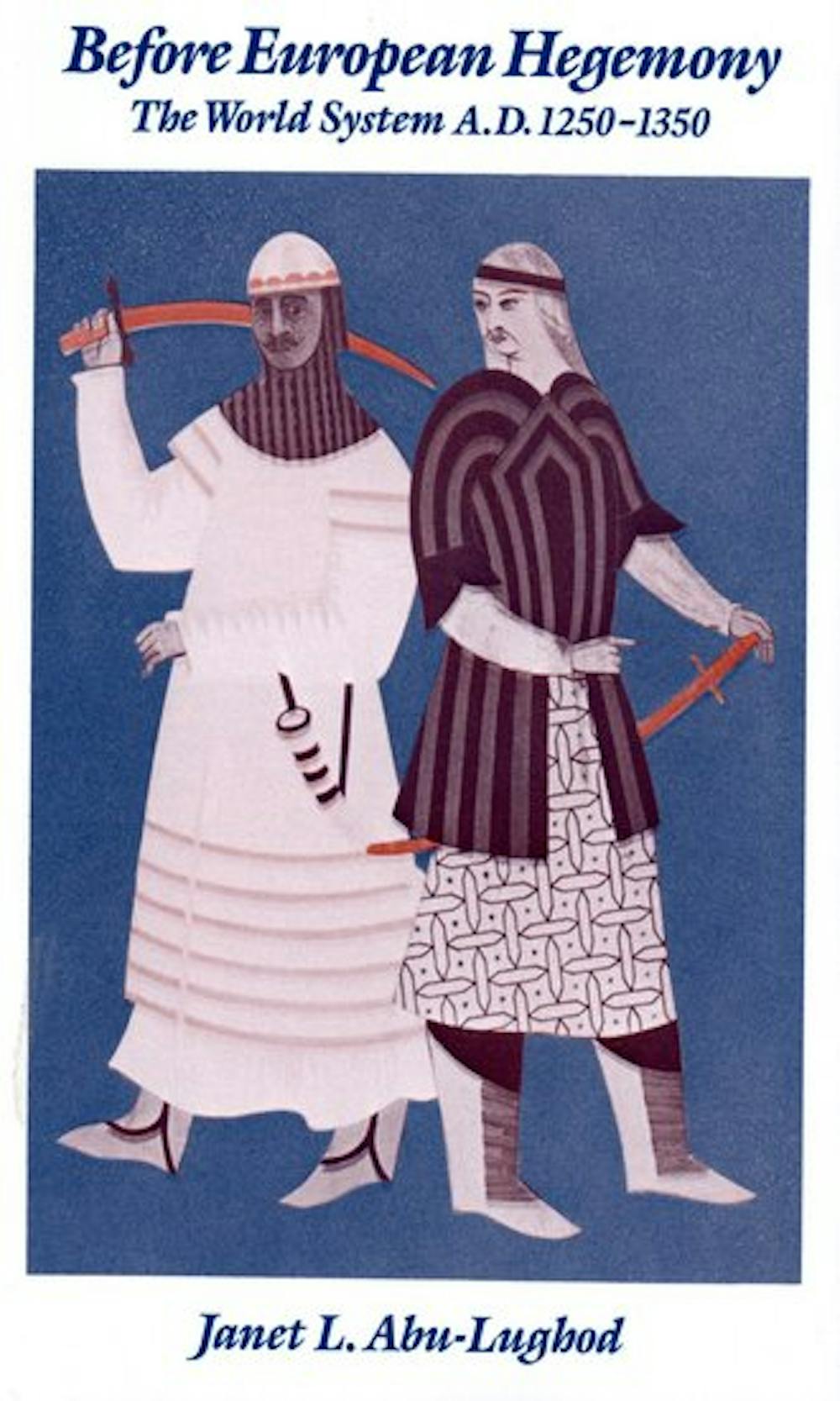 For example, historian William H. McNeill saw the world as highly integrated place of communication, cultural, social and political connections, characterised by the spread of intellectual ideas and commodities over time, a challenge to the idea of the preeminence of the west. His book Plagues and Peoples (1976) explained this integration through the spread of disease. Eric Hobsbawm, a towering figure in British history, wrote about about the importance of a seeing our world as a global village in his many works.
One of the most exciting books in world history was written by Janet Abu-Lughod, who wrote about the world system before European dominance. This pre-modern economic, cultural and trade system extended across Eurasia in the 13th century, and suggested a network prior to the modern system, which arose in the 17th century.
In other words, peoples, as well as things, have always been on the move, and have always turned up in surprising ways as being connected with each other. The history of Australia and its peoples is no different. Our connections with the global world through its peoples make us a richer nation.
Mobile Australians
Australia’s students are increasingly diverse. According to the Centre for Education Statistics and Evaluation, in state secondary schools in NSW, a third of students come from non-English speaking backgrounds. The number of students speaking Arabic, for example, is climbing steadily: it was at 35,735 in 2016. The group includes refugees, new arrivals, and international students here by virtue of their families’ mobility.
The proportion of Indigenous students is also growing. Aboriginal and Torres Strait Islander students currently make up 6.8% of all NSW state school enrolments.
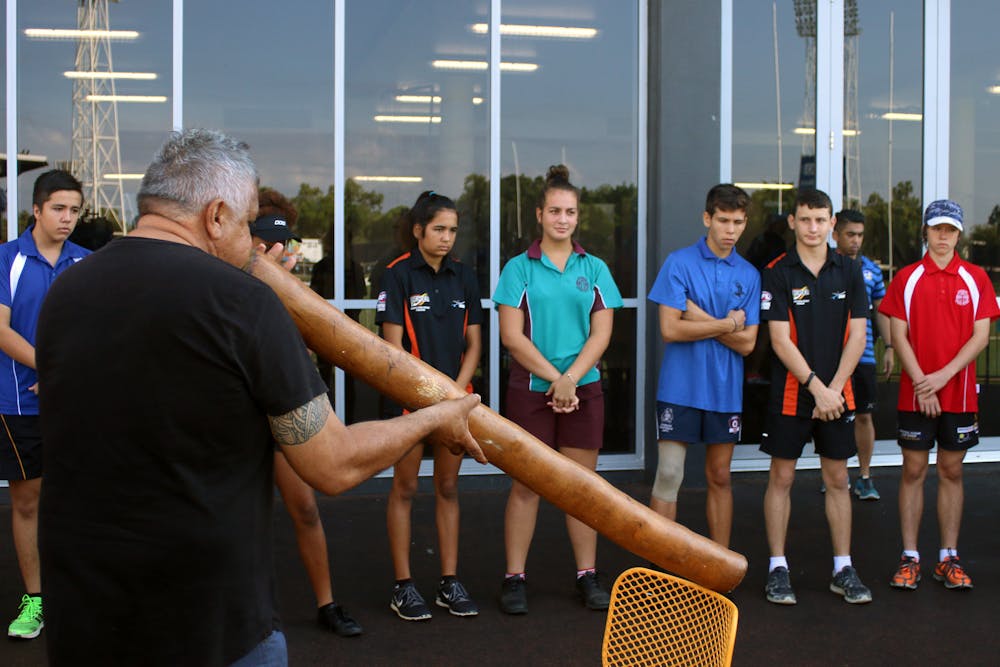 Local Darwin school children and some Parramatta Eels players at a NRL Indigenous youth summit in Darwin last year.
Neda Vanovac/AAP
Local Darwin school children and some Parramatta Eels players at a NRL Indigenous youth summit in Darwin last year.
Neda Vanovac/AAP
University education for these students should extend our collective sense of history, and universities must avoid narrowing the liberal arts to an old-fashioned view of a world with borders. These borders tend to be reinforced through the focused study of specific peoples and places, such as western civilisation.
Universities should embrace the multiple languages, literature, histories and perspectives of a broad array of cultures and peoples, a task made more pressing by our changing demographic. We need to teach students to relate to our neighbours near and far, and to celebrate difference and diversity.
Authors: Catharine Coleborne, Dean of Arts/Head of School Humanities and Social Science, University of Newcastle


 Daily Bulletin


