

Sustainable re-use and recycling work for heritage buildings and places too
- Written by: Jason Byrne, Associate Professor of Environmental Planning, Griffith University
This article is part of our Building on Heritage series on preserving heritage buildings and places while making them as environmentally sustainable as possible.
The desire to preserve the special character and historical significance of unique places and buildings is at the heart of heritage preservation. But should heritage be “frozen in time”? Or can it sometimes be adapted for re-use in sustainable ways?
Safeguarding heritage for future generations can celebrate urban histories. But it can also make environmental sense. This includes conserving the embodied energy in buildings and retaining examples of design suited to the local environment.
Further reading: Heritage building preservation vs sustainability? Conflict isn’t inevitable
However, some may see heritage protection as an imposition. This might include owners who wish to add modern sustainability features to a heritage building.
Say, for example, a home owner wants to improve thermal performance and energy efficiency by using double-glazing and solar panels. Would a council heritage officer reject such improvements?
If done well, heritage protection can add value to buildings, neighbourhoods and communities. The benefits can include:
- preserving cultural and architectural assets
- defining the character of places
- contributing to social and community well-being
- improving the overall built environment.
What is old is new again
Many of the world’s cities need to accommodate population growth and activities within existing urban areas. Even places and buildings that are treasured for their cultural value can face mounting pressure for demolition and redevelopment to accommodate growth.
Further reading: Saving Sirius: why heritage protection should include social housing
Environmental challenges like climate change are also driving efforts to adapt built environments to be more sustainable and liveable.
How best to protect built heritage then becomes a key question. Fortunately, we can often sustainably modify built heritage for new uses.
Indeed, we have been recycling old places since the first cities were created.
Further reading: Reinventing heritage buildings isn’t new at all – the ancients did it too
“Adaptive re-use” is the process of repurposing built heritage for new functions. It’s based on the idea of “preservation through transformation”.
Sustainably retrofitting heritage buildings
The possibilities created by adaptive re-use can easily capture the imagination. Could a former chocolate factory be converted into retail spaces? Or a power station be turned into a bookstore, cafe, restaurants or museum? Or a market building be transformed into a museum and studios for artisans?
Adaptive re-use offers potential social, economic, cultural and environmental returns. There are now many successful examples of this. For example, London’s iconic Tate Modern gallery is housed in a former power station.
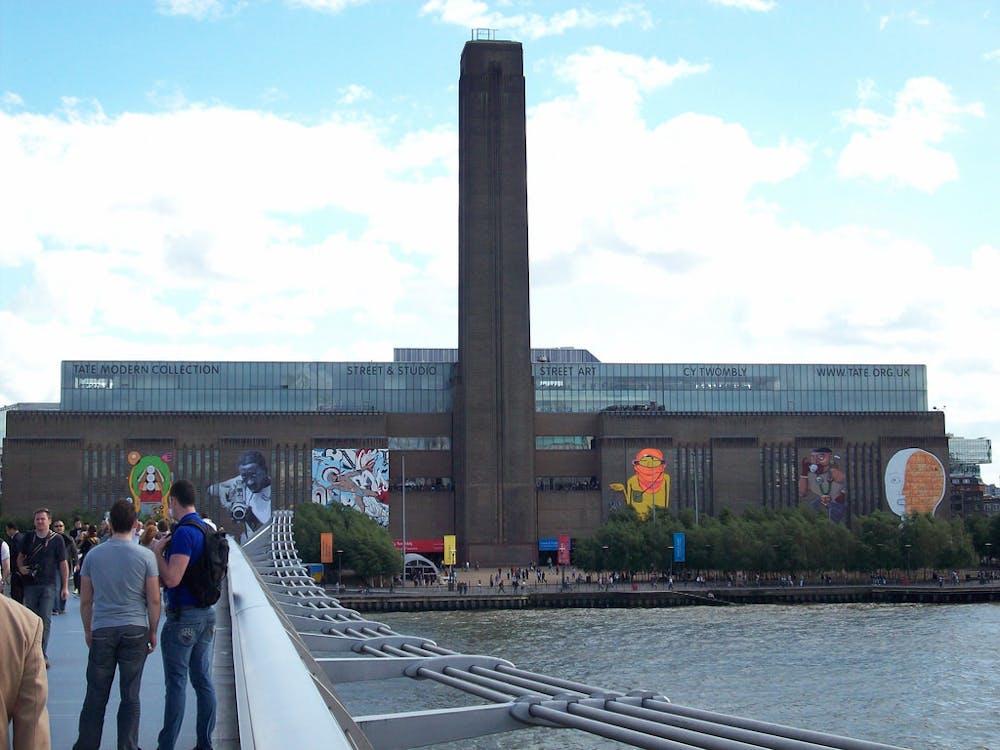 From power station to art gallery: the Tate Modern in London.
Alquiler de Coches/flickr, CC BY
From power station to art gallery: the Tate Modern in London.
Alquiler de Coches/flickr, CC BY
Commentators have noted how since the 1970s formerly disparaged inner-city areas have become trendy around the world. Preserving heritage while allowing buildings and districts to evolve organically in response to current needs is possible.
Further reading: Lessons in living heritage from Tokyo to Adelaide
Buildings are not the only heritage assets that can be adaptively re-used. There are many examples internationally where sites such as cemeteries have been re-used for parks and gardens. One may be seen in the Shandon Architectural Conservation Area in Cork, Ireland.
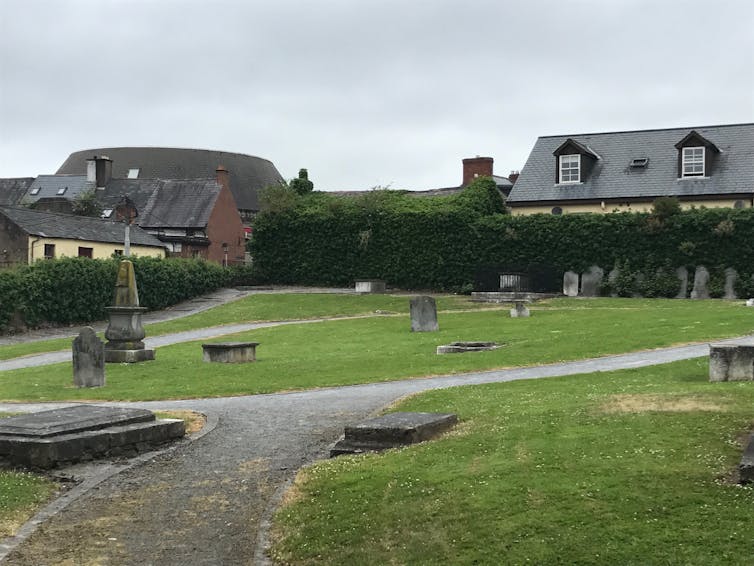 This historic, heritage-protected graveyard in Shandon has been adapted into a pocket park.
Tony Matthews
This historic, heritage-protected graveyard in Shandon has been adapted into a pocket park.
Tony Matthews
In Sydney, the Paddington Reservoir Gardens are a recycled former water storage reservoir. It’s now a beautiful urban park. As well as recreation and relaxation, the park offers urban cooling.
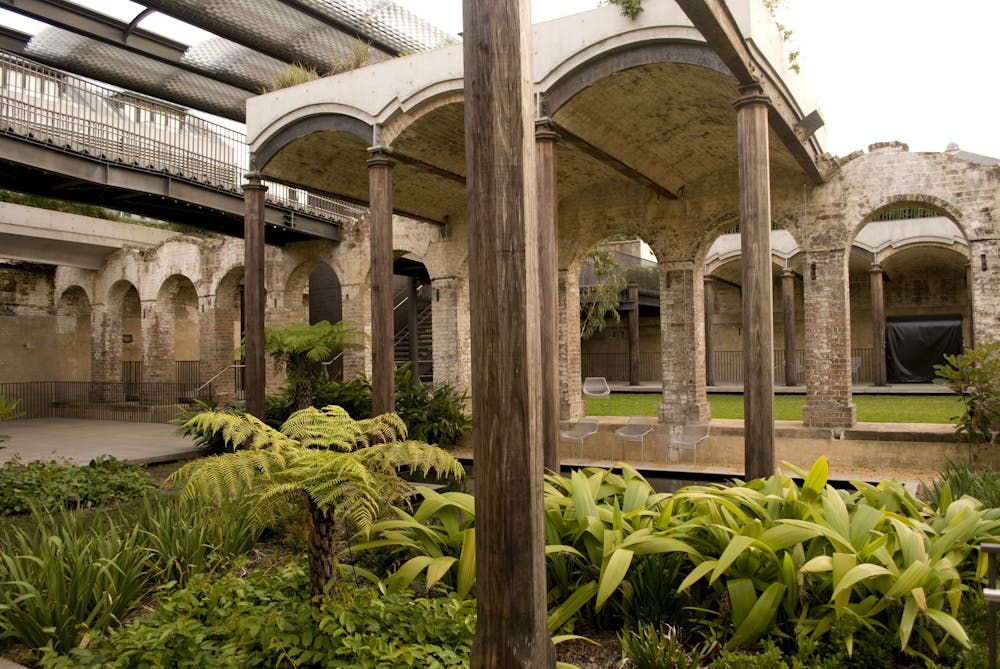 Paddington Reservoir Gardens in Sydney were formerly a water storage reservoir.
Wikimedia Commons, CC BY-SA
Paddington Reservoir Gardens in Sydney were formerly a water storage reservoir.
Wikimedia Commons, CC BY-SA
Adaptive re-use is different to “facadism”, where only the external shell of a building is saved. Adaptive re-use attempts to preserve the interior of building too (wherever possible), sometimes incorporating old fittings in playful ways. Facadism is a less elegant and useful version of heritage protection.
 An example of ‘facadism’ – only the shell of the building is retained.
Newtown grafitti/flickr, CC BY
An example of ‘facadism’ – only the shell of the building is retained.
Newtown grafitti/flickr, CC BY
So what is allowed in adaptive re-use?
Given the many possibilities for repurposing buildings and places, we need to keep in mind what steps can be taken to preserve heritage and improve sustainability. Legal, practical and financial questions are central to decisions on adaptive re-use.
A raft of international and national laws, conventions and organisations have emerged in recent decades to guide heritage management. These include the International Council on Monuments and Sites (ICOMOS), the Burra Charter and the UNESCO World Heritage List. And practical guidance to protect built heritage while sustainably adapting it is becoming more common.
The European Union has developed guidelines and best practice examples for local governments. These provide guidance for achieving ambitious energy efficiency standards when renovating historic buildings. This is seen as a way for heritage buildings to become beacons of sustainable development at the community level.
ICOMOS Australia also has a range of information about guidelines for sustainability retrofits and adaptive re-use of heritage buildings.
For example, let’s return to our earlier example of fitting solar panels to a heritage building. In South Australia the use of solar panels on heritage buildings needs to ensure they are not visible from the street. Hobart City Council has very specific guidelines for incorporating solar in heritage buildings. In Queensland, sustainability upgrades must not damage or obscure views of the heritage building, must not damage the “significant fabric” of the building, and must be sympathetic in size, scale, colour, materials etc.
Adaptive re-use offers great potential to protect built heritage while meeting principles of sustainability. Practices that combine built heritage protection and sustainable development are gaining momentum in many cities. Comprehensive, integrated and strategic guidance is the first and best step towards supporting the exciting possibilities.
Authors: Jason Byrne, Associate Professor of Environmental Planning, Griffith University


 Daily Bulletin


