

A parent's guide to why teens make bad decisions
- Written by: James McCue, Lecturer in Psychology and Criminology, Edith Cowan University
From getting beyond drunk at a friend’s party, to some seriously questionable outfit choices, teenagers often do things that seem outlandishly stupid. But we now know why: the areas of the brain that control decision-making don’t fully develop until early adulthood.
A teen’s developing brain places them at greater risk of being reactive in their decision-making, and less able to consider the consequences of their choices. So how can parents help their teenagers learn and apply good decision-making skills?
Read more: How to maintain the balance between boundaries and freedom in secondary school parenting
The difference between what teenagers know and do
Most children demonstrate an understanding of “right” and “wrong” behaviour from an early age. As language develops, children are able to give clear reasons as to why certain behaviours are undesirable.
But children and teenagers have been found to be poor decision-makers if they feel pressured, stressed or are seeking attention from peers.
So it’s reasonable to expect a 15-year-old to know they should not steal. But they are less adept at choosing not to steal in the presence of coaxing peers whom they wish to impress.
The difference between what teenagers know and what they choose can be explained in terms of “cold” and “hot” situations. Cold situations are choices made during times of low emotional arousal. During these periods, teenagers are able to make well-reasoned and rational decisions.
Hot situations refer to choices during periods of high emotional arousal (feeling excited, anxious, or upset).
 Teenagers may not make the decision they know is right if they’re pressured, stressed or seeking approval from mates.
Unsplash/steinar engeland, CC BY
Teenagers may not make the decision they know is right if they’re pressured, stressed or seeking approval from mates.
Unsplash/steinar engeland, CC BY
Hot situations increase the chance of teenagers engaging in risk-taking and sensation-seeking behaviours, with little self-control or consideration of the possible consequences of their actions.
The impact of emotional arousal on decision-making explains why teenagers might discuss, for example, the negative consequences associated with drinking and drug-taking, but then engage in those very behaviours when with friends.
Read more: Adolescence is hard, but it's not necessarily getting harder
The biology of bad decision making in teens
Brain studies show the frontal lobe – which is responsible for decision-making, impulse control, sensation-seeking, emotional responses and consequential thinking – does not finish developing until our early-to-mid 20s.
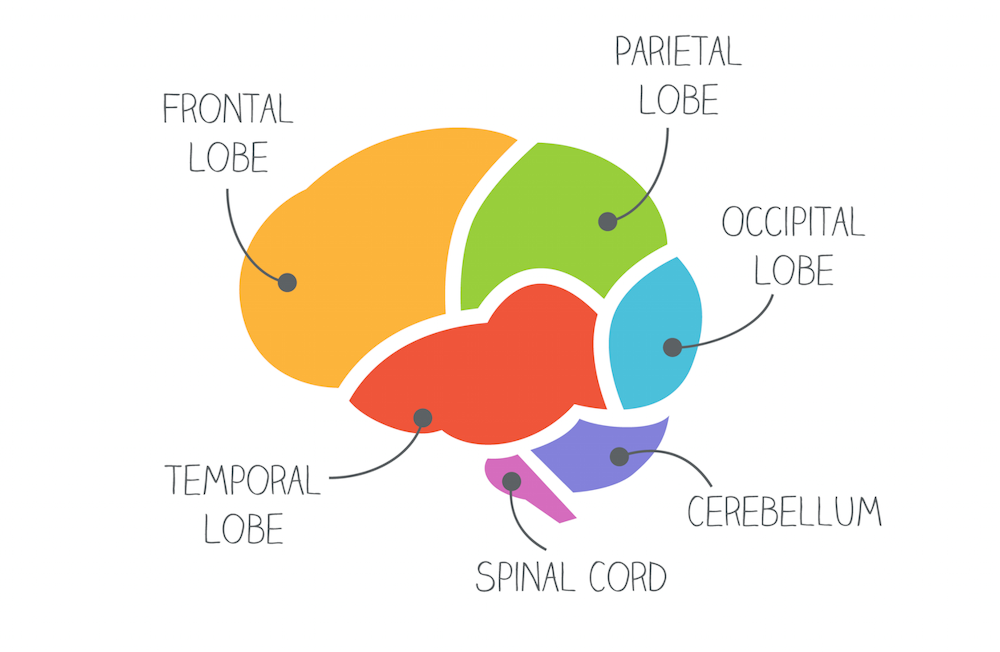 The regions of the human brain.
from www.shutterstock.com
The regions of the human brain.
from www.shutterstock.com
The relationship between brain development and the risk of making poor choices, particularly during hot situations, is referred to as psychosocial maturity.
Research has shown youth aged 12 to 17 years are significantly less psychosocially mature than 18 to 23 years who are also less psychosocially mature than adults (24 and older).
Overall, teenagers’ psychosocial immaturity makes them more likely to:
• seek excitement and engage in risk-taking behaviour
• make choices on impulse
• focus on short-term gains
• have difficulty delaying gratification
• be susceptible to peer pressure
• fail to anticipate consequences of their choices.
Read more: Why sugar is so much worse for teenagers' brains
Helping teenagers make good decisions
Gradual increases in autonomy and practice with independent decision-making are vital for teenagers to become confident adults with good emotional and social well-being. Although parents know poor choices are part of becoming an adult, most want to protect their teenager from making very serious, or illegal, choices.
Good decision-making skills can be learned, and there are six key steps parents can employ to encourage better teen decision-making:
Be aware of upcoming events that may present teenagers with decisions that need to be made. Listen to their expectations about the events (such as whether they expect to drink alcohol)
Present scenarios which may present a risk, or will require a decision (such as missing the train home, friends becoming intoxicated) to explore healthy, or safer choices
Encourage your teenager to stop and think. Help them recognise “when in the moment” to temporarily remove themselves from a situation to help them make decisions away from direct pressures (go to the bathroom, make a phone call, text a friend)
Provide a decision-making compass. Although teenagers are not able to consider all of the potential consequences of a situation, to check whether a decision is a good one, get them to consider whether they would tell you about their decision (“would I want mum/dad/grandma/grandpa to know about what I’m about do?”)
Remind teenagers to ask for help. They don’t have to make choices alone. Ensure they save contact details of people who can be available to talk through options if they’re in a difficult situation (siblings, parents, or extended family)
Use mistakes as learning opportunities. Teenagers may make some wrong choices. Use these lived experiences to generate discussion about where the decision making went wrong, and how to make better choices in the future.
Authors: James McCue, Lecturer in Psychology and Criminology, Edith Cowan University
Read more http://theconversation.com/a-parents-guide-to-why-teens-make-bad-decisions-88246


 Daily Bulletin


