

Minimum price on alcohol in the NT will likely reduce harm
- Written by: Michael Livingston, Postdoctoral Research Fellow, Centre for Alcohol Policy Research, La Trobe University
The Northern Territory government this week made a series of announcements on alcohol policy, including a commitment to implement a minimum price for alcohol of A$1.30 per standard drink across the territory. This makes the NT the first Australian jurisdiction to bring in a floor price as a mechanism to reduce alcohol-related harm.
There is a wealth of international evidence a minimum floor price is effective, but there are also downsides to such a policy.
A floor price is a minimum amount under which alcohol can’t be sold. So, for instance, if a bottle of wine costs A$8, at an average of eight standard drinks, it would have to be sold for at least A$10.40. The impacts on cask wine will be even more dramatic, with prices increasing from around A$20 for a 2 litre cask to at least A$27. Products currently priced at or above the minimum price should be unaffected.
As suggested by policy advocates, the minimum price will be indexed, meaning it will increase along with inflation.
The floor price is part of a suite of other measures being introduced after last year’s Riley review of the Territory’s alcohol policy. These will complement existing approaches such as the banned drinkers register (where ID needs to be shown to buy takeaway alcohol). It also includes improvements to the treatment system, education and more.
Does a minimum floor price work?
Implementing a floor price is a bold response to the NT’s particular problems with alcohol. Territorians drink more alcohol per capita than people in any other Australian jurisdiction, and experience substantially higher rates of harm. While discussion of alcohol-related harm in the NT tends to centre around Aboriginal and Torres Strait Islander people, the issue is widespread. Alcohol does not just cause harm in one group of the population.
There is a growing body of evidence minimum pricing policies can reduce alcohol-related harm. In Canada, where a number of provinces have implemented a minimum price, researchers have found reductions in consumption, alcohol-related hospital admissions and deaths.
Read more: Minimum alcohol pricing: Canada's accidental public health strategy
Researchers in the UK have conducted modelling based on survey data and health records to examine the impact of price policies. They estimated a £0.50 minimum price (AU$0.90) would reduce alcohol consumption by 6.9%, and prevent 2,930 deaths per year. Importantly, their modelling suggests minimum price policies particularly affect the heaviest drinkers.
In a survey of 2,020 Australians conducted in 2013, heavy drinkers were nearly twice as likely to buy cheap alcohol as moderate drinkers. Cask wine appears to be a key driver of this, with respondents reportedly spending an average of A$0.65 per standard drink for cask wine. Average prices were higher than A$1.30 for all other beverage types.
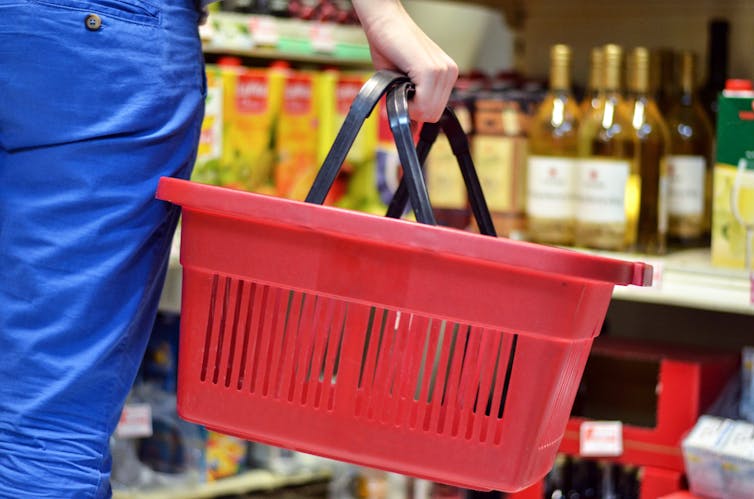 Research shows that heavy drinkers are more likely to buy cheap alcohol than moderate drinkers.
from shutterstock.com
Research shows that heavy drinkers are more likely to buy cheap alcohol than moderate drinkers.
from shutterstock.com
Minimum pricing policies probably have a disproportionate effect on lower income groups, although these effects are small for light and moderate drinkers. Australian data suggests the amount of low-cost alcohol purchased is broadly similar across income groups. But among low-income respondents, it makes up a larger proportion of alcohol purchased. This means that, on average, higher-income groups drink more alcohol.
Importantly, alcohol-related harms are a key driver of health inequalities. And modelling suggests that minimum pricing can contribute to more equal health outcomes.
A suite of measures
A minimum floor price will significantly affect the price of cheap alcohol in the NT, especially outside of Alice Springs and Central Australia where a range of policies are already in place. These include times and days you can buy takeaway alcohol and how much you can buy of certain types of alcohol each day.
Read more: How mandatory treatment for public drunkenness is failing Aboriginal people
The NT has previous experience with increasing alcohol prices to reduce alcohol-related harms. In the 1990s the government introduced the Living With Alcohol (LWA) program. A levy of A$0.05 per standard drink was charged on alcoholic beverages with more than 3% alcohol. The additional money was then used for a range of prevention and treatment services.
The levy was removed in 1997, following a High Court case about tobacco taxation that cast state-based levies into a vulnerable light, constitutionally. But the prevention programs continued for a further five years. Evaluations of the LWA program found significant reductions in deaths, especially while the levy was in place. This suggests the price effects were particularly important.
Overall it was the combination of pricing policies along with other programs that succeeded in reducing harm. Fortunately, the Riley review recommends a similarly broad suite of programs and policies to complement the introduction of minimum pricing.
These include improvements to the treatment system, changes to family and youth programs, education and a range of other supply, demand and harm reduction programs. Funding for these will be critical. Working with Aboriginal communities, leaders and health professionals will also be key to ensure local ownership of the impact of this new policy approach.
Downsides to a minimum price
A major downside to minimum pricing policy is that the additional money spent on alcohol goes to the industry – evidence suggests the decline in consumption won’t fully offset the increased prices. In the LWA example, the levy was collected by the government and used specifically to fund alcohol programs in the NT.
Reforms to the taxation system at the federal level could have similar effects to a minimum price, while providing extra revenue to governments. This could then be allocated to prevention programs. Australia’s taxation system is complex, but a key issue is the price-based (rather than alcohol content-based) taxation of wine, which means cheaper products attract lower taxes. This not only encourages the sale of cheap alcohol, it is hurting the budget bottom line.
A tax system that was based on alcohol content for all products, with revenue allocated to prevention programs would be the ideal outcome for public health across Australia. For now though, in the absence of any action from the Commonwealth, the NT government is breaking new ground. Comprehensive evaluations are obviously needed, but the evidence suggests this is a big step in the right direction.
Authors: Michael Livingston, Postdoctoral Research Fellow, Centre for Alcohol Policy Research, La Trobe University
Read more http://theconversation.com/minimum-price-on-alcohol-in-the-nt-will-likely-reduce-harm-92577


 Daily Bulletin


