

Australia should start planning for universal tertiary education
- Written by: Tim Pitman, Senior Research Fellow, Curtin University
Australia is often characterised as having a mass higher education system. In fact, it could be called near-universal. According to the 2016 Census, 56% of Australians aged 15 years and over – 9.6 million people – hold a post-school qualification, up from 46% in 2006.
Universal education does not mean every Australian should attain a higher education or tertiary qualification. It means every Australian should be given the opportunity to get one if they want.
The distinction between “mass” and “universal” is not just an academic one. Viewing higher and tertiary education as universal could help an incoming government better design policy. All Australians need to be prepared for, informed about and able to make a choice that is right for them about whether or not to pursue post-school education.
Needs-based funding of schools
If the government could do one thing to improve post-school education outcomes, it needs to happen in our primary and high schools. Prior academic achievement is one of the main predictors of higher education aspiration and success. In some studies it’s the main factor.
Needs-based funding puts more money into education. In particular, it puts more money into the schools and students who need it most.
The Gillard-led Labor government recognised the importance of this approach by adopting a needs-based school funding model. The Turnbull-led Coalition government reaffirmed this commitment, with the specific aim of helping under-achieving students focus on improvement.
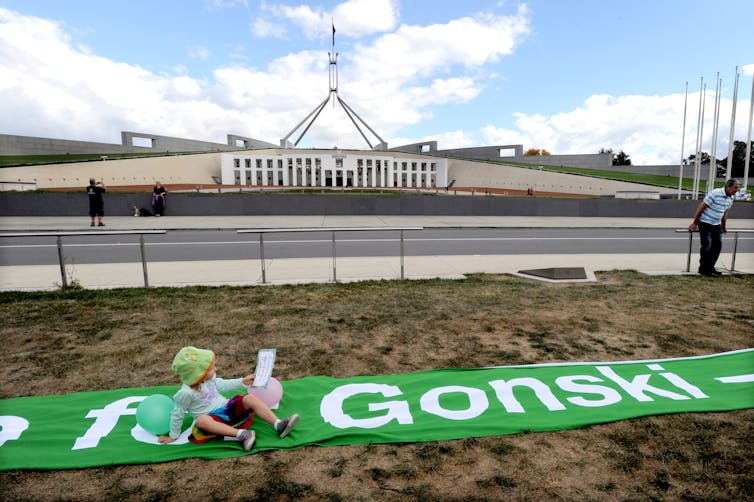 Pay attention to the details of what Labor and the Coalition promise on needs-based funding this coming election.
Alan Porritt/AAP
Pay attention to the details of what Labor and the Coalition promise on needs-based funding this coming election.
Alan Porritt/AAP
This coming election, look closely at what positions the Coalition and Labor take on needs-based school funding. Both have signed up in principle, but there should be a clear commitment on how much extra money will be provided. This is not the same as simply spending more money to maintain standards in an ever-expanding system.
There also needs to be a clear explanation of how that money will be spread around, to ensure those furthest behind get the resources they need to catch up.
It’s not university or TAFE
Too many Australians – and successive governments – think in terms of students having to make a choice between university or vocational studies or neither. Tertiary education policy shouldn’t be seen this way.
For many people, the false trichotomy of degree-or-trade-or-job is locked in way too early by social and family expectations, and curriculum choices. Greater flexibility in how lifelong education is understood and explained (in terms of pathways and options) needs to be developed at the policy level.
 TAFE is a good option in its own right.
from www.shutterstock.com
TAFE is a good option in its own right.
from www.shutterstock.com
This isn’t about merging the vocational and higher education sectors. That is neither necessary nor desirable. All tertiary education providers play a part in delivering lifelong education opportunities.
What is needed is more cooperation between state and federal governments. They need to be able to coordinate on how these various organisations will be funded and how students will be financially supported.
In many cases, there are fewer financial barriers to doing a university degree than a vocational course. This can lead some students to make a choice that seems right for them, but over the long term doesn’t work out.
The good news is all the pieces are there – even if they don’t quite fit together yet. The Coalition government has made great strides in how students can access loans for vocational courses. But the VET fee cap means some vocational courses still result in the student having to cover the excess up front, which is not the case for higher education degrees.
For example, an Australian student studying a Diploma of Business in 2019 would have a loan cap of just over A$5,000. They would have to cover the rest of the cost of the course. Depending on the provider, this could be several thousand more.
If the same student chose to study a Bachelor of Business at a university, they would have access to a loan for the full amount, which would be more than A$30,000 for the entire degree.
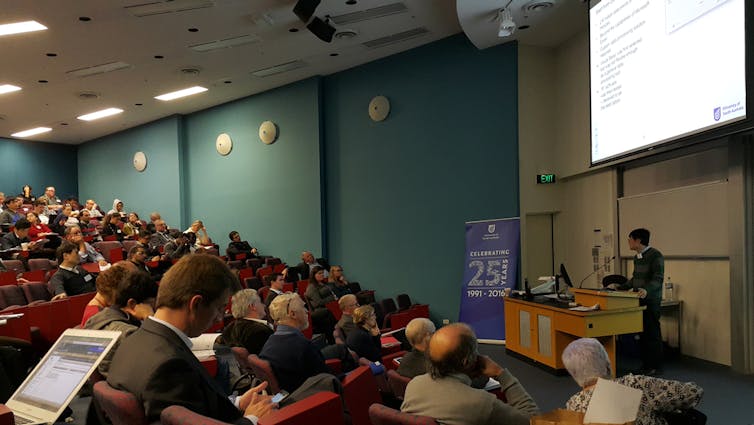 The next government should work towards making sure everyone has the opportunity to attend university if they want.
from www.shutterstock.com
The next government should work towards making sure everyone has the opportunity to attend university if they want.
from www.shutterstock.com
Against this, students can be more sure they’re getting what they pay for from universities than from vocational education providers. The Tertiary Education Quality and Standards Agency is responsible for the registration and quality oversight of all higher education providers, public and private.
The vocational training sector could benefit from a similarly national and coordinated approach to quality assurance. Given there are more than 5,000 vocational providers, a more realistic approach might be to provide a similar oversight (or even expand TEQSA) to cover all courses offered by the public TAFES, to begin with.
Whoever forms the next government needs to finish the job of creating a more unified structure of financial support and pathway information. It should allow students to think first and foremost about what skills and knowledge are right for them and not about what the institution they’re going to or the degree they’re going to do is called.
Making Australian higher education look more like, well, Australia
The foundation of the Australian higher education system is built on two broad principles. The first is that they exist for the betterment of the nation. The second is that the doors of universities and other higher education institutions are open to everyone. This is actually written into the founding acts of our oldest universities.
The journey towards realising the second principle has been long, rocky and as yet uncompleted. Too many groups of students still remain under-represented. These include Aboriginal and Torres Strait Islander peoples, people with disability, those living in regional areas and those from lower socioeconomic backgrounds.
Progress has been made and much of the big policy picture has been painted. In particular, more institutions have been created to better meet demand, a demand-driven system of funding has been introduced so there is federal funding for each student place, and an income-contingent loan scheme has been provided to remove many of the upfront financial barriers to accessing university.
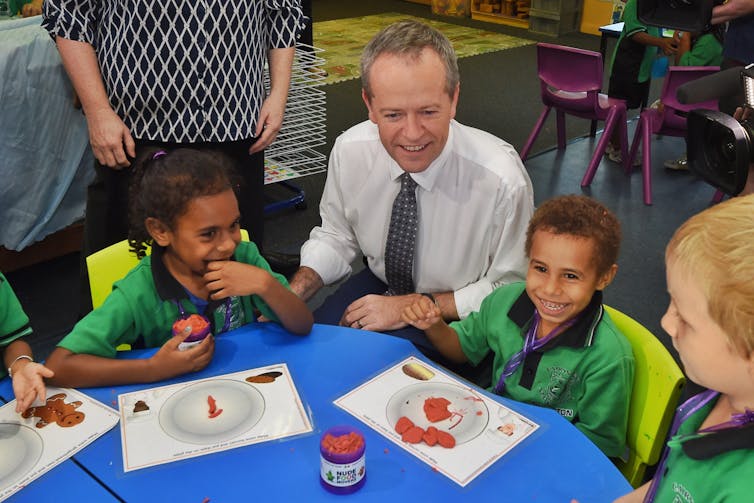 To make progress in the higher education sector, we also need to make progress in schools.
Mick Tsikas/AAP
To make progress in the higher education sector, we also need to make progress in schools.
Mick Tsikas/AAP
But finishing the picture requires a final push. Committing to a sustainable, needs-based funding of school education and harmonising the support structure for vocational and higher education would go a long way towards achieving this goal. It may be enough, but if not there is another thing that would work – quotas.
Quotas are contentious, as recent political debate shows. It’s likely the concern would be raised that quotas would ignore the very different institutional profiles that are in play. For example, a regionally based university is going to find it easier to recruit regional students than one in a CBD.
One solution would be to apply the quota at the sector level, rather than the institutional level. The government could then enforce the quotas in a number of ways. It could use performance-based funding to reward the universities doing the heavy lifting. Or it could allow the universities to virtually trade between themselves.
For example, a university with a below-average enrolment of regional students could “purchase” the excess from a university with an above-average enrolment. The students would not actually move institution, but the money would. This would mean the university with the extra enrolments would receive additional financial support to help with the costs associated with supporting these students.
Authors: Tim Pitman, Senior Research Fellow, Curtin University
Read more http://theconversation.com/australia-should-start-planning-for-universal-tertiary-education-110783


 Daily Bulletin


