

how to protect your kids from in-person sexual abuse
- Written by: Divna Haslam, Senior Research Fellow (Faculty of Law/ Health) & Clinical Psychologist, Queensland University of Technology
We know it can seem easier to bury your head in the sand, when it comes to the hideous issue of child sexual abuse.
But child sexual abuse is disturbingly common.
Last week, the Australian Federal Police announced it had busted an alleged child sex offender network, warning
child exploitation in Australia is becoming more prolific … this type of offending is becoming more violent and brazen.
The good news is when parents are empowered with accurate information, we can better protect our children.
Read more: Why children need to be taught more about their human rights
We are researchers in the prevention of child abuse, working across psychology, education and law.
In a separate article, we have looked at how parents can protect their children from online sexual abuse.
This article looks at how to protect kids from in-person sexual abuse.
How common is in-person sexual abuse?
In-person, child sexual abuse is defined as any sexual act, done to a child (under 18 years old) where true consent is absent and where the act constitutes misuse or taking advantage of the child.
This includes with touch and without it (flashing, voyeurism, or masturbating in front of children).
It can occur anywhere a perpetrator has access to children and privacy, such as in homes, schools and sporting complexes.
But sexual abuse is often not reported, and measurement of it varies.
Read more: Child sexual abuse: hearing the cry for help is not always a simple task
No fully representative Australian study exist yet, so it is difficult to know just how many Australian children are abused. However, a 2010 Victorian study found 7% of boys and 17% of girls are victims of some type of sexual abuse.
Most abusers are not strangers. According to the Australian Bureau of Statistics, 86% of victims knew their abuser.
Perpetrators can include family friends, teachers, coaches, neighbours, parents, step-parents, siblings or other family members. It can also involve other children.
Parents have a special role
Although society more broadly has a responsibility to protect children, parents have a special role in this regard.
Firstly, parents can provide barriers to abuse via monitoring, involvement and attention.
Secondly, they play a key role in developing children’s self-esteem, confidence and sexual knowledge, which makes young people less susceptible to abuse.
Finally, informed parents are better able to respond appropriately should abuse occur.
Research suggests two-thirds of mothers talk to children about sexual abuse, which is reassuring. But many fail to cover critical prevention aspects, such what to do if someone touches your genitals.
Researchers don’t know exactly why this is, but it may be to do with lack of knowledge or confidence about exactly what to say.
Mothers and fathers should be involved, and conversations are needed with both girls and boys. The average age of first sexual abuse is somewhere between six and nine years old, so parents need to start thinking about protection early.
Tips for protecting your child
The following advice is based on research identifying known factors that reduce or increase a child’s risk of abuse and the best prevention research.
 Wes Mountain/The Conversation, CC BY-ND
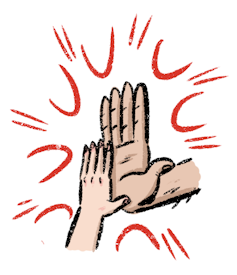
Teach children their bodies belongs to them. Don’t force your child to hug and kiss others. Even if they are a close friend of family member. If they don’t want to hug Great Aunty Sue, offer alternatives such as as a high five or handshake. Let your child choose what they prefer and respect their choice.
Teach children which touches are OK and which are not. Give specific examples like, “someone giving you a hug hello might be OK but if anyone tries to see, touch, or take photos of your penis, or wants you to see or touch theirs, it is not OK and you should tell someone.”
Teach children to always tell you if anything ever happens that makes them feel uncomfortable or unsafe (they might say “weird” or “gross”). And then take children seriously. Children do not typically lie about abuse. This is a precious moment to believe and act.
Don’t imply abuse is inflicted only by strangers. Tell them something like, “sometimes even adults we trust might not know what is OK about touching. So if you are ever in doubt just say no and come and tell me”. Also tell your children: “nothing is so bad or awful that you can’t tell me about it”.
Don’t tell children to always do what adults tell them. Teach them about when they should do what adults say - for example, when teachers give instructions in class - and when they should not. For example, when an adult asks them to do or say something sexual or personal.
Teach children how to respond to abuse attempts. This may vary with age. You can start with something simple, like, “say ‘that’s not OK’ or ‘not cool’. And then get away, and tell me what happened”.
Wes Mountain/The Conversation, CC BY-ND
Teach children their bodies belongs to them. Don’t force your child to hug and kiss others. Even if they are a close friend of family member. If they don’t want to hug Great Aunty Sue, offer alternatives such as as a high five or handshake. Let your child choose what they prefer and respect their choice.
Teach children which touches are OK and which are not. Give specific examples like, “someone giving you a hug hello might be OK but if anyone tries to see, touch, or take photos of your penis, or wants you to see or touch theirs, it is not OK and you should tell someone.”
Teach children to always tell you if anything ever happens that makes them feel uncomfortable or unsafe (they might say “weird” or “gross”). And then take children seriously. Children do not typically lie about abuse. This is a precious moment to believe and act.
Don’t imply abuse is inflicted only by strangers. Tell them something like, “sometimes even adults we trust might not know what is OK about touching. So if you are ever in doubt just say no and come and tell me”. Also tell your children: “nothing is so bad or awful that you can’t tell me about it”.
Don’t tell children to always do what adults tell them. Teach them about when they should do what adults say - for example, when teachers give instructions in class - and when they should not. For example, when an adult asks them to do or say something sexual or personal.
Teach children how to respond to abuse attempts. This may vary with age. You can start with something simple, like, “say ‘that’s not OK’ or ‘not cool’. And then get away, and tell me what happened”.
 Wes Mountain/The Conversation, CC BY-ND
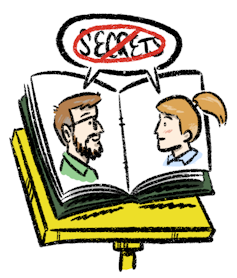
Teach children about secrets. Many abusers use threats or bribes to silence children. Teach children secrets are not OK and that nothing is ever so bad that they can’t tell you. Back this up by not asking children to keep everyday secrets (for example, “don’t tell Mum I gave you ice cream for dinner”).
Encourage children’s attendance at school-based prevention programs. Have brief conversations about these frequently to reinforce key messages - such as a chat in the car. Add more detail as kids get older.
Wes Mountain/The Conversation, CC BY-ND
Teach children about secrets. Many abusers use threats or bribes to silence children. Teach children secrets are not OK and that nothing is ever so bad that they can’t tell you. Back this up by not asking children to keep everyday secrets (for example, “don’t tell Mum I gave you ice cream for dinner”).
Encourage children’s attendance at school-based prevention programs. Have brief conversations about these frequently to reinforce key messages - such as a chat in the car. Add more detail as kids get older.
 Wes Mountain/The Conversation, CC BY-ND
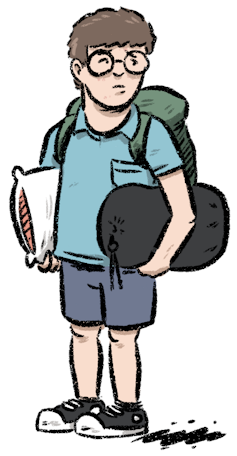
Be careful about who you leave your children alone with and where they go for overnight stays. Abusers need privacy. It’s OK to say no if your children are young. With older children, make a plan together and be sure to ask them what happened when they get back.
Teach your children how they should treat other children. All children should understand they have a right to their own body safety, and
that other children have this same right. It’s important to talk about
concepts like consent, respect and equality.
Watch for warning signs. Is there an adult your child avoids? Does your child get an unusual amount of attention from an adult at school, sport, music or ballet? Has your child received gifts, money, or special privileges from anyone? Has your child become really upset by something that you can’t explain?
More resources for parents are available via Bravehearts and at esafety.gov.au.
If you believe your child is the victim of grooming or exploitation, or you come across exploitation material, you can report it via ThinkuKnow or contact your local police.
If you are a child, teen or young adult who needs help and support, call the Kids Helpline on 1800 55 1800.
If you are an adult who experienced abuse as a child, call Blue Knot Helpline on 1300 657 380 or visit their website.
Wes Mountain/The Conversation, CC BY-ND
Be careful about who you leave your children alone with and where they go for overnight stays. Abusers need privacy. It’s OK to say no if your children are young. With older children, make a plan together and be sure to ask them what happened when they get back.
Teach your children how they should treat other children. All children should understand they have a right to their own body safety, and
that other children have this same right. It’s important to talk about
concepts like consent, respect and equality.
Watch for warning signs. Is there an adult your child avoids? Does your child get an unusual amount of attention from an adult at school, sport, music or ballet? Has your child received gifts, money, or special privileges from anyone? Has your child become really upset by something that you can’t explain?
More resources for parents are available via Bravehearts and at esafety.gov.au.
If you believe your child is the victim of grooming or exploitation, or you come across exploitation material, you can report it via ThinkuKnow or contact your local police.
If you are a child, teen or young adult who needs help and support, call the Kids Helpline on 1800 55 1800.
If you are an adult who experienced abuse as a child, call Blue Knot Helpline on 1300 657 380 or visit their website.
Authors: Divna Haslam, Senior Research Fellow (Faculty of Law/ Health) & Clinical Psychologist, Queensland University of Technology


 Daily Bulletin


