

Portable Toilet Hygiene Standards Explained: Clean vs Sanitised vs Disinfected
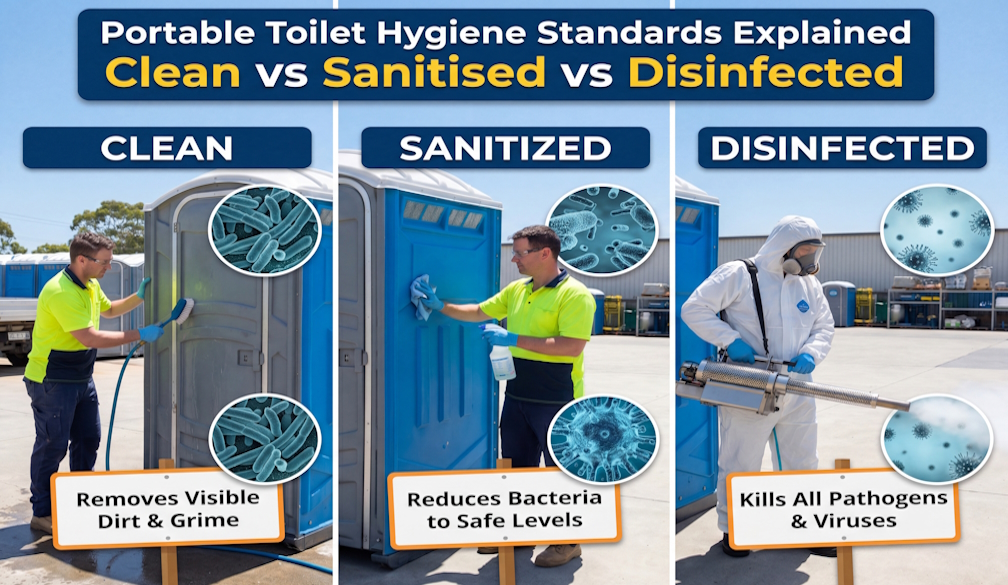
In portable toilet servicing, the words clean, sanitised, and disinfected often get used as if they mean the same thing. They don’t. And that difference matters because a unit can look tidy and still have high-touch surfaces that carry germs, or smell “fresh” while residue and bacteria build up in corners.
To make sense of what you’re paying for or managing on a site, it helps to separate the three terms by what they actually achieve. In day-to-day operations, sydney portaloo cleaning is usually a bundle of tasks across all three levels, but the scope and thoroughness can vary depending on service intervals, usage, and process.
What “Clean” Means in Practice
Cleaning is primarily about removing visible soil: dust, splashes, grime, and residue. It improves appearance and reduces some germs simply because you’re physically removing contaminants, but it doesn’t automatically mean the surfaces are hygienically treated.
In a portable toilet context, “clean” commonly includes:
- Wiping down interior surfaces
- Removing obvious mess from the seat area and around the tank opening
- Rinsing or wiping the floor
- Tidying mirrors or vents (if present)
- Basic waste pump-out and tank reset (sometimes counted as part of “cleaning,” sometimes listed separately)
Key point: cleaning is the foundation. If the unit isn’t cleaned first, later hygiene steps are less effective because dirt and residue can block products from working well.
What “Sanitised” Should Mean
Sanitising is about reducing germs to a safer level for routine use. It’s a step beyond making things look clean, and it should be directed at the surfaces people touch most.
In practical terms, a “sanitised” service should include:
- Cleaning first, then applying a sanitising agent to target areas
- Treating high-touch points systematically
- Allowing enough time for the product to do its job (not just a quick wipe)
High-touch points that should be included every visit:
- Door handle and latch (inside and outside)
- Lock mechanism
- Seat top and underside
- Urinal edges
- Any grab rails
- Dispenser push points (sanitiser/soap)
Key point: sanitising is where servicing starts to become about hygiene outcomes, not just presentation.
What “Disinfected” Implies
Disinfecting is generally the strongest claim of the three. It aims to kill a broader range of microorganisms on hard, non-porous surfaces. For a service to credibly claim disinfection, the method matters: correct product choice, correct application, and sufficient contact time.
In portable toilets, disinfecting is most relevant to:
- Door hardware and locks (highest frequency of contact)
- Seat surfaces and hinges
- Areas with higher splash risk
- Any surfaces used for support or balance
Key point: “disinfected” should not mean “sprayed with something that smells strong.” The effectiveness is about process, not fragrance.
Why Deodorising Is a Separate Thing
Odour control is important, but it’s not a hygiene standard by itself. A unit can be deodorised and still be unhygienic, especially if high-touch points weren’t treated or if residue was left behind.
Smell control is more reliable when it comes from:
- Correct tank chemical balance after pump-out
- Residue removal in corners and around openings
- Service frequency matched to usage and weather
- Ventilation that isn’t blocked
If the only noticeable change after a service is a stronger scent, hygiene may not have improved much.
The Role of Pump-Out and Tank Reset in Hygiene
Waste removal is a big part of portable toilet servicing, but “pump-out” isn’t automatically “sanitised.” Hygiene depends on how well the service handles:
- Splash control and residue removal around the tank opening
- Leaks or cracks that trap waste
- Correct chemical dosing after pump-out
- Quick checks that the unit is functioning normally (door, lock, vents, dispensers)
A unit can be emptied and still be a hygiene risk if the touchpoints and splash zones weren’t properly addressed.
What Good Process Looks Like Without Getting Technical
You don’t need lab language to set expectations. A credible hygiene-focused service is usually:
- Repeatable: the same checklist every visit
- Targeted: high-touch points are always included
- Time-aware: products aren’t wiped off immediately
- Practical: restocking is handled so users can keep things cleaner between services
- Documented: notes are made when usage spikes, damage occurs, or frequency needs to change
Consistency is the difference between a unit that stays usable and one that swings between “fine” and “awful.”
Signs the Hygiene Standard Might Be Superficial
You can’t audit every step, but you can notice patterns. Red flags often include:
- Sticky locks or grimy door handles right after servicing
- Residue in seat hinges and creases
- Strong perfume smell paired with visible splatter marks
- Empty sanitiser dispenser or missing toilet paper
- Odour returning very quickly in moderate weather
- Wet floors that look rinsed rather than properly wiped and treated
When these happen repeatedly, it can signal an incomplete process or a service interval that’s too long for the number of users.
Setting Clear Expectations in Plain Language
If you’re coordinating servicing for a worksite or event, the simplest way to avoid confusion is to define what you mean by the words. A clear expectation might be:
- Clean interior surfaces
- Sanitise or disinfect high-touch points (door hardware, locks, seat)
- Pump-out and reset tank chemistry
- Restock essentials (paper and hand hygiene supplies)
- Inspect for leaks, damage, and anything affecting usability
- Adjust service frequency if usage is higher than planned
When “clean,” “sanitised,” and “disinfected” are treated as distinct outcomes, you can compare services more accurately and avoid nasty surprises mid-week or mid-event.


 Daily Bulletin


