

AI trust gap reveals distinct retail priorities: Divergent paths to consumer growth in Hong Kong and the GBA
- Published in News from Asia
New research from KPMG China and GS1 Hong Kong highlights three key priorities for retailers: building trust in AI, delivering market-specific strategies for the growing silver economy, and strengthening brand confidence across Hong Kong and other cities in the Greater Bay Area
HONG KONG SAR – Media OutReach Newswire – 4 November 2026 – Consumer confidence in artificial intelligence is rising across Hong Kong and other cities in the Greater Bay Area (GBA), but new research from KPMG China and GS1 Hong Kong shows that retailers will need markedly different strategies to convert that confidence into growth.While consumers in other GBA cities show greater openness to personalised experiences and Chinese Mainland brands, Hong Kong consumers place more emphasis on value for money.
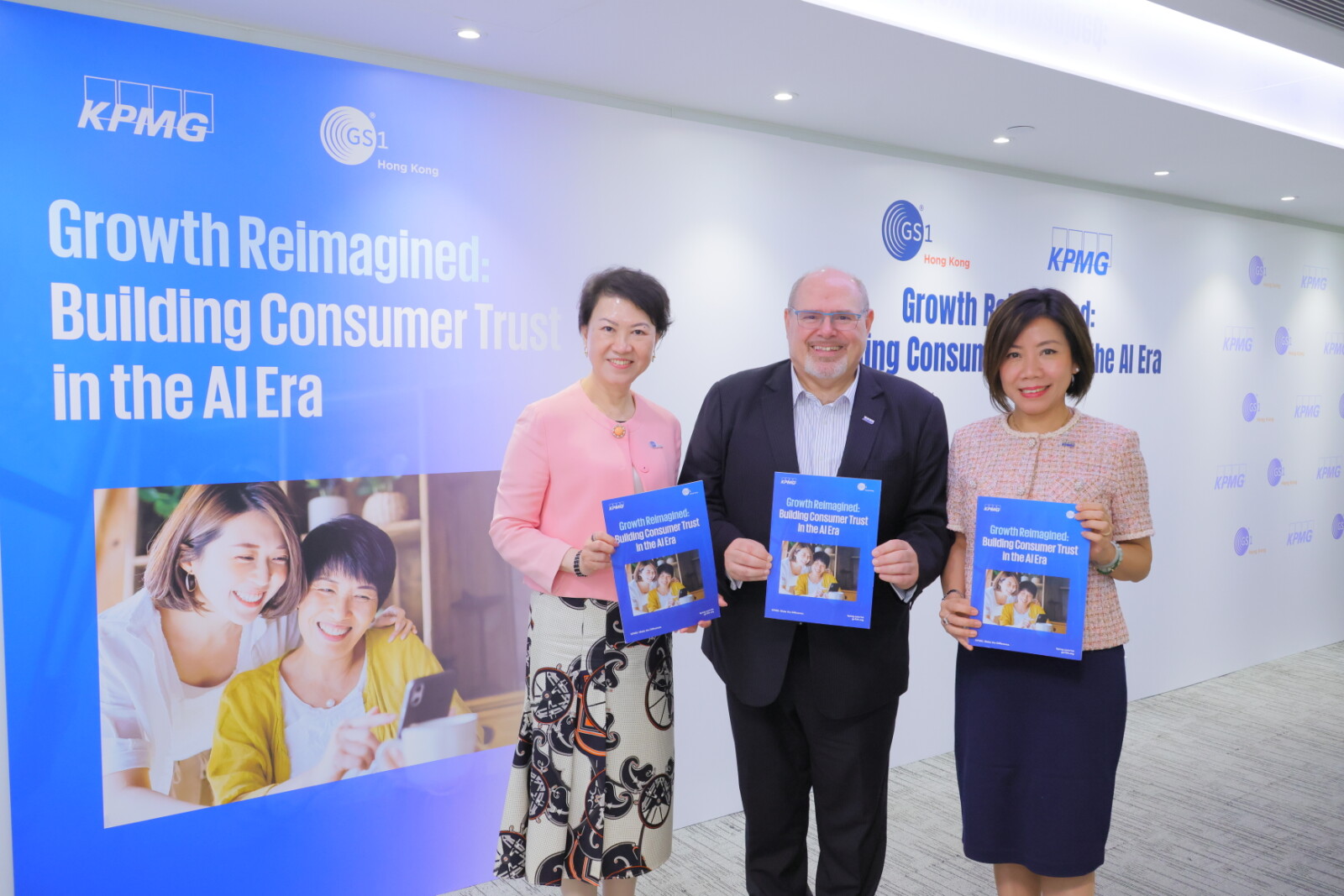
The Growth Reimagined: Building Consumer Trust in the AI Era report identifies three themes which have emerged as a roadmap for future growth:
- Trusted AI builds consumer confidence: AI can enhance personalisation and speed up service delivery, but privacy, accuracy, transparency and a human touch will determine consumer adoption.
- Silver shoppers diverge by market: To capture the growing silver economy, brands must prioritise price in Hong Kong, and brand reputation and engaging experiences in other GBA cities.
- The low-cost-only label no longer fits Chinese Mainland brands: Their advances in quality and innovation are forcing competitors to rethink where future brand advantage will come from.
AI trust is rising but a transparency gap persists, creating new opportunities for growth
Trust in AI has risen significantly since last year's survey. In Hong Kong, 48% of consumers now trust AI at least somewhat, up from 28%, while trust in other GBA cities has increased from 59% to 76%. Yet growing trust has not translated into the same willingness to share personal data: just 10% of Hong Kong consumers who trust AI are comfortable doing so, compared with 32% in other GBA cities.
The difference in AI trust between Hong Kong and other GBA cities is particularly pronounced among silver shoppers, defined in the report as consumers aged above 55. Just 38% of Hong Kong silver shoppers trust AI, compared with 76% in other GBA cities, underscoring the challenge retailers face in building AI confidence among older Hong Kong consumers.
To bridge this gap, retailers in Hong Kong need to demonstrate clear value before asking consumers to share more data, while providing transparency and control over how their data is used. Consumer confidence should extend across the entire retail journey: from payment and product authenticity to returns and customer support. AI should help consumers find what they need more easily, while maintaining accuracy, fairness and access to human support.
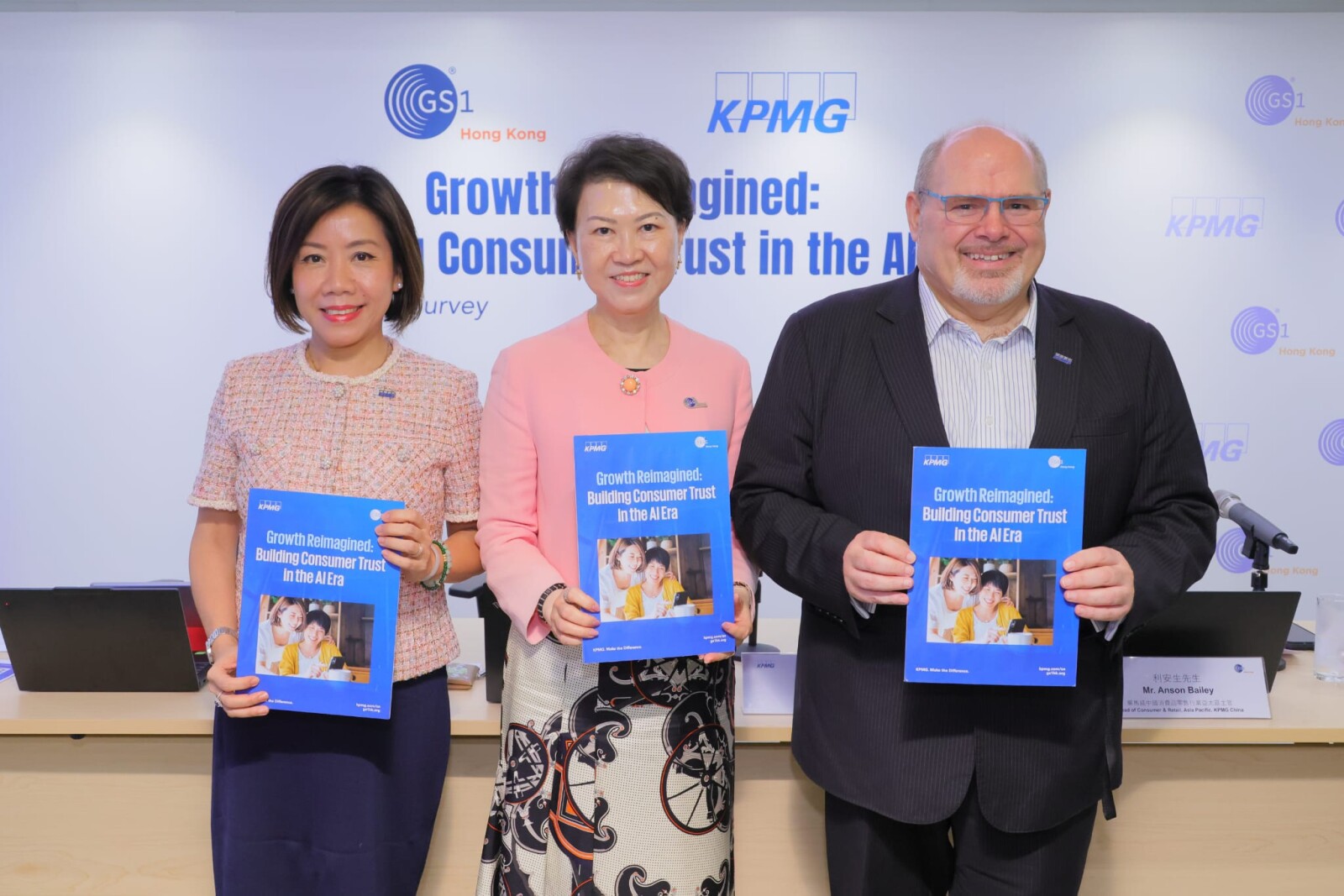
Anna Lin, Chief Executive, GS1 Hong Kong, says: "AI is increasingly shaping how consumers discover and evaluate products, and it tends to recommend those backed by data it can readily interpret and trust. Businesses with trusted, standardised product data that is structured for machines to understand and use and traceable to an identifiable source will be best positioned to earn consumer confidence and influence future purchasing decisions."
The silver economy is not a single consumer market
Across all age groups, value remains a priority for 73% of Hong Kong consumers, compared with 45% in other GBA cities.
When asked to describe their shopping style, 57% of silver shoppers in Hong Kong identify primarily as value shoppers, compared with only 23% in other GBA cities, where brand reputation, at 37%, and shopping experience, at 27%, emerge as their leading considerations.
The findings suggest that age alone is not enough to define the silver shoppers. Retailers looking to capture the opportunities created by the region's ageing population will need to understand how expectations differ by market, and develop propositions that reflect those differences.
Alice Yip, Partner, Head of Consumer & Retail, Hong Kong SAR, KPMG China, says: "Growth in the silver economy depends on recognising that shoppers' priorities differ across markets. Hong Kong's silver shoppers prioritise competitive prices, while those in other GBA cities place greater emphasis on brand reputation and shopping experiences. Capturing this opportunity involves understanding what matters locally and tailoring the retail offer accordingly, rather than treating the silver economy as one uniform market."
Chinese Mainland speed raises the stakes for Hong Kong and global brands
Chinese Mainland brands are emerging as a stronger force in innovation and speed. In other GBA cities, that progress is already reflected in consumer perceptions: 64% choose them for value for money, 58% for safety and reliability and 50% for brand reputation.
In Hong Kong, however, they are still seen primarily through the lens of value. While 81% of consumers choose Chinese Mainland brands for value for money, fewer cite safety and reliability (39%), higher quality (33%) or brand reputation (31%). Their next opportunity is to turn Chinese Mainland speed and improving quality into stronger brand confidence.
Hong Kong brands retain a clear advantage in trust. Consumers in Hong Kong (74%) and other GBA cities (61%) cite safety and reliability as the leading reason for choosing Hong Kong brands. Among Hong Kong consumers, preference for Hong Kong brands is particularly strong in airlines (78%) and food and beverages (71%).
But trust cannot be taken for granted. As Chinese Mainland brands strengthen their safety and reliability credentials, Hong Kong brands will need to combine their reputation for reliability with greater innovation, sharper value and faster execution.
Anson Bailey, Head of Consumer & Retail, Asia Pacific, KPMG China, says: "Any brand that still sees Chinese Mainland competitors as a low-cost threat is looking in the rear-view mirror. Chinese Mainland speed is now producing better products, sharper design and faster innovation at a scale few markets can match. The real shift is that Chinese Mainland brands are learning to build brand equity at the same pace as they have built scale through value and speed. This is increasingly influencing who can win – not only in the GBA, but in consumer markets worldwide."
Hashtag: #KPMG #GS1HongKong
The issuer is solely responsible for the content of this announcement.
About KPMG
KPMG in China has offices located in 31 cities with over 14,000 partners and staff, in Beijing, Changchun, Changsha, Chengdu, Chongqing, Dalian, Dongguan, Foshan, Fuzhou, Guangzhou, Haikou, Hangzhou, Hefei, Jinan, Nanjing, Nantong, Ningbo, Qingdao, Shanghai, Shenyang, Shenzhen, Suzhou, Taiyuan, Tianjin, Wuhan, Wuxi, Xiamen, Xi'an, Zhengzhou, Hong Kong SAR and Macau SAR. It started operations in Hong Kong in 1945. In 1992, KPMG became the first international accounting network to be granted a joint venture licence in the Chinese Mainland. In 2012, KPMG became the first among the "Big Four" in the Chinese Mainland to convert from a joint venture to a special general partnership.
KPMG is a global organisation of independent professional services firms providing Audit, Tax and Advisory services. KPMG is the brand under which the member firms of KPMG International Limited ("KPMG International") operate and provide professional services. "KPMG" is used to refer to individual member firms within the KPMG organisation or to one or more member firms collectively.
KPMG firms operate in 138 countries and territories with more than 276,000 partners and employees working in member firms around the world. Each KPMG firm is a legally distinct and separate entity and describes itself as such. Each KPMG member firm is responsible for its own obligations and liabilities.
About GS1 Hong Kong
GS1 Hong Kong is the local chapter of GS1®, a global, not-for-profit data standards organisation represented in over 120 countries. Through globally recognised standards such as GTIN (barcodes), we enable businesses to identify, capture and share trusted data across physical and digital supply chains, helping them accelerate digital transformation, access global markets, strengthen supply chain resilience and efficiency, and advance transparency, safety and sustainability.
Building on global data standards, GS1 Hong Kong provides solutions including ezTRADE for B2B data exchange, ezTRACK for supply chain traceability, and 1QR, powered by GS1 Digital Link, connecting 2D barcodes to rich product information such as certifications and sustainability data.
The trusted data infrastructure also supports emerging business needs, from trade finance to Scope 3 emissions reporting and ESG compliance. In an AI-driven economy, we provide the foundation for high-quality data that is accurate, visible, linkable, searchable, shareable and traceable.
GS1 Hong Kong supports close to 8,000 corporate members across 20 sectors, including retail and consumer goods, food and beverage, healthcare, apparel and footwear, logistics and ICT.
Website: www.gs1hk.org


 Daily Bulletin


