

Trail Running Shoes vs Hiking Shoes: Which Is Better for Australian Trails?
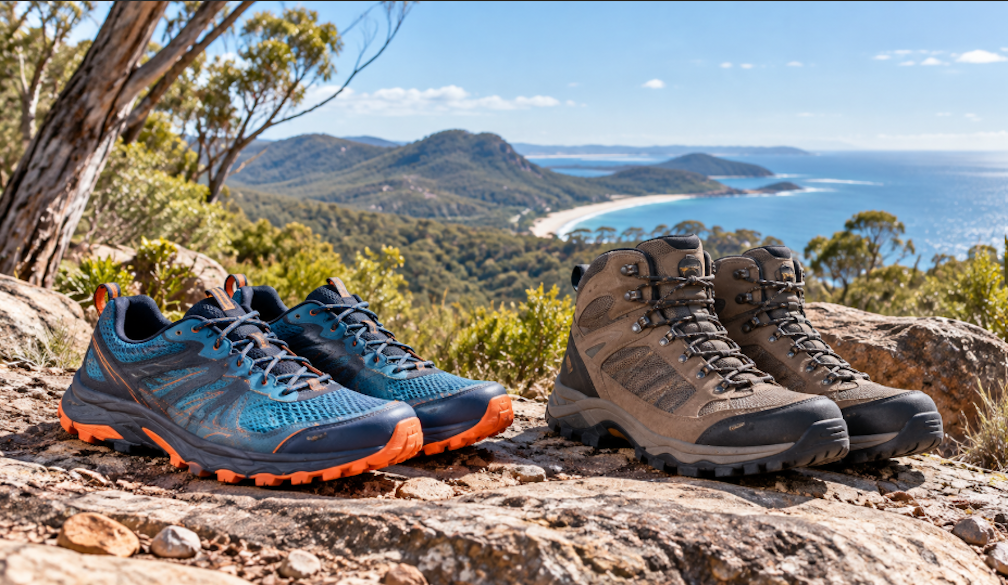
Australia does not offer one neat definition of a “trail.” A weekend walk might mean a hard-packed coastal path outside Sydney, loose gravel through the Flinders Ranges, wet forest in Tasmania or a steep alpine track where the weather changes quickly.
That variety makes footwear choice less obvious than it first appears.
Trail running shoes are generally lighter, more flexible and built for quicker movement. Hiking shoes sacrifice some of that lightness for greater structure, underfoot protection and durability. Neither is automatically safer or more comfortable. The better choice depends on the trail, the load you are carrying, how long you will be out and how much protection your feet actually need.
What Is the Main Difference Between Trail Running Shoes and Hiking Shoes?
Trail runners are running shoes adapted for off-road surfaces. They typically use deeper outsole lugs than road shoes, reinforced uppers and enough protection to deal with gravel, roots and irregular ground.
Hiking shoes are low-cut outdoor shoes designed primarily for walking rather than running. They usually have sturdier uppers, firmer midsoles and more substantial protection around the toe and sides.
NSW National Parks describes trail runners as lighter and more flexible, while hiking footwear is generally tougher and better at keeping out dirt and water. It also notes that the choice comes down partly to stability, durability and personal preference.
The categories increasingly overlap. Some hiking shoes now feel almost like trail runners, while rugged trail-running models can have surprisingly substantial soles.
When Are Trail Running Shoes the Better Choice?
Trail runners make sense when speed, low weight and flexibility matter.
A walker moving quickly on maintained tracks may appreciate having less shoe to lift through thousands of steps. The flexible forefoot can also feel more natural on rolling terrain, particularly for people accustomed to athletic footwear.
They are well suited to:
- maintained dirt tracks
- dry forest trails
- gravel paths
- shorter day walks
- fast hiking with a light pack
- mixed walking and trail-running trips
They also tend to dry faster than heavier footwear when built with breathable mesh rather than waterproof membranes.
That can be useful on warm Australian walks. A waterproof shoe that keeps rain out may also trap more heat, while a ventilated trail runner generally handles hot, dry conditions better.
Where Hiking Shoes Have the Advantage
Rougher ground exposes what has been removed to make a trail shoe light.
Hiking shoes usually place more material between your foot and sharp rock. A firmer midsole or protective plate can make repeated steps over broken stone less tiring. More substantial uppers also help when the sides of the shoe regularly scrape against rock, sticks or coarse vegetation.
When looking at hiking shoes for men, the strongest reason to choose the hiking option is not that it looks tougher. It is that the terrain genuinely calls for more protection or structure.
A heavier pack can change the decision as well. NSW National Parks specifically recommends footwear with good grip and support on uneven surfaces when carrying a substantial load on a multi-day hike.
Australian Trail Grades Give You a Useful Clue
Australia's walking-track grading system runs from Grade 1 to Grade 5.
At the easy end, tracks may be relatively smooth and accessible. Grade 5 walks are aimed at very experienced bushwalkers and can be rough, steep and unmarked, requiring navigation and emergency skills.
The grade does not prescribe footwear, but it tells you something about what your feet will encounter.
On a well-maintained Grade 2 track in dry weather, lightweight trail runners may be entirely adequate. A rougher Grade 4 or Grade 5 route with steep, broken ground makes underfoot protection, traction and durability more valuable.
Distance alone does not make a trail technical. Ten kilometres on a smooth fire trail can be easier on footwear than three kilometres of wet rock and steep descent.
Grip Is More Complicated Than Deep Lugs
A chunky outsole looks capable, but tread depth is only one part of traction.
Rubber compound, lug spacing, lug direction and how much outsole contacts the ground all affect grip. Deep, widely spaced lugs can work well in mud because they penetrate softer ground and shed debris. On flat rock, rubber compound and contact area may become more important.
Australia regularly puts both demands into the same walk.
Blue Mountains sandstone can move from dry and grippy to slick when wet. Alpine trails can combine rock, mud and loose surfaces. Subtropical tracks may stay damp long after rain has stopped.
A 2026 review of footwear research in trail running and hiking found that off-road footwear commonly uses aggressive outsole designs and structural stability features for variable terrain. It also found that the research remains surprisingly limited: only 16 studies met the review criteria, with most focusing on trail running rather than hiking.
So claims that one particular outsole technology is universally “best” deserve some caution.
Does Ankle Height Make Hiking Shoes Safer?
The comparison here is between low-cut trail runners and low-cut hiking shoes, so neither offers the coverage of a traditional boot.
That does not necessarily make either unsuitable.
Foot and ankle stability comes from more than the height of the upper. Outsole width, heel fit, midsole stiffness, strength, fatigue and the terrain itself all play roles.
A low hiking shoe may feel more planted than a very soft trail runner simply because its platform is firmer. Conversely, an experienced walker may prefer the feedback and freedom of a more flexible shoe.
If you repeatedly roll your ankles, carry substantial weight or have an existing ankle problem, footwear choice becomes more individual. A taller boot may be worth considering, but height alone should not be treated as guaranteed injury prevention.
What Happens When You Carry a Heavy Pack?
The extra load makes every uneven landing more noticeable.
With a lightweight daypack containing water, food and a jacket, the difference between a trail runner and hiking shoe may be modest. Add camping equipment, cooking gear and several days of supplies and the firmer platform of a hiking shoe can become more appealing.
A heavily loaded pack also changes balance. Feet may benefit from a broader, more controlled platform on uneven ground.
This does not mean lightweight footwear cannot be used for multi-day hiking. Experienced ultralight walkers often do exactly that. Their pack weight, walking style and familiarity with the terrain are different from someone carrying a conventional trekking load for the first time.
How Should Either Type of Shoe Fit?
The same basic fitting rules apply to both.
Your heel should stay reasonably secure. The forefoot should not spill over the sides of the platform. The toes need enough space to sit naturally and should not strike the front during descents.
Do not add an entire shoe size just because you have heard that hiking footwear should be bigger. NSW National Parks specifically cautions against adding a size yourself. Some extra room is useful for socks, normal foot expansion and downhill walking, but too much can leave the foot moving inside the shoe.
Try footwear later in the day with the socks you intend to wear outdoors. Then test it on an incline if possible.
Downhill fit reveals problems quickly.
Waterproof or Quick-Drying?
This choice deserves almost as much thought as trail runner versus hiking shoe.
Waterproof footwear works well in shallow mud, wet vegetation and cool conditions. Once water enters over the collar, however, a waterproof membrane can make drying slower.
Breathable trail runners take the opposite approach. Water gets in more easily, but many lightweight models also release moisture and dry faster.
Australian conditions make both strategies reasonable.
For a cool Tasmanian walk involving persistent damp ground, keeping water out may be worth the extra warmth. On a hot trail where creek crossings are unavoidable, a lighter shoe that drains and dries quickly can make more sense.
There is no waterproofing rule that fits the whole country.
Heat Changes the Equation
Footwear that works beautifully in winter can feel oppressive in a hot Australian summer.
Parks Victoria advises hikers to consider heat when planning warm-weather walks and recommends carrying roughly 3 to 4 litres of water per person for a full-day hike.
That advice is mainly about hydration, but heat affects footwear too. Feet sweat more, socks become damp and friction can increase.
Light trail runners often have the advantage here because breathable mesh allows more airflow.
Durable hiking shoes with thick uppers and waterproof membranes may run considerably warmer. If most of your walking happens in dry heat, paying for maximum waterproofing may solve a problem you rarely have.
Which Is Better on Rocky Australian Trails?
For sustained rock, hiking shoes generally make the stronger case.
The difference becomes obvious late in the day. A thin, flexible sole lets you feel the trail clearly, which some people enjoy, but repeated contact with sharp rock can fatigue the underside of the foot.
A hiking shoe with more torsional stiffness and underfoot protection can reduce that sensation.
Rock also damages uppers. Reinforced toe caps and abrasion-resistant panels tend to survive repeated contact better than lightweight mesh.
That extra durability comes with more weight, though. On a track containing only occasional rocky sections, you may decide the trade-off is not worthwhile.
Can You Hike Long Distances in Trail Runners?
Absolutely.
Plenty of experienced walkers choose them precisely because the lower weight makes long days feel easier. The important point is that distance should not be separated from terrain, pack weight and the walker's experience.
A 25 km maintained trail in dry conditions may suit trail runners extremely well.
A shorter walk over wet boulders with a heavy pack may favour something more substantial.
For longer Australian trips, hiking shoes for men become especially worth considering when durability and protection outweigh the benefit of saving a few hundred grams.
Should You Break in New Hiking Footwear?
Modern trail runners usually need little breaking in. Many current hiking shoes are similar.
That does not mean wearing a completely new pair on a remote 20 km walk is a good experiment.
Use them on shorter walks first. You want to discover whether the heel rubs, the toes hit the front downhill or the upper presses on one particular spot while you are still close to home.
A shoe that already hurts during a short walk should not be trusted to magically improve after six hours.
FAQs About Trail Running Shoes and Hiking Shoes
Are trail running shoes safe for bushwalking?
Yes, on many trails. They are particularly suitable for confident walkers carrying lighter loads on maintained or moderately technical tracks. A rough trail changes things. So does a heavy pack or hours spent walking in the wet. That’s where hiking shoes often become the more sensible choice.
Do hiking shoes last longer than trail runners?
Often, yes. Hiking shoes usually hold up better over time because there is simply more material in them, especially through the upper and the sole. Trail runners keep things lighter and more flexible, which can mean giving up some durability.
Are trail runners better in hot Australian weather?
Trail runners often feel less hot on the feet, largely because they use lighter materials and plenty of mesh. Waterproof hiking shoes can feel warmer inside, but that really depends on the pair.
Which is better for the Blue Mountains?
It depends on the track and weather. Maintained, dry routes may suit either. Steep, wet or rocky sections make traction and underfoot protection more important, which may favour a sturdier hiking shoe.
Choose for the Worst Part of the Trail, Not the Car Park
Trail runners and hiking shoes have moved close enough together that the old idea of one being “proper” hiking footwear and the other being unsuitable no longer holds up.
A trail runner is often the better tool for fast, light movement on moderate ground. A hiking shoe earns its weight when the route becomes rougher, the pack gets heavier or protecting the foot matters more than shaving grams.
Australian trails make that decision particularly dependent on context. Heat, wet rock, loose gravel, alpine weather and long dry tracks can all appear within the same country, sometimes within the same trip.
Look at the hardest section you expect to walk. Then choose the lightest footwear that still gives you the grip, fit and protection you are comfortable relying on there.


 Daily Bulletin


