

Sydney Academy Partnership Targets Talent Development for Travel and Hospitality
- Written by: Daily Bulletin
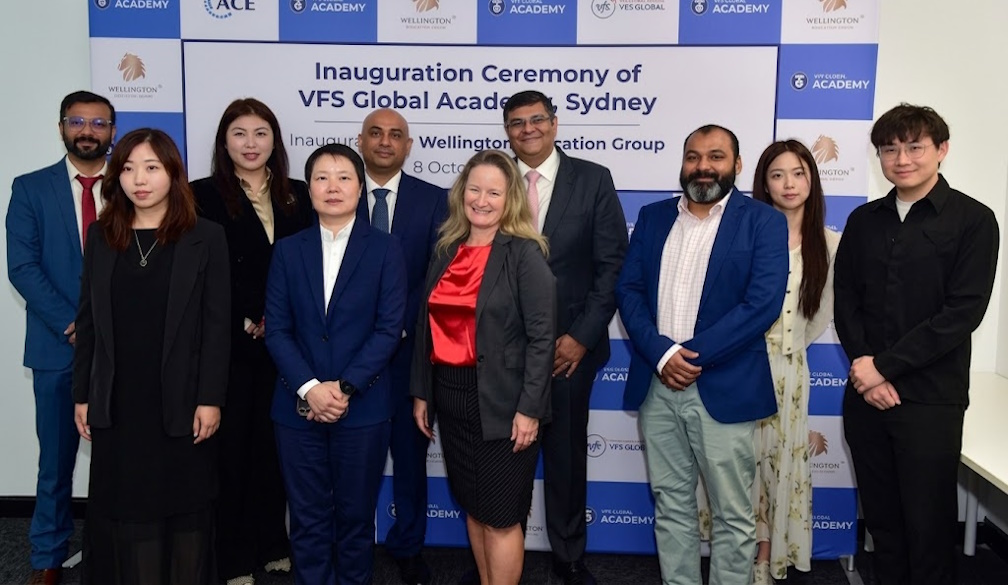
VFS Global Academy’s Australian expansion will focus on practical skills and career development through a partnership with Wellington Education Group.
VFS Global Academy has entered the Australian education market with the launch of a Sydney academy aimed at developing talent for the travel, tourism, hospitality and customer service sectors.
The initiative, delivered in partnership with Australia-based Wellington Education Group (WEG), will offer industry-relevant training for students, graduates and working professionals seeking to strengthen their employment prospects and professional capabilities.
The organisations marked the launch with an inauguration ceremony and the signing of a Memorandum of Understanding at Sydney Town Hall on 8 October. Representatives from education, industry and government attended alongside VFS Global leadership.
For the partners, the Sydney Academy establishes a local base for programmes intended to connect education more closely with workplace requirements. Training will cover both technical and soft skills, preparing learners for customer-facing industries and international work environments.
WEG will support recruitment and student engagement, provide training infrastructure and the online learning platform for programme delivery, and promote the courses across the Australian market.
Kellen Chen, Executive Director of Wellington Education Group Sydney, Australia, said the collaboration was intended to build a lasting relationship with opportunities for learners and industry professionals.
“This collaboration brings together Wellington’s experience in education and training with VFS Global’s extensive international expertise and operational excellence,” Chen said.
“Through the Academy, we look forward to developing practical, industry-relevant learning opportunities that strengthen professional capability, support career development, and contribute to higher standards across the sector.”
Chen said the launch represented the foundation of a long-term partnership with potential to create opportunities in Australia and beyond.
The Sydney operation also extends the international reach of VFS Global Academy, which was established in 2023 as VFS Global’s education and talent development arm.
The Academy now operates across five countries, including India, China, Saudi Arabia, the United Arab Emirates and Australia. Its international locations include Shanghai, Guangzhou, Riyadh, Ajman and Sydney, alongside a network spanning multiple Indian cities.
Amit Saincher, Head of VFS Global Education, Skilling & Mobility, said the Australian launch supported the Academy’s wider goal of linking learning with industry.
“Through our partnership with Wellington Education Group, we aim to equip students and young professionals with skills that are increasingly valued in today's dynamic travel, tourism and hospitality sectors,” Saincher said.
“Together, we are building pathways that support employability, industry readiness and long-term career growth.”
The Academy combines academic learning with practical industry exposure and professional development. Through partnerships with educational institutions, businesses and industry leaders, it aims to help learners build the skills and confidence required for employment.
The Sydney partnership gives that model an Australian presence, with a focus extending from people preparing to enter the workforce to professionals seeking to enhance their existing skills.

 Daily Bulletin


