

Confused about aged care in the home? These 10 charts explain how it works
- Written by: Fron Jackson-Webb, Deputy Editor/Senior Health + Medicine Editor
This week, the Royal Commission into Aged Care Quality and Safety hearings focused on aged care in the home.
Most Australians want to stay in their homes for as long as possible as they advance in age. And the nation’s aged care system provides subsidies to support this choice. But the commission heard evidence that ageing Australians face an average wait of 18-24 months for a home care package.
Those who have secured a package report problems with poorly trained staff, high management fees and unnecessary bureaucracy, such as having to call a 1800 number to change the time someone comes to help them shower.
So how does Australia’s aged care system provide services in the home and why is it under so much pressure?
Australia’s aged care services are delivered through a mix of community and residential services. The three main types of care are:
- home support: provides basic support, such as help with food preparation and transport, for older Australians in their own homes
- home care: provides older people with more complex needs with four levels of care options, from basic care (level 1) which is assistance with tasks such as bathing and transport, to more complex needs (up to level 4) such as nursing care
- residential care: provides care and accommodation for people who can no longer live independently in their own homes.
Read more: Explainer: what is a home care package and who is eligible?
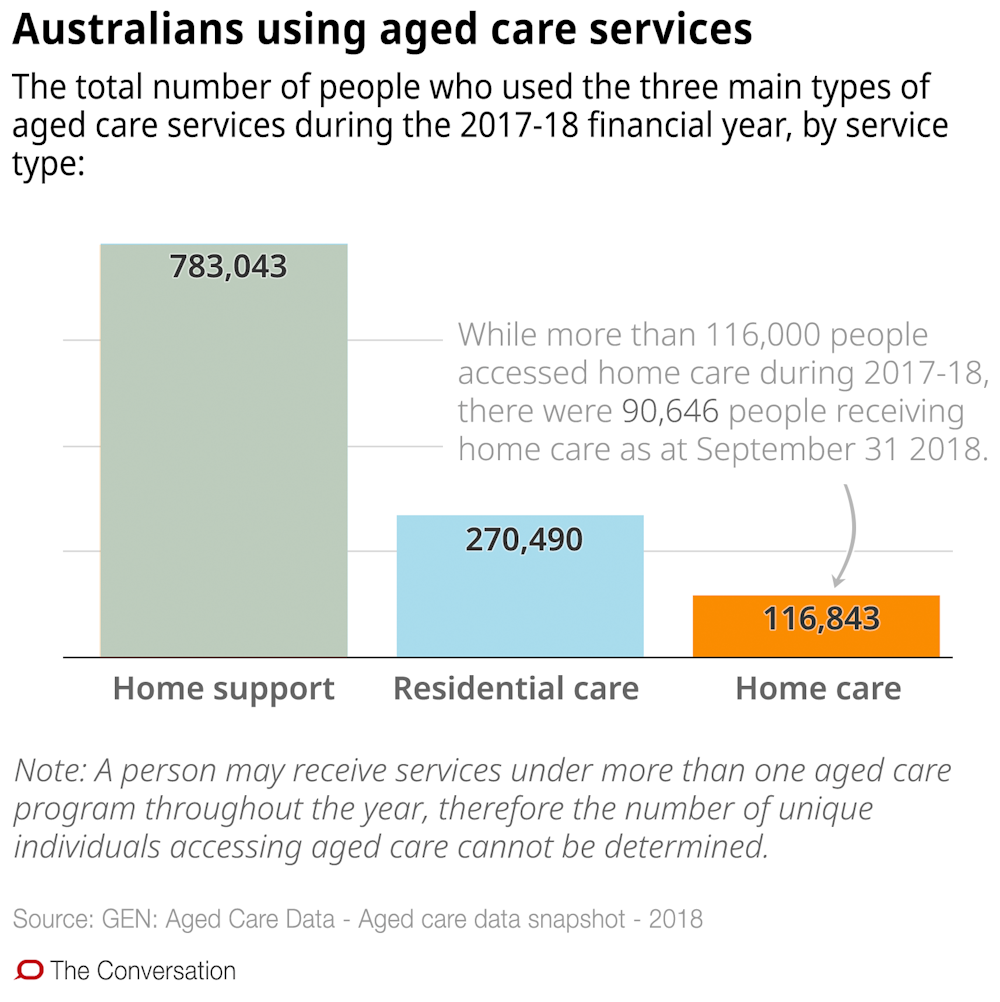
In the 2017-18 financial year, more than 1.2 million Australians used some form of aged care service – with the majority receiving home-based support or care.
As at September 2018, there were 90,646 people receiving one of the government’s subsidised home care packages.
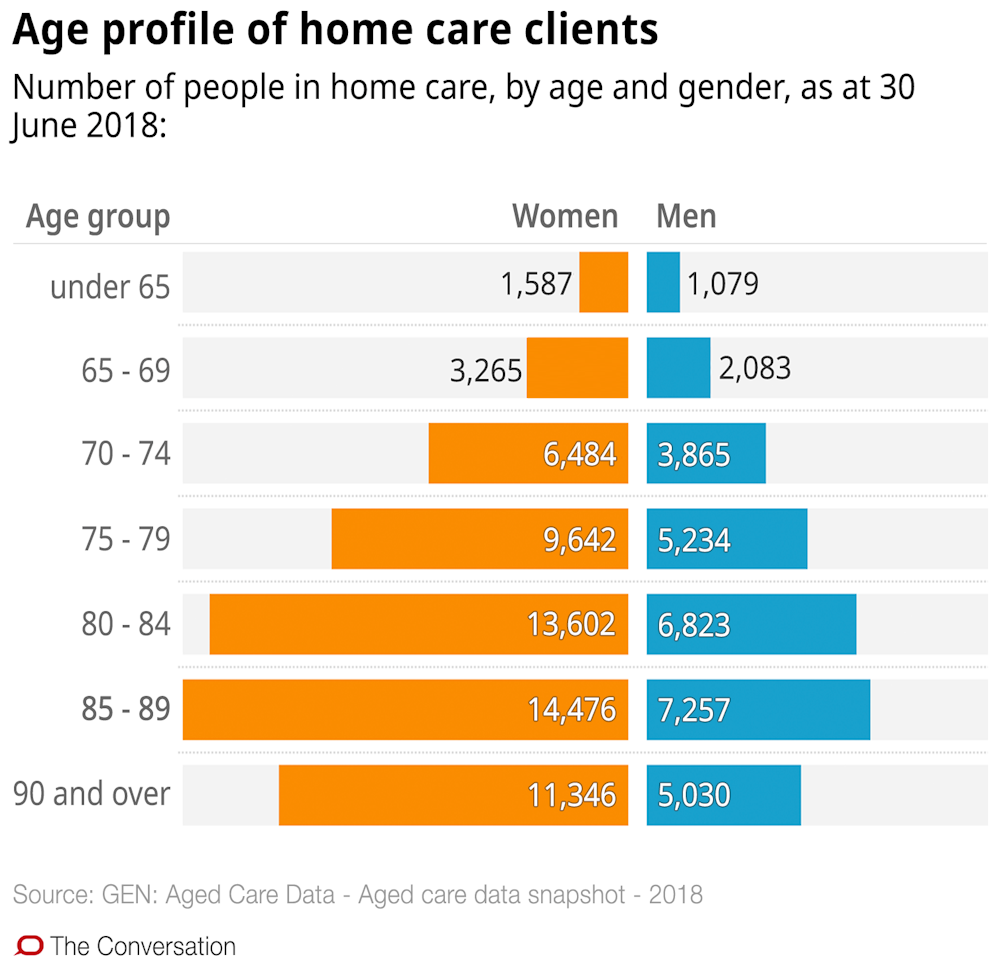
 Most people who receive home care packages (about 63%) are aged 80 years or over. The number of women receiving home care packages is almost double the number of men.
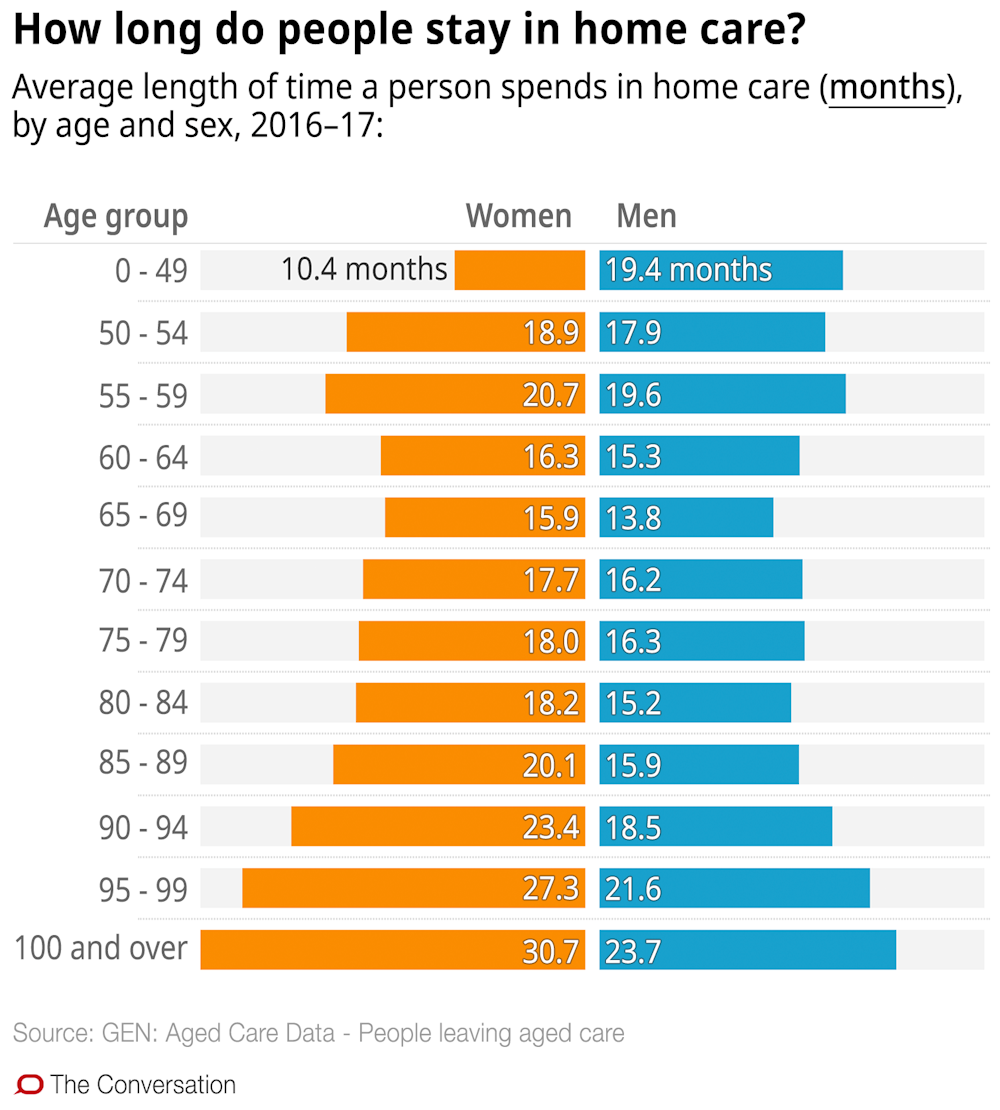
 In 2016-17, the average length of time a person received home care was just under 19 months, compared to about 30 months for someone in residential care.
 The number of older Australians accessing home care packages is rising. During the 2017-18 financial year, 116,843 people accessed home care packages.
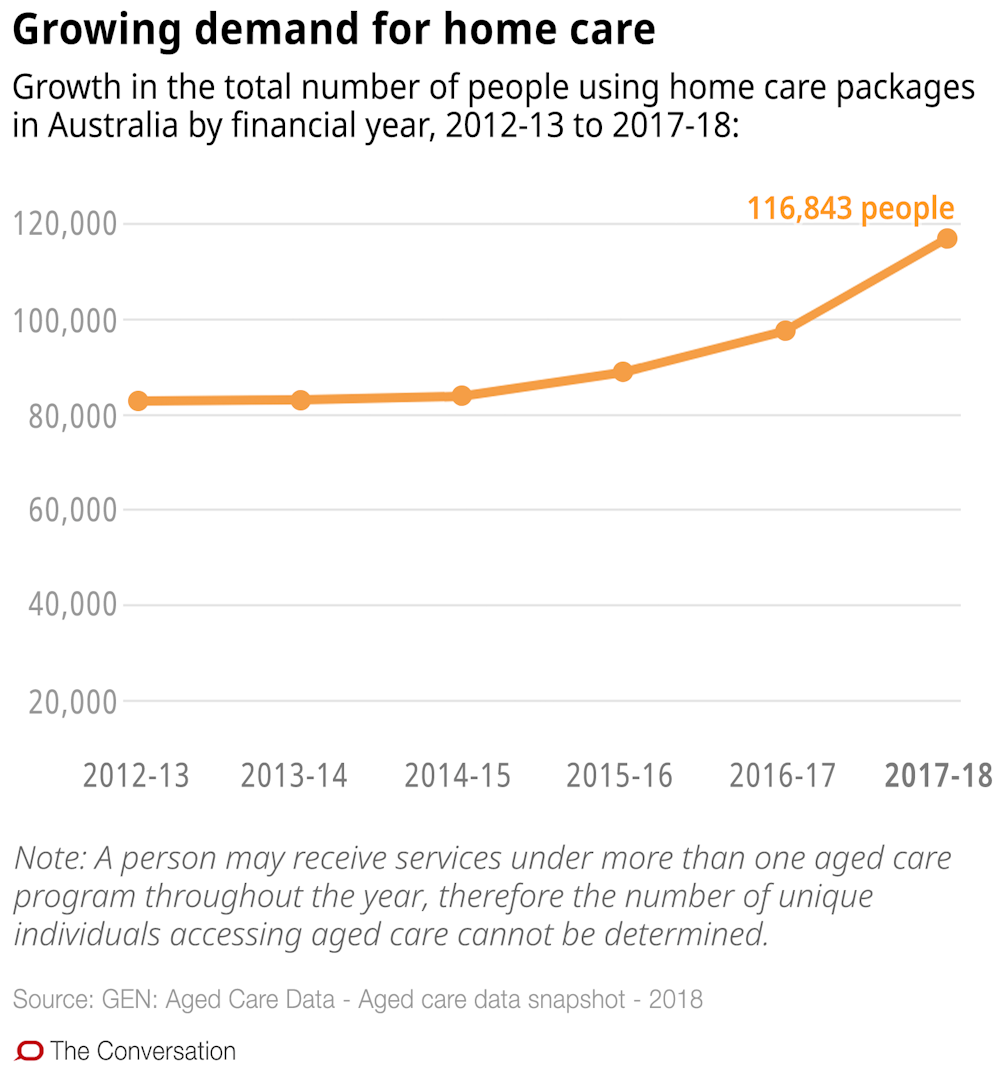 Due to the increasing demand, the government funded an extra 14,000 home care places over four years in the 2017-18 budget.
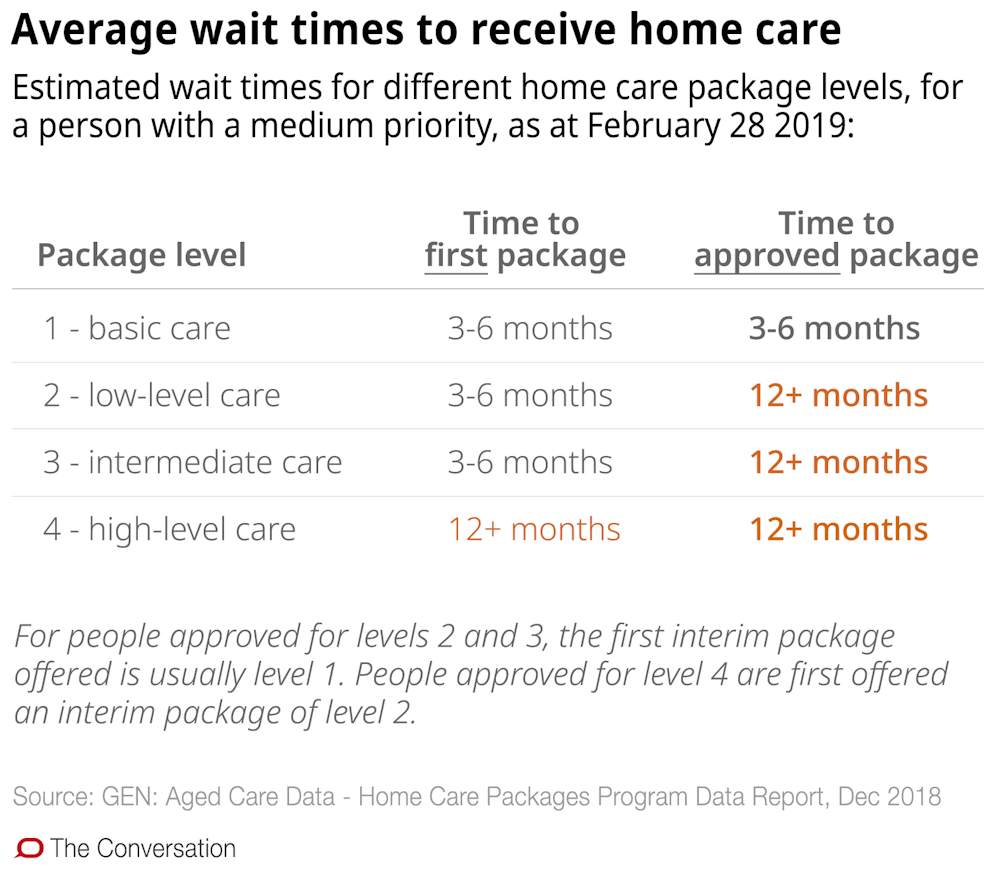
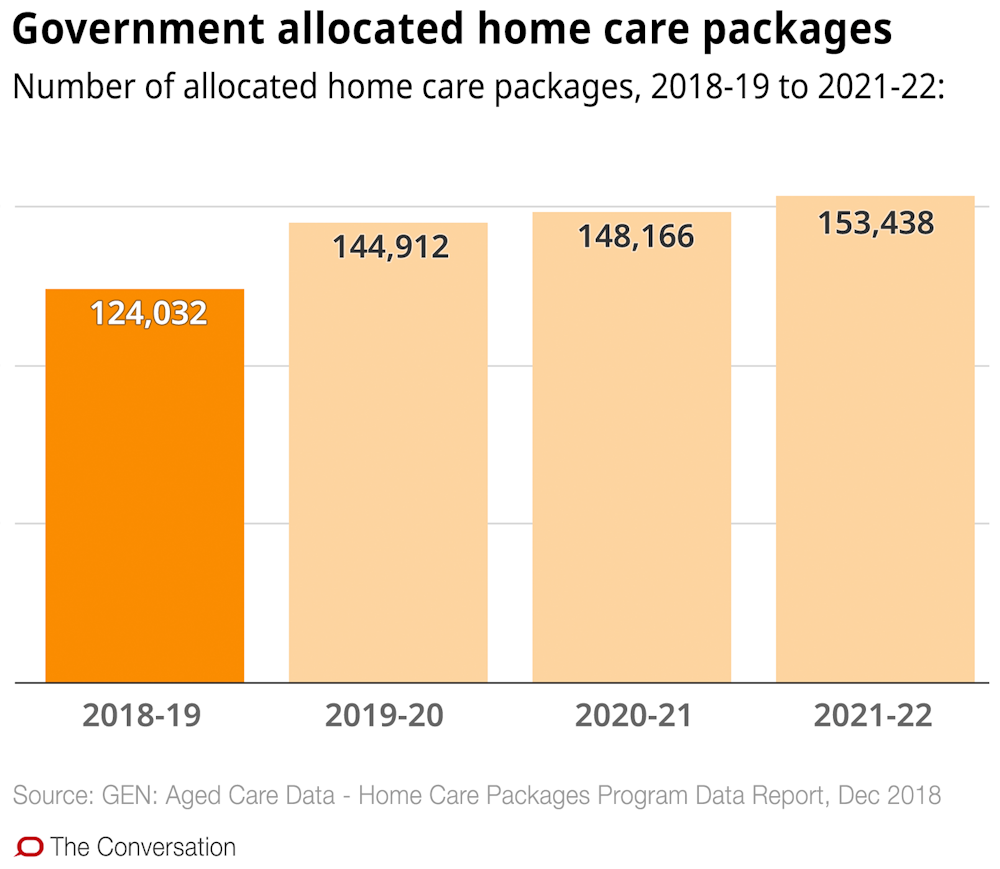 But more than 127,000 people were on the waiting list to access their preferred level of care in December 2018. Of those, about 29,000 have been placed in interim care. This means they’re receiving a home care package below the level they’ve been approved for.
People who apply for home care packages above level 1 usually wait more than 12 months to receive a package at their approved care level.
But more than 127,000 people were on the waiting list to access their preferred level of care in December 2018. Of those, about 29,000 have been placed in interim care. This means they’re receiving a home care package below the level they’ve been approved for.
People who apply for home care packages above level 1 usually wait more than 12 months to receive a package at their approved care level.
 The number of home care service providers has increased significantly in recent years. More than 900 approved providers now offer home care packages, up from around 690 in March 2017.
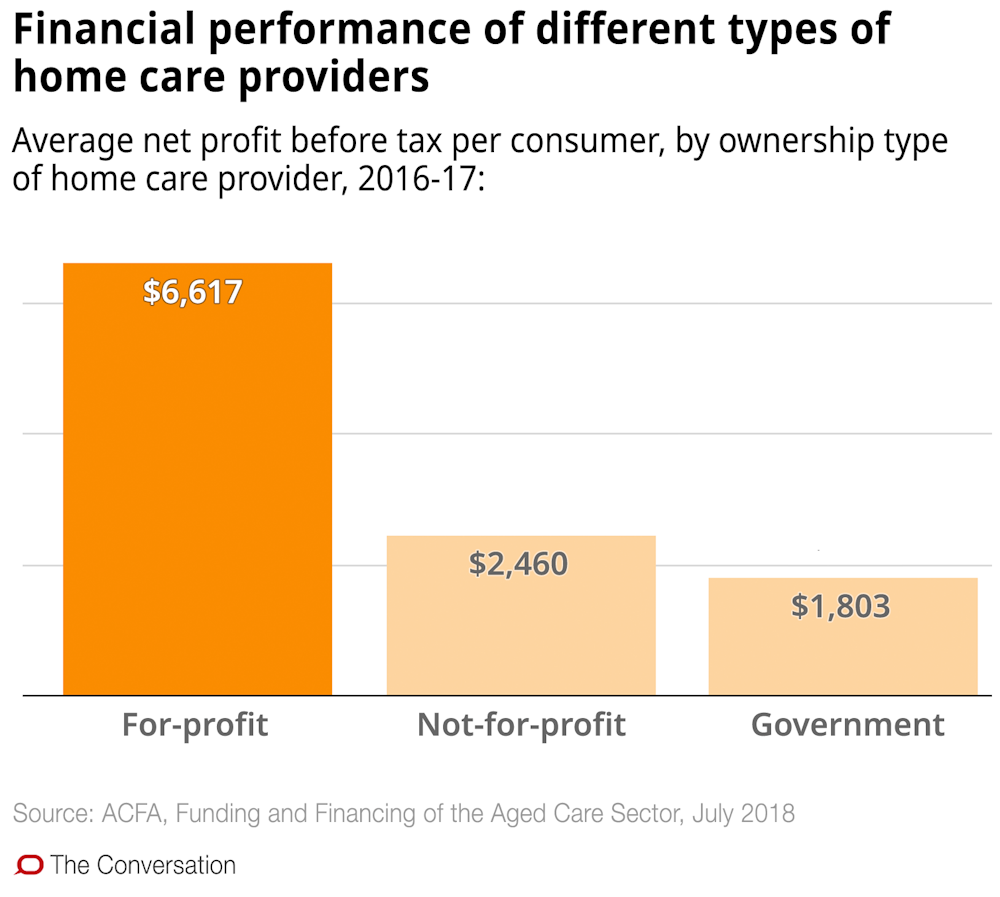
 Home care providers made an average net profit (before tax) of A$2,832 per consumer in 2016-17. This was a slight decrease of 0.8% from the previous financial year, mainly due to the large increase in the number of home care consumers in 2016-17.
But if we look at the financial performance of home care providers by ownership type, we see there is a significant difference in the margins between the for-profit providers and the not-for-profit and government providers.
Home care providers made an average net profit (before tax) of A$2,832 per consumer in 2016-17. This was a slight decrease of 0.8% from the previous financial year, mainly due to the large increase in the number of home care consumers in 2016-17.
But if we look at the financial performance of home care providers by ownership type, we see there is a significant difference in the margins between the for-profit providers and the not-for-profit and government providers.
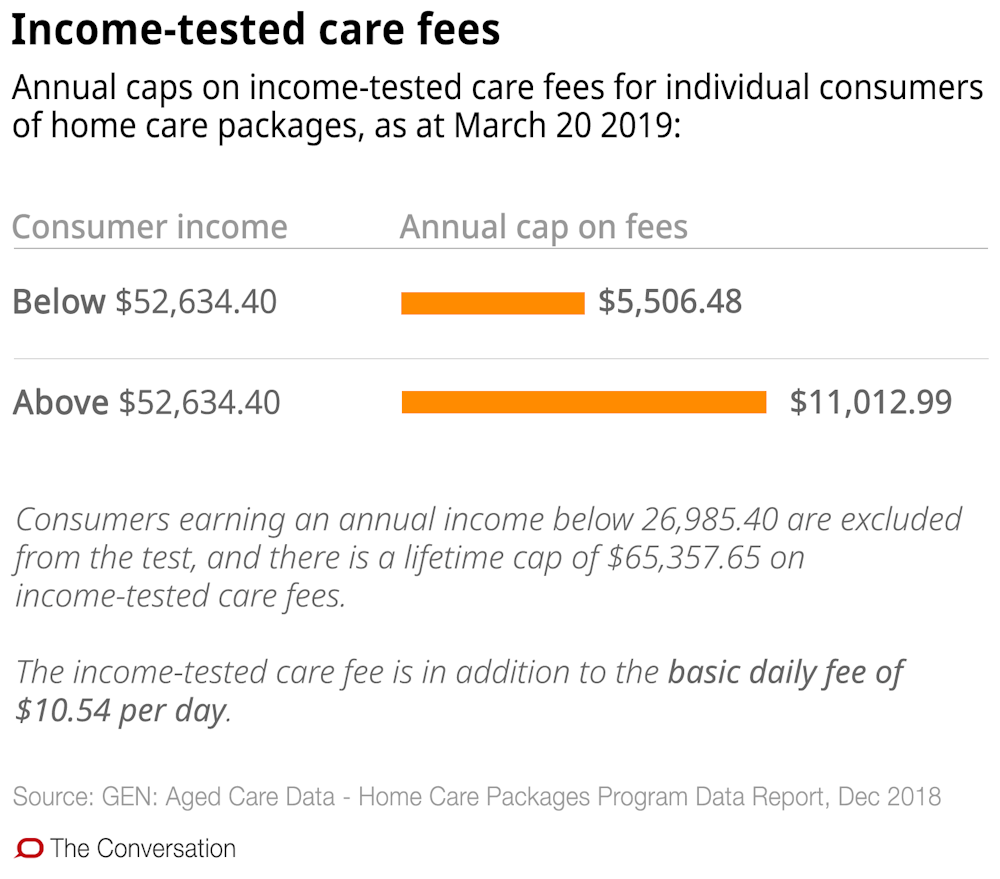
 Home care providers can charge consumers with three types of fees:
a basic daily fee of A$10.54 per day
an income-tested care fee
additional fees for care or services not covered by the home care package.
The basic daily fee for a home care package is 17.5% of the single person rate of the basic age pension. From 20 March 2019, the fee is A$10.54 per day (A$147.56 per fortnight).
The income-tested care fee is dependent on the income of the recipient, and is in addition to the basic daily fee.
Home care providers can charge consumers with three types of fees:
a basic daily fee of A$10.54 per day
an income-tested care fee
additional fees for care or services not covered by the home care package.
The basic daily fee for a home care package is 17.5% of the single person rate of the basic age pension. From 20 March 2019, the fee is A$10.54 per day (A$147.56 per fortnight).
The income-tested care fee is dependent on the income of the recipient, and is in addition to the basic daily fee.
 The Australian government subsidises the costs of home care packages. The amount of the subsidy depends on the level of care received.
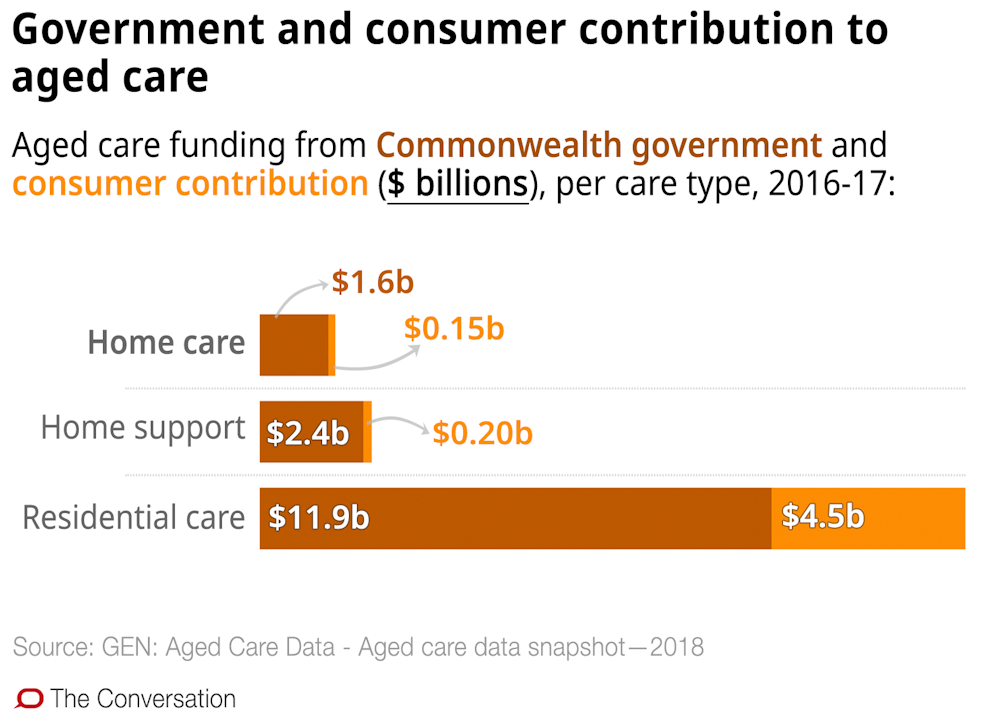
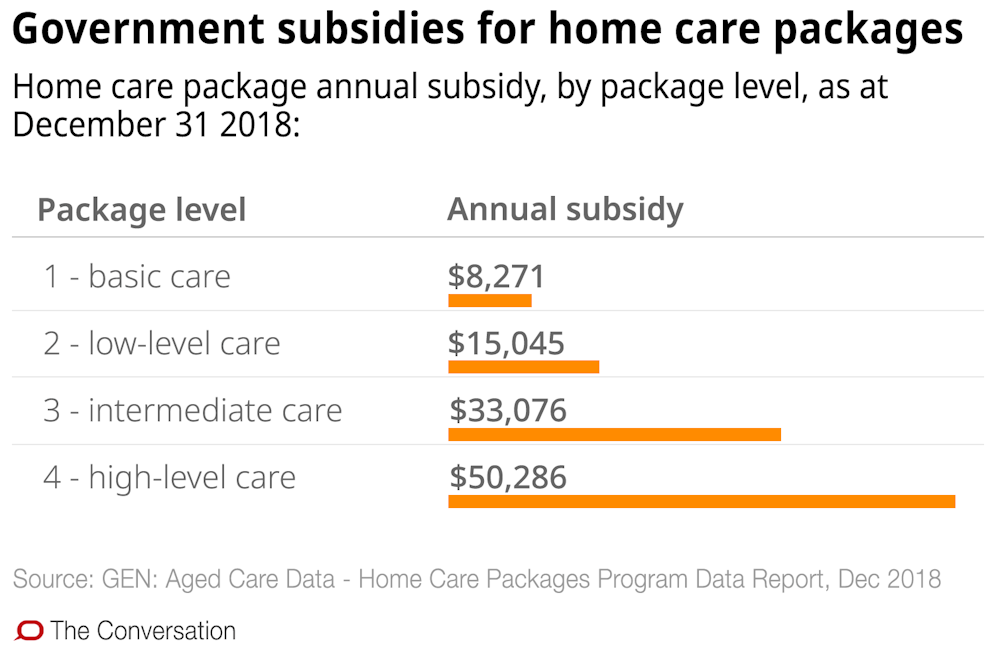 In the 2016-17 financial year, the Australian government provided A$1.6 billion in funding towards home care packages.
 Read more: Would you like to grow old at home? Why we’re struggling to meet demand for subsidised home care
Read more: Don’t wait for a crisis – start planning your aged care now
Read more: Would you like to grow old at home? Why we’re struggling to meet demand for subsidised home care
Read more: Don’t wait for a crisis – start planning your aged care now
Authors: Fron Jackson-Webb, Deputy Editor/Senior Health + Medicine Editor


 Daily Bulletin


