

Friday essay: YouTube apologies and reality TV revelations - the rise of the public confession
- Written by: Kate Douglas, Professor, Flinders University
A little over a year ago, former Australian cricket captain Steve Smith made a tearful confession and apology to the public, having been banned from cricket for 12 months for ball tampering. Smith’s confession was expected. As Australian captain, he would take responsibility for the indiscretions of the whole team.
Smith’s televised confession and apology, and a later Vodafone advertisement referencing it that leans into a redemption narrative, have paved the way for his atonement and successful return to cricket. Smith recently played for the Australia XI in a game against New Zealand; he and Warner will likely play in the first Ashes in August.
We might interpret these confessions cynically, as a public relations exercise. But it is also clear that, in performing these acts, Smith is following particular, expected cultural templates for confession and apology.
Though confession has its origins within Judeo-Christian faiths, it has evolved to become one of Western society’s most familiar rituals. We see confessions every day: in literature, on television, and now online. Some are more convincing than others.
While confessions on reality TV programs, on certain current affairs shows, and from YouTubers who thrive on controversy are now quite formulaic, new spaces are constantly opening up for confessional narratives. Anonymous social media spaces such as “Reddit” have shown that there is something potentially liberating about sending an anonymous (or semi-anonymous) confession out into the world. While these do have the potential to cause harm, they show just how strong the confessional impulse can be.
The word confession originates from Latin Middle English via Old French Latin (confession, confiture – meaning “acknowledge”). In the act of confession, people disclose their sins (by speaking to a priest) or as part of the sacrament of reconciliation. But whatever the context for the confession, the listener is essential; only they have the power to judge and absolve.
Secular contexts
Though influenced by its religious origins, confession has become meaningful in secular contexts. It is central to legal discourse. The admission of a crime within a court of law is the first step towards penance and possibly absolution.
Read more: Friday essay: how do you measure remorse?
 Goodreads
The tradition of literary confession is thought to have begun with Saint Augustine’s Confessions, written between AD397-400. Augustine writes about the sins of his youth and his eventual conversion to Christianity. Along with Jean-Jacques Rosseau’s 1782 autobiography Confessions, Augustine has provided a model for writing the confessional that has endured over time: deep, intimate introspection as the first-person author or speaker admits to having committed sins that they wish to atone for.
“Confessional” is now used to describe any autobiography or memoir that is particularly intimate in its revelations.
Authors such as Lena Dunham, Lindy West, and Amy Schumer have mined the deeply personal subjects of their lives for their memoirs.
In Australia, comedians like Judith Lucy use confession, usually in the form of embarrassing personal disclosure, as the foundation for their stand-up. More recently, Hannah Gadsby, in Nanette, explored the problems that come with confessing for laughs. Gadsby persuasively argued that comedians (particularly those from minority groups) should not use self-deprecating humour to put themselves down. Personal stories should instead be positioned as a powerful means of connecting humanity through mutual understanding. Now, Gadsby continues to tell personal stories, but on her own terms – to share and explore her politics on issues such as gender, sexuality, and power.
Goodreads
The tradition of literary confession is thought to have begun with Saint Augustine’s Confessions, written between AD397-400. Augustine writes about the sins of his youth and his eventual conversion to Christianity. Along with Jean-Jacques Rosseau’s 1782 autobiography Confessions, Augustine has provided a model for writing the confessional that has endured over time: deep, intimate introspection as the first-person author or speaker admits to having committed sins that they wish to atone for.
“Confessional” is now used to describe any autobiography or memoir that is particularly intimate in its revelations.
Authors such as Lena Dunham, Lindy West, and Amy Schumer have mined the deeply personal subjects of their lives for their memoirs.
In Australia, comedians like Judith Lucy use confession, usually in the form of embarrassing personal disclosure, as the foundation for their stand-up. More recently, Hannah Gadsby, in Nanette, explored the problems that come with confessing for laughs. Gadsby persuasively argued that comedians (particularly those from minority groups) should not use self-deprecating humour to put themselves down. Personal stories should instead be positioned as a powerful means of connecting humanity through mutual understanding. Now, Gadsby continues to tell personal stories, but on her own terms – to share and explore her politics on issues such as gender, sexuality, and power.
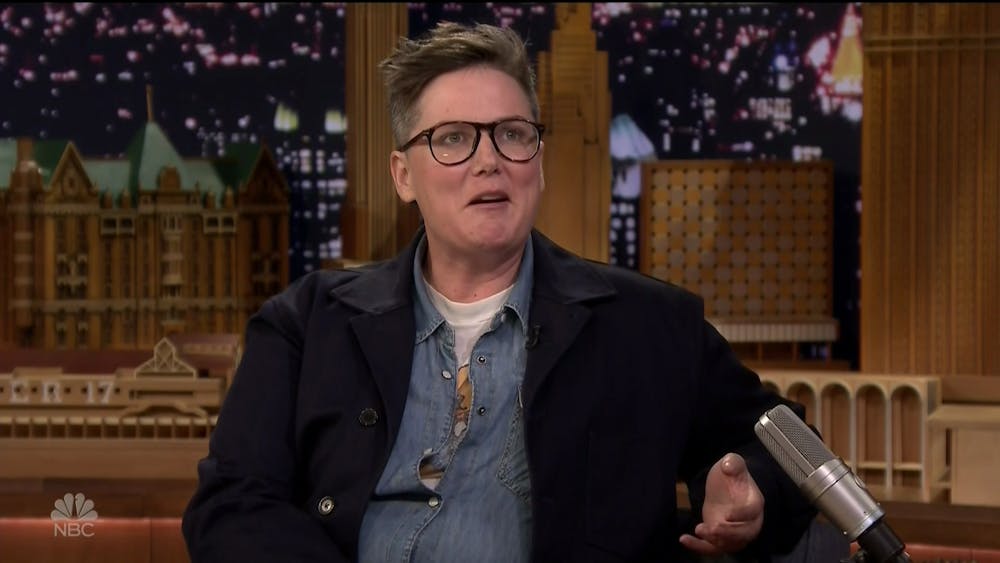 Comedian Hannah Gadsby spoke in her show Nanette of the problems that come with confessing for laughs.
Supplied by WENN.com/AAP
In these contexts, where humour, confession, and trauma intersect, the listener is positioned to respond with empathy and without judgement. Such self-disclosures establish a sense of intimacy between performer and audience; this might forge connections in an often individualistic, impersonal world.
Read more:
Friday essay: garish feminism and the new poetic confessionalism
Schadenfreude and current affairs TV
Confessions are also a staple of televised entertainment, encouraging a very different listener/spectator dynamic. Contemporary television confessions are usually about an indiscretion and the need to expunge guilt – for personal reasons or because society requires it (like Steve Smith). Or, the confessor might benefit in some way from the confession (for instance, fame, infamy or monetary reward).
Witness the rise of minor celebrities from reality TV shows like Married at First Sight. At the program’s “commitment ceremonies”, those who offered the most salacious disclosures have become the most in/famous participants. Viewers witnessed the indiscretions on previous episodes. And because they know how these programs work, they are aware that the confessions are coming, and will become an integral part of the show’s narrative arc.
Confessional narratives are sometimes positioned as therapeutic for the confessor, but the viewer is invited to engage in schadenfreude – the joy of witnessing someone else’s misfortune. Reality TV confessions are edited and structured for their sensational value, rather than complexity or nuance. The confession exists in a formulaic mode; the genre is rarely transgressed.
Comedian Hannah Gadsby spoke in her show Nanette of the problems that come with confessing for laughs.
Supplied by WENN.com/AAP
In these contexts, where humour, confession, and trauma intersect, the listener is positioned to respond with empathy and without judgement. Such self-disclosures establish a sense of intimacy between performer and audience; this might forge connections in an often individualistic, impersonal world.
Read more:
Friday essay: garish feminism and the new poetic confessionalism
Schadenfreude and current affairs TV
Confessions are also a staple of televised entertainment, encouraging a very different listener/spectator dynamic. Contemporary television confessions are usually about an indiscretion and the need to expunge guilt – for personal reasons or because society requires it (like Steve Smith). Or, the confessor might benefit in some way from the confession (for instance, fame, infamy or monetary reward).
Witness the rise of minor celebrities from reality TV shows like Married at First Sight. At the program’s “commitment ceremonies”, those who offered the most salacious disclosures have become the most in/famous participants. Viewers witnessed the indiscretions on previous episodes. And because they know how these programs work, they are aware that the confessions are coming, and will become an integral part of the show’s narrative arc.
Confessional narratives are sometimes positioned as therapeutic for the confessor, but the viewer is invited to engage in schadenfreude – the joy of witnessing someone else’s misfortune. Reality TV confessions are edited and structured for their sensational value, rather than complexity or nuance. The confession exists in a formulaic mode; the genre is rarely transgressed.
 Confessions have become an expected ritual in Married at First Sight.
9now/IMDB
On a Sunday evening you will typically witness confessions on 60 Minutes or Sunday Night. The latter recently ran a story titled “Sex, Guys and Videos” in which so-called “football groupies” (women who date famous AFL or NRL players) disclosed their experiences with the sport’s cultures of toxic masculinity (in particular, sex scandals). Such confessions are constructed as cautionary tales for the viewer: “don’t fall into the traps that I have”. The women discussed their hurt and embarrassment. But these confessions also function as a celebrity exposé and a strong social commentary around power, sexual consent and sexist cultures that seek to silence and degrade women. Confession commonly implicates others.
Confessing online
Not surprisingly, there are myriad outlets for confession online, whether public, semi-public, or anonymous; indeed, the internet has been described as a “global confessing machine”.
There are possibly millions of portals online catering to different genres of confession. On the news, rating and discussion site and app, Reddit, there are various discussion pages or “subreddits” devoted to anonymous confession. One called “Admit your wrongdoings”, has over a million subscribers.
The “rules” of this subreddit state that all submissions must be a confession, ie a statement that “presumes that you are providing information that you believe other people in your life are not aware of, and is frequently associated with an admission of a moral or legal wrong”. Common confessions here include cheating on partners, failing college, and financial failures.
Perhaps the most infamous spaces for online confessions in recent years are anonymous social networking apps such as “Whisper”, and “Confide”. Designed for mobile use, they allow users (most likely young people) to publicly share secrets and confessions, usually through uploading a symbolic image and one-line caption. Confessional subjects include the breakdown of friendships, unrequited love, and family secrets.
Other apps such as “Wut”, “Rumr” and “Sarahah” are described as “semi-anonymous” because users exist in a known network (for instance, a school or work network), but messages are anonymous.
These anonymous messages are not first-person confessions, but confessions directed towards another. They usually take the form of “feedback” to another user (“I said I liked your formal dress, but really I hate it”). This, unsurprisingly, has resulted in instances of bullying and the potential for defamation.
The likely appeal of these anonymous apps is that they offer an antidote to the more public and performative spaces of Facebook and Instagram, enabling young people to engage anonymously outside of their usual social networks.
Confessions have become an expected ritual in Married at First Sight.
9now/IMDB
On a Sunday evening you will typically witness confessions on 60 Minutes or Sunday Night. The latter recently ran a story titled “Sex, Guys and Videos” in which so-called “football groupies” (women who date famous AFL or NRL players) disclosed their experiences with the sport’s cultures of toxic masculinity (in particular, sex scandals). Such confessions are constructed as cautionary tales for the viewer: “don’t fall into the traps that I have”. The women discussed their hurt and embarrassment. But these confessions also function as a celebrity exposé and a strong social commentary around power, sexual consent and sexist cultures that seek to silence and degrade women. Confession commonly implicates others.
Confessing online
Not surprisingly, there are myriad outlets for confession online, whether public, semi-public, or anonymous; indeed, the internet has been described as a “global confessing machine”.
There are possibly millions of portals online catering to different genres of confession. On the news, rating and discussion site and app, Reddit, there are various discussion pages or “subreddits” devoted to anonymous confession. One called “Admit your wrongdoings”, has over a million subscribers.
The “rules” of this subreddit state that all submissions must be a confession, ie a statement that “presumes that you are providing information that you believe other people in your life are not aware of, and is frequently associated with an admission of a moral or legal wrong”. Common confessions here include cheating on partners, failing college, and financial failures.
Perhaps the most infamous spaces for online confessions in recent years are anonymous social networking apps such as “Whisper”, and “Confide”. Designed for mobile use, they allow users (most likely young people) to publicly share secrets and confessions, usually through uploading a symbolic image and one-line caption. Confessional subjects include the breakdown of friendships, unrequited love, and family secrets.
Other apps such as “Wut”, “Rumr” and “Sarahah” are described as “semi-anonymous” because users exist in a known network (for instance, a school or work network), but messages are anonymous.
These anonymous messages are not first-person confessions, but confessions directed towards another. They usually take the form of “feedback” to another user (“I said I liked your formal dress, but really I hate it”). This, unsurprisingly, has resulted in instances of bullying and the potential for defamation.
The likely appeal of these anonymous apps is that they offer an antidote to the more public and performative spaces of Facebook and Instagram, enabling young people to engage anonymously outside of their usual social networks.
 Anonymous social networking apps like Whisper have become a new forum for confession.
Sharaf Maksumov/Shutterstock
As my colleagues and I have found, personal disclosure can be positive and empowering for young people. Online self-representations and self-disclosures can encourage teenagers to take control of their public self-image and how and where it is shared.
There are lots of moral panics about teens over-sharing online, or having stories and images shared without consent. But it is possible that the more experience young people have using different apps and sites, the more skilled, knowledgeable, and comfortable they will be using them to their own benefit.
Social media self-representations can be a site for creativity, showcasing photography, clothing ensembles, hair and make-up, making memes and so on. Private, online confessional spaces can offer supportive networks for exploring thoughts and ideas than require a more intimate public and a place for positive exploration of identities with like-minded peers.
The use of anonymous apps suggests that there is something emancipatory about being invisible amidst so much pressure to be active and visible in their everyday public storying to larger networks on Snapchat and Instagram. There’s potentially something thrilling in the risk of being recognised, or of recognising someone else when engaged in online confession. There’s also the promise of social contact, of connection, attention and validation.
But these apps also have the potential to prey on young people’s sense of alienation or loneliness – when confessions are elicited by platforms designed for profit, who holds the power?
Anonymous social networking apps like Whisper have become a new forum for confession.
Sharaf Maksumov/Shutterstock
As my colleagues and I have found, personal disclosure can be positive and empowering for young people. Online self-representations and self-disclosures can encourage teenagers to take control of their public self-image and how and where it is shared.
There are lots of moral panics about teens over-sharing online, or having stories and images shared without consent. But it is possible that the more experience young people have using different apps and sites, the more skilled, knowledgeable, and comfortable they will be using them to their own benefit.
Social media self-representations can be a site for creativity, showcasing photography, clothing ensembles, hair and make-up, making memes and so on. Private, online confessional spaces can offer supportive networks for exploring thoughts and ideas than require a more intimate public and a place for positive exploration of identities with like-minded peers.
The use of anonymous apps suggests that there is something emancipatory about being invisible amidst so much pressure to be active and visible in their everyday public storying to larger networks on Snapchat and Instagram. There’s potentially something thrilling in the risk of being recognised, or of recognising someone else when engaged in online confession. There’s also the promise of social contact, of connection, attention and validation.
But these apps also have the potential to prey on young people’s sense of alienation or loneliness – when confessions are elicited by platforms designed for profit, who holds the power?
 Anonymous social media apps could be emancipatory for young people - but they could also prey on loneliness.
Shutterstock
Such concerns – about the potential manipulation of young media consumers – are not new; they simply shift according to new media trends. As I found in my research, young people’s engagements with sites such as these anonymous ones are much more complex than we currently know, and are shifting at a pace faster than we can track.
Engagements with social media can be time-consuming, dull, and harmful. They can also be empowering, creative, and community-forming. And they might be everything in between.
Either/or debates are not useful here: we need to develop much more nuanced discussions on this fast-shifting cultural terrain. And these discussions are best driven by young cultural consumers and producers.
YouTube apologies
Another genre of confession that has become very visible online is apologies from “YouTubers”. The usual sequence of events is this: the YouTuber says something inappropriate or offensive in a video on their channel. They receive backlash from the media or from followers. As in the case of Steve Smith, they must conform to established scripts for confession and apology or else risk being “cancelled” by their fans.
As writer Morgan Sung has noted, because their YouTube content is most often autobiographical, covering intimate subjects and perspectives, apologies are expected as an extension of this constructed intimacy between YouTuber and viewer.
For instance, one of the most well-known YouTubers, Shane Dawson, has found himself in an apologetic loop as he tries to evade his own digital footprint. The now 30-year-old Dawson has confessed to, and apologised for, things he said online during his younger days, most notably for offensive jokes he made during his late-teens “shock” phase. He was heavily criticised for his racially offensive humour, inappropriate sexual jokes, and the attention he paid to conspiracy theories.
Just last week we witnessed the rapid fall of YouTube beauty blogger and make up artist James Charles. Charles’s public feud with fellow YouTuber and former mentor Tati Westbrook resulted in him losing over 2.5 million subscribers. Charles’s numerous confessions via apology videos did not initially help his case. However, after a week of excessive social media banter and accusation (and a 40-minute video from Charles titled No More Lies), the feud seems to have settled a little.
James Charles’s apology video.Apology videos have become so common they are now often the subject of parody for being insincere or exaggerated. These videos have a formulaic structure; they most often function as image repair - to ensure the YouTuber does not lose their followers. Like the reality television confessions, these apology videos follow expected templates.
The confession compulsion
Though confession has evolved considerably since the times of Augustine and Rosseau, we can see familiar patterns in contemporary practices: we are guided by the moral conventions of our time to perform confession and contrition when required, or else suffer the consequences. Confession, whether anonymous or public, has long been positioned as a means for redemption, connection, or simply, a way of feeling better.
Whether or not confession is therapeutic is still up for debate, and no doubt its potential is time and culture-specific.
But if the stakes are high enough; if confession and apology are required for the maintenance of economic livelihood, or fame, these acts, whether believable, will at least be predictable.
Anonymous social media apps could be emancipatory for young people - but they could also prey on loneliness.
Shutterstock
Such concerns – about the potential manipulation of young media consumers – are not new; they simply shift according to new media trends. As I found in my research, young people’s engagements with sites such as these anonymous ones are much more complex than we currently know, and are shifting at a pace faster than we can track.
Engagements with social media can be time-consuming, dull, and harmful. They can also be empowering, creative, and community-forming. And they might be everything in between.
Either/or debates are not useful here: we need to develop much more nuanced discussions on this fast-shifting cultural terrain. And these discussions are best driven by young cultural consumers and producers.
YouTube apologies
Another genre of confession that has become very visible online is apologies from “YouTubers”. The usual sequence of events is this: the YouTuber says something inappropriate or offensive in a video on their channel. They receive backlash from the media or from followers. As in the case of Steve Smith, they must conform to established scripts for confession and apology or else risk being “cancelled” by their fans.
As writer Morgan Sung has noted, because their YouTube content is most often autobiographical, covering intimate subjects and perspectives, apologies are expected as an extension of this constructed intimacy between YouTuber and viewer.
For instance, one of the most well-known YouTubers, Shane Dawson, has found himself in an apologetic loop as he tries to evade his own digital footprint. The now 30-year-old Dawson has confessed to, and apologised for, things he said online during his younger days, most notably for offensive jokes he made during his late-teens “shock” phase. He was heavily criticised for his racially offensive humour, inappropriate sexual jokes, and the attention he paid to conspiracy theories.
Just last week we witnessed the rapid fall of YouTube beauty blogger and make up artist James Charles. Charles’s public feud with fellow YouTuber and former mentor Tati Westbrook resulted in him losing over 2.5 million subscribers. Charles’s numerous confessions via apology videos did not initially help his case. However, after a week of excessive social media banter and accusation (and a 40-minute video from Charles titled No More Lies), the feud seems to have settled a little.
James Charles’s apology video.Apology videos have become so common they are now often the subject of parody for being insincere or exaggerated. These videos have a formulaic structure; they most often function as image repair - to ensure the YouTuber does not lose their followers. Like the reality television confessions, these apology videos follow expected templates.
The confession compulsion
Though confession has evolved considerably since the times of Augustine and Rosseau, we can see familiar patterns in contemporary practices: we are guided by the moral conventions of our time to perform confession and contrition when required, or else suffer the consequences. Confession, whether anonymous or public, has long been positioned as a means for redemption, connection, or simply, a way of feeling better.
Whether or not confession is therapeutic is still up for debate, and no doubt its potential is time and culture-specific.
But if the stakes are high enough; if confession and apology are required for the maintenance of economic livelihood, or fame, these acts, whether believable, will at least be predictable.
Authors: Kate Douglas, Professor, Flinders University


 Daily Bulletin


