

Our culture affects the way we look after ourselves. It should shape the health care we receive, too
- Written by: Sabrina Gupta, Associate lecturer, School of Psychology and Public Health, La Trobe University
This article is the final part in a series, Where culture meets health.
For South Asians, there’s a distinct difference between “rice with curry” and “curry with rice”. When we spoke to Indian and Sri Lankan migrants with type 2 diabetes and heart disease, they told us the advice they received on ways to reduce the quantity of staples like rice in their diet was difficult to implement.
This was because it doesn’t match with their perception of a “proper” meal – that is, a lot of rice and a little bit of curry. Receiving dietary advice not tailored to their cultural needs created a feeling that clinicians didn’t understand the social value they placed on traditional foods.
This acted as a barrier to effectively managing their diets, and in turn, their conditions.
Read more: Australia’s ethnic face is changing, and so are our blood types
While Australia’s multiculturalism enhances the fabric of society, the health outcomes of some of Australia’s culturally and linguistically diverse groups are poor in comparison to the majority population. We looked at type 2 diabetes and heart disease partly because these conditions are experienced more commonly in migrant groups.
Importantly, people from culturally and linguistically diverse backgrounds tend to have lower levels of health literacy than people born in Australia. People with lower health literacy are less likely to access health care, and more likely to mismanage chronic health conditions (for example, by misinterpreting medical advice or medicine dosage instructions, or having a limited sense of severity of disease).
It’s imperative to consider cultural and language differences if we want to achieve the best health outcomes for our diverse population.
Language is just the start
Providing interpreting services in the patient’s language is important, but not the only consideration. Even when someone is well-versed in English, medical terminology or jargon can be hard to comprehend.
In addition, conceptualisations of health and illness and ways of expressing these vary across cultural and language groups.
For example, a common expression for psychosomatic symptoms (where there may be no disease, but physical symptoms such as nausea may be related to mental stress) in either Hindi or Punjabi, is dil (heart) doob (sinking) raha hai (is).
This implies generalised illness, but its direct English translation would be “a sinking heart”.
Another example is the use of ice on an acute injury. This is often seen as going against traditional Chinese medicine principles, upsetting the balance between Yin and Yang energies.
So the focus needs to go beyond language and include broader cultural considerations. For health professionals, this can be achieved by establishing trust with the patient and their family. It means being attuned, respectful and responsive to cultural differences in understandings of disease.
Can someone really be trained to be ‘culturally competent’?
Cultural competency is the ability to work effectively with culturally and linguistically diverse populations.
Many professionals – not only health professionals – should now be aware of the term, with the recent proliferation of cultural competency training packages. These programs are designed to train staff to become more culturally competent by providing information about various cultures.
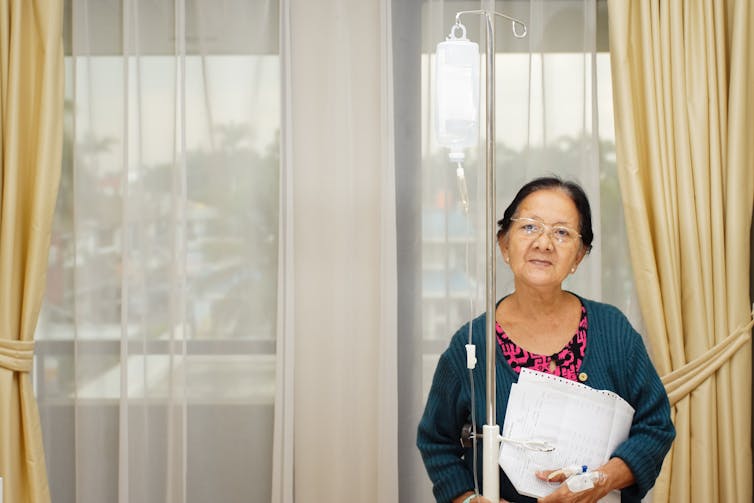 People from different cultural backgrounds have different understandings of health and illness.
From shutterstock.com
People from different cultural backgrounds have different understandings of health and illness.
From shutterstock.com
While these training packages are a good source of information, whether completing the package is enough to deem a person “culturally competent” is questionable.
Many such packages are delivered within a short time frame, leaving little scope for individual learners to reflect on their practices and develop practical strategies around how they can be more culturally responsive.
And these packages rarely include any follow-up assessments or evaluation to ascertain if their completion actually promotes more culturally responsive clinical practice.
Read more: Between health and faith: managing type 2 diabetes during Ramadan
While mandating training is an efficient way to ensure practice improvement and meet accreditation requirements, it can turn people away from being engaged with the learning.
Instead of mandating training, the focus should be on facilitating staff engagement with diverse groups. This might include celebrating cultural diversity by perhaps holding a diversity day in the workplace, where people are encouraged to showcase their cultures through performances, food and traditional outfits.
People need to develop an interest in engaging with culturally and linguistically diverse groups before being motivated to complete training.
Partnership and participation
Apart from equipping staff with knowledge and skills, we need to create a safe and respectful environment where people from culturally and linguistically diverse communities feel empowered to voice their opinions.
Strong partnerships between government, organisations and communities should see a gradual improvement in the engagement of people from culturally and linguistically diverse communities in health-care activities.
Read more: Aboriginal Australians want care after brain injury. But it must consider their cultural needs
While cultural competency implies a skill that can be perfected, cultural responsiveness suggests provision of culturally appropriate care is an ongoing process involving self reflection and lifelong learning.
So rather than striving to be culturally competent, it may be more realistic to work towards the provision of culturally responsive health services.
Authors: Sabrina Gupta, Associate lecturer, School of Psychology and Public Health, La Trobe University


 Daily Bulletin


