

Want to avoid a botched beauty procedure? This is what you need to be wary of
- Written by: Michelle Rodrigues, Consultant Dermatologist, St Vincent's Hospital Melbourne
Recent news that more than a dozen cosmetic beauty operators have been shut down across Victoria in the last year will give many people cause for concern.
One beauty therapist was allegedly found to be operating at the back of a jewellery store, offering risky procedures including mole removal, facial fillers and skin tightening. In many cases, plastic surgeons and dermatologists have been required to treat the damage caused at these rogue salons, including swelling, scarring, and infection.
While low-cost procedures can be alluring, there are several things to keep in mind to ensure the treatments you’re getting are safe and reputable.
Read more: Injecting regulations into cosmetic medicine
Regulation
The skin is the largest and most accessible organ of the body, making skin procedures like laser, dermabrasion, microneedling, skin peels, toxin injections and fillers very common among unqualified or minimally qualified people and clinics.
The Medical Board of Australia, supported by the Australian Health Practitioner Regulation Agency (AHPRA), are the governing bodies for medical professionals. They register practitioners, and enforce guidelines for cosmetic medical and surgical procedures, which serve to protect the community.
There have been cases where registered medical practitioners, including general practitioners, have performed procedures outside their area of expertise or have not conformed with codes of conduct, sometimes with tragic consequences. But in many of these cases, the regulations in place have helped to identify offending practitioners and ensure disciplinary action is taken.
Yet for non-medical operators, for the most part, no training or educational requirements need to be met, no uniform national professional standards or codes of conduct exist, and there is no governing body to whom people can direct concerns.
Essentially, these beauty salons and non-medical clinics are simply not regulated by an external body or organisation.
The importance of medical training
The skin is an organ, just like the heart or lungs. Its structure and function is complex. In order to practise as a dermatologist, a person needs to first complete their medical degree, and then complete a further six years of specialist training in all matters related to the skin, hair and nails.
Laser treatment is commonly offered to treat things like redness on the skin, brown spots, and to improve skin texture and tone.
In order to deliver safe laser treatments, an accurate diagnosis is important. Is the brown spot on your cheek you want to remove a freckle, melasma (a discolouring of the skin) or a melanoma? A person without a medical background could easily mistake a melanoma for a freckle, which could be deadly.
Even if you do have just a freckle, what laser settings will be safe and effective? An intimate understanding of the structure and function of the skin and the physics of the laser is necessary to make these important decisions.
Read more: Friday essay: toxic beauty, then and now
The regulations surrounding who can operate a laser differ from state to state. In Western Australia, unless you’re a medical doctor, nurse, or hold a diploma or certificate IV in beauty therapy (or equivalent) with a licence, you cannot operate a laser for the purpose of hair removal. Further restrictions apply to the use of lasers for cosmetic procedures and tattoo removal. In Queensland and Tasmania, only those with relevant licences can operate laser devices.
For the rest of the country, no regulation exists. This means anyone can offer skin treatments – a person who has done some online training or a weekend course could hang a “laser certificate” on the wall and start using lasers and other devices to treat skin.
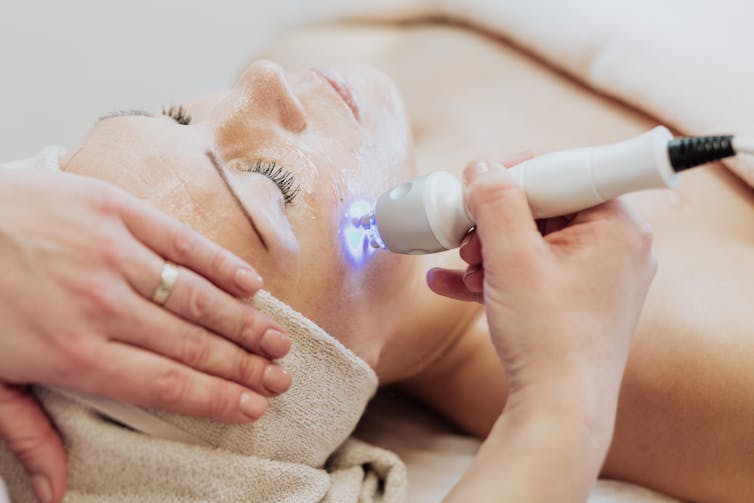 In some Australian states, a person performing laser treatment doesn’t need to have had any training.
From shutterstock.com
In some Australian states, a person performing laser treatment doesn’t need to have had any training.
From shutterstock.com
The same can be said for microneedling, the insertion of very fine, short needles into the skin for the purposes of rejuvenation or to reduce acne scarring. While some states regulate procedures involving skin penetration, particularly around infection control, no uniform minimum training requirements exist for providers.
The depth of penetration of the microneedling device, the type of needle chosen, and pre- and post-treatment care are critical to maximising the benefits and minimising the risks of the procedure.
Similarly, for anti-wrinkle injections and fillers, an intimate understanding of facial anatomy is required to ensure safe and successful treatment. Complications can range from local injection site infection through to blindness. To have people performing these procedures who are not medically trained is very risky.
Medical professionals take precautions to minimise the risk of complications and are trained to recognise and deal with complications that will inevitably occur from time to time. They can also prescribe relevant medications to help with things like infection or pain, if necessary. Non-medical providers cannot.
Read more: Will microdermabrasion or skin needling give me better skin?
Equipment and sanitation
There are hundreds of different lasers, microneedling and skin care devices around. There are different brands, different models, and different safety features. So, varying outcomes can be seen with different devices.
Any piece of equipment that penetrates the skin needs to be sterilised in a medical-grade steriliser. Sterilising the equipment prevents the transmission of blood-borne infections like hepatitis B, hepatitis C and HIV. Failing to sterilise properly or not doing so at all places patients and the community at risk.
It must be said that there are many trained non-medical practitioners who adhere to infection control measures, understand what is safe and what is not, and who administer treatments in sanitary conditions.
What needs to change?
Regulatory bodies and the government need to work together to safeguard the community. We need to better regulate who can operate lasers and other skin devices, who can inject, cut and treat skin and in what type of environment this can take place. And we even need to regulate advertising – who can use the words “skin specialist”, “medical grade skin peels”, and so on. Because right now, anyone can.
Read more: Safety before profits: why cosmetic surgery is ripe for regulation
So how can a consumer know how to access treatment from a qualified practitioner? Given there are little or no regulations in some parts of the country, it’s very hard to be sure, but these tips can help:
- if you want to be treated by a medical practitioner, look up the APHRA website to see if the practitioner you are going to consult with is registered
- you only get what you pay for. If consultations and treatments are very cheap, you may want to look into the quality of the equipment and the experience of the provider
- don’t believe everything you read online. Medical professionals are not allowed to have testimonials on their websites, so don’t decide on a provider on this basis
- trust your gut – if something doesn’t feel right about the place or person, walk away.
Authors: Michelle Rodrigues, Consultant Dermatologist, St Vincent's Hospital Melbourne


 Daily Bulletin


