

From Richard Boyle and Witness K to media raids: it’s time whistleblowers had better protection
- Written by: A J Brown, Professor of Public Policy & Law, Centre for Governance & Public Policy, Griffith University
Never has the case for law reform to properly protect public-interest whistleblowers been so stark.
Today, the public hearings into press freedom begin, following the “seismic” raids on media organisations in early June.
A broader Senate inquiry into protecting public whistleblowing is hot on its heels. This builds on a 2017 parliamentary inquiry, which recommended reforms only partially implemented.
Read more: Dutton directive gives journalists more breathing space, but not whistleblowers
Yesterday, a crowdfunding campaign for Richard Boyle’s legal defence was launched. Boyle is charged with 66 offences for disclosing concerns about oppressive debt collection by the Australian Taxation Office in Adelaide.
What’s more, the unknown Australian Secret Intelligence Service agent “Witness K” last week pleaded guilty to exposing secrets by revealing Australia bugged Timor Leste government buildings during treaty negotiations in 2004.
Witness K’s legal advisor, Bernard Collaery – still fighting his own charges – described the prosecution as:
a very determined push to hide dirty political linen […] under the guise of national security imperatives.
The trouble is, Australian laws make it inevitable for whistleblowers to be charged whenever national security might be involved – even when, in theory, they’re intended to protect public interest whistleblowing.
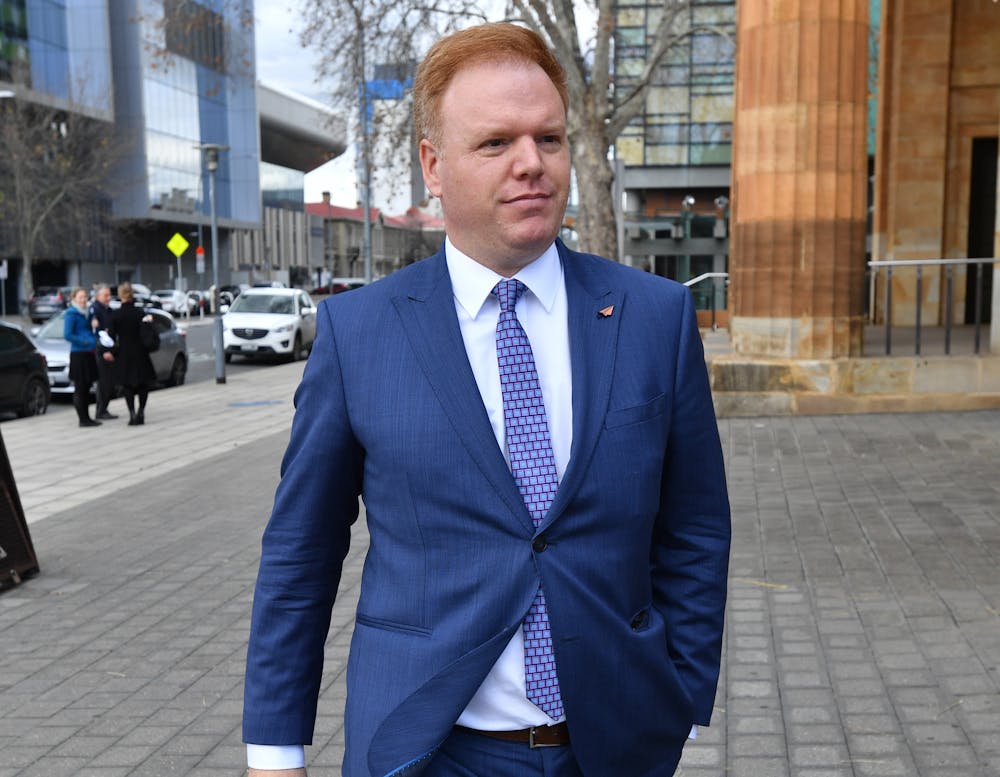 Richard Boyle exposed abuse of power inside the ATO, including aggressive debt collection practices.
David Mariuz/AAP
Richard Boyle exposed abuse of power inside the ATO, including aggressive debt collection practices.
David Mariuz/AAP
Most whistleblowers don’t go public
New research – the world’s largest on whistleblowing – demonstrates the importance of whistleblower protection to public integrity and regulatory systems like never before.
Released last week, our Clean As A Whistle study reports on whistleblowing policies in 699 public and private sector organisations, and the experience of 17,778 employees in 46 of them. This includes 5,055 who raised concerns about wrongdoing, internally and outside their organisation.
The study confirms just how rare public whistleblowing is, even though whistleblowing within organisations is the lifeblood of integrity. In fact, whistleblowing is ranked as the single most important way wrongdoing is brought to light, leading to action or reform more than 60% of the time.
Read more: Parliamentary press freedom inquiry: letting the fox guard the henhouse
In our study, 98% of whistleblowers raised their concerns internally. Only 2% went outside their organisations in the first instance. Even when whistleblowers feel forced to go outside, it is rarely directly to the media. In fact,
- only 16% of reporters ever went to an external regulatory body
- of the 20% of reporters who ever went public, 19% went to a union, professional association or industry body. Only 1% of whistleblowers ever went directly to a journalist, media organisation or public website.
These data show there’s hardly a crisis of leaking and external disclosure of information in Australian institutions.
As our research highlights, Australia’s whistleblowing laws need many reforms to make protections real – including a properly resourced whistleblower protection authority. But reform of public disclosure rules is especially critical.
The latest laws to protect whistleblowers don’t go far enough
The government’s latest improvements to whistleblower protection laws, for the private sector, try to recognise the principle that whistleblowers should remain protected if they need to go public.
Read more: It's a new era for Australia's whistleblowers – in the private sector
The improvements include a “three-tiered” approach to protect internal, regulatory and public disclosures. Pioneered in NSW, and expanded in the UK, this is now reflected in seven of Australia’s nine public sector whistleblowing laws, as well as amendments to the Corporations Act.
Legislation from Western Australia uses a simple test to determine when public whistleblowing should be protected. Protection applies wherever an agency has refused to investigate, has not completed an investigation within six months, or has investigated but failed to recommend action.
But the equivalent federal law has been crippled by blanket prohibitions on certain types of information, especially anything connected with national security or “intelligence”, since inception in 2013.
Now, these fundamental flaws in our laws are embarrassing everyone from the AFP to the government itself, triggering criminal investigations and charges against whistleblowers, irrespective of the public interest.
Read more: Four laws that need urgent reform to protect both national security and press freedom
Punishment for revealing any intelligence information, any at all
These flaws mean fraud, corruption or criminal behaviour in any activity vaguely touched by intelligence agency functions cannot be revealed to the public, even when the same disclosure about any other agency would be protected.
The key problem is section 41 of the Public Interest Disclosure Act 2013 (PID Act). It says protection can never be given to someone who revealed “intelligence information” to the public. This is defined as anything which “has originated with, or has been received from, an intelligence agency”.
It doesn’t matter how grievous the wrongdoing was – or even that revealing it would not actually harm any security or intelligence interests. If it is connected in any way to the agency, the whistleblower will still be punished.
The same is true of the poorly-named exclusion of “inherently harmful information” from disclosure under sections 121 and 122 of the Criminal Code.
Contrary to its name, the information excluded from whistleblower protection doesn’t necessarily need to be harmful. Instead, it refers to any information with security classification, or, like the PID act, any record “obtained by, or made by or on behalf of” an intelligence agency.
Read more: Explainer: what are the media companies' challenges to the AFP raids about?
The inappropriateness of these blanket exclusions was vividly confirmed last week. Peter Dutton directed the AFP to only investigate secrecy breaches by journalists when the case includes:
a harm statement indicating the extent to which the disclosure is expected to significantly compromise Australia’s national security.
But why is this “harm test” not already the basis of the law in the first place?
Unless we extend the protections applying to public whistleblowing, we cannot expect the public to take the rest of our whistleblowing regimes seriously. And the effect will be chilling on all reporting of wrongdoing on which public integrity daily depends.
Authors: A J Brown, Professor of Public Policy & Law, Centre for Governance & Public Policy, Griffith University


 Daily Bulletin


