

Attention United Nations: don't be fooled by Australia's latest report on the Great Barrier Reef
- Written by: Jon C. Day, PSM, Post-career PhD candidate, ARC Centre of Excellence for Coral Reef Studies, James Cook University
For some years, Australia has been on notice: the world is watching how we care for the Great Barrier Reef. The iconic natural wonder is the largest living organism on the planet. But its health is deteriorating.
In 2017 UNESCO, the United Nations body that granted the reef world heritage status, asked Australia to report back on how the reef was faring.
Australia this month submitted its latest report. It provides a wealth of information on many threats to the reef, such as water quality and crown-of-thorns starfish.
But the report’s overall message is that the reef’s world heritage values are fine and the threats are in hand, when the reality is far different.
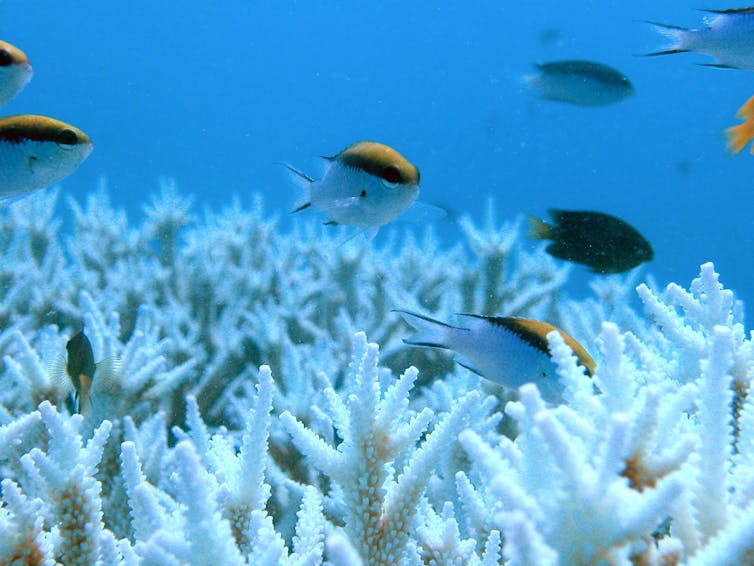 Bleached coral on the Great Barrier Reef.
OVE HOEGH GULDBERG
Bleached coral on the Great Barrier Reef.
OVE HOEGH GULDBERG
A global jewel
The Great Barrier Reef was listed as a World Heritage Area in 1981. It was recognised as globally significant or, in the parlance of the world heritage committee, having “outstanding universal value”.
In ensuing years, a myriad of impacts have devastated the reef’s health. They include coral bleaching exacerbated by climate change, poor water quality from land-based runoff, and unsustainable fishing and coastal development.
Read more: The Great Barrier Reef is in trouble. There are a whopping 45 reasons why
UNESCO considered listing the reef as “in danger” but in 2017 decided against it. Australia was asked to report back to show it was protecting the reef’s outstanding universal value.
But Australia’s report is deficient. It claims the reef “maintains many of the elements” that make up its outstanding universal value – yet its methodology fails to properly assess this.
Why the report is deficient
The report relies on assessments made by the Great Barrier Reef Marine Park Authority in its five-yearly outlook report released in August. Our analysis shows four flaws in that otherwise commendable report have carried over to the report to UNESCO.
First, instead of assessing the world heritage values themselves, the report assessed the four natural criteria for which the reef was granted world heritage status.
These four broad criteria cover the reef’s exceptional natural beauty; its evolution over millennia; its outstanding demonstration of significant ecological and biological processes; and its enormous biodiversity of habitats and species.
Each of these criteria comprise many “values”, or features. The outlook report assesses the status and trends of these values but fails to identify which are specifically world heritage values – which is what UNESCO really needs to know.
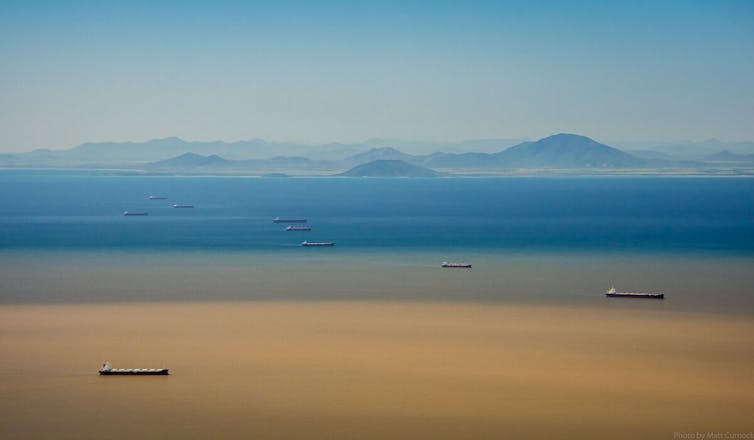 A photo depicting two threats to the Great Barrier Reef: coal ships anchored near Abbot Point and a flood plume.
Matt Curnock
A photo depicting two threats to the Great Barrier Reef: coal ships anchored near Abbot Point and a flood plume.
Matt Curnock
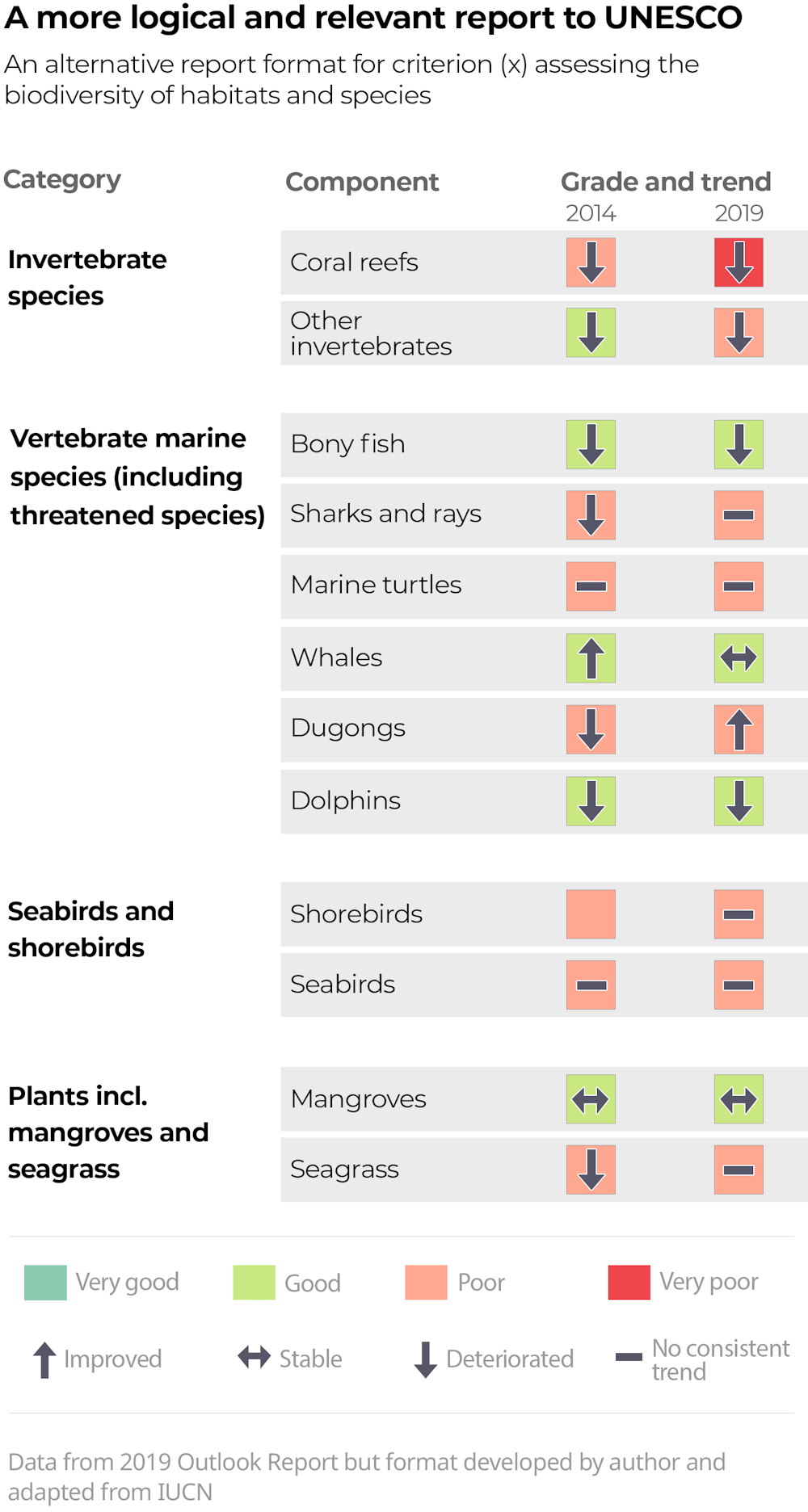
Here’s an example. The biodiversity criterion encompasses coral reefs, sandy and muddy habitats, mangroves and seagrass, dugongs, whales, dolphins, turtles and birds.
For biodiversity, the report gives an overall grade of “poor”. But this obscures the fact large areas of coral – a key world heritage value – are in very poor health.
This method is used despite the federal government’s own legislation specifically requiring the reef’s world heritage values, not the criteria, be assessed.
Second, the latest assessment is measured against results in 2014. So it does not show the degradation since the reef was listed 38 years ago.
Read more: The Great Barrier Reef outlook is 'very poor'. We have one last chance to save it
Third, the report wrongly assesses the reef’s “integrity”, an important part of its outstanding universal value. Integrity refers to the “wholeness and intactness” of the area and its threats, and requires separate investigation. Instead, the report assumes the assessments of the criteria answer the integrity question.
Fourth, both reports fail to acknowledge Indigenous people’s links to the reef are clearly part of its outstanding universal value.
In essence, the report to UNESCO sends the message Australia is well in control of the threats to the reef. This is misleading, and does not accord with the 2019 outlook report which downgraded the reef’s prospects from “poor” to “very poor”.
These criticisms may seem semantic. But the report will be critical when the world heritage committee meets next year in China to assess how the reef is faring.
What the report should have said
The table below demonstrates a more logical and relevant way of reporting back to UNESCO. Information in the outlook report is rearranged in this example against one of four world heritage criteria.
 CC BY-ND
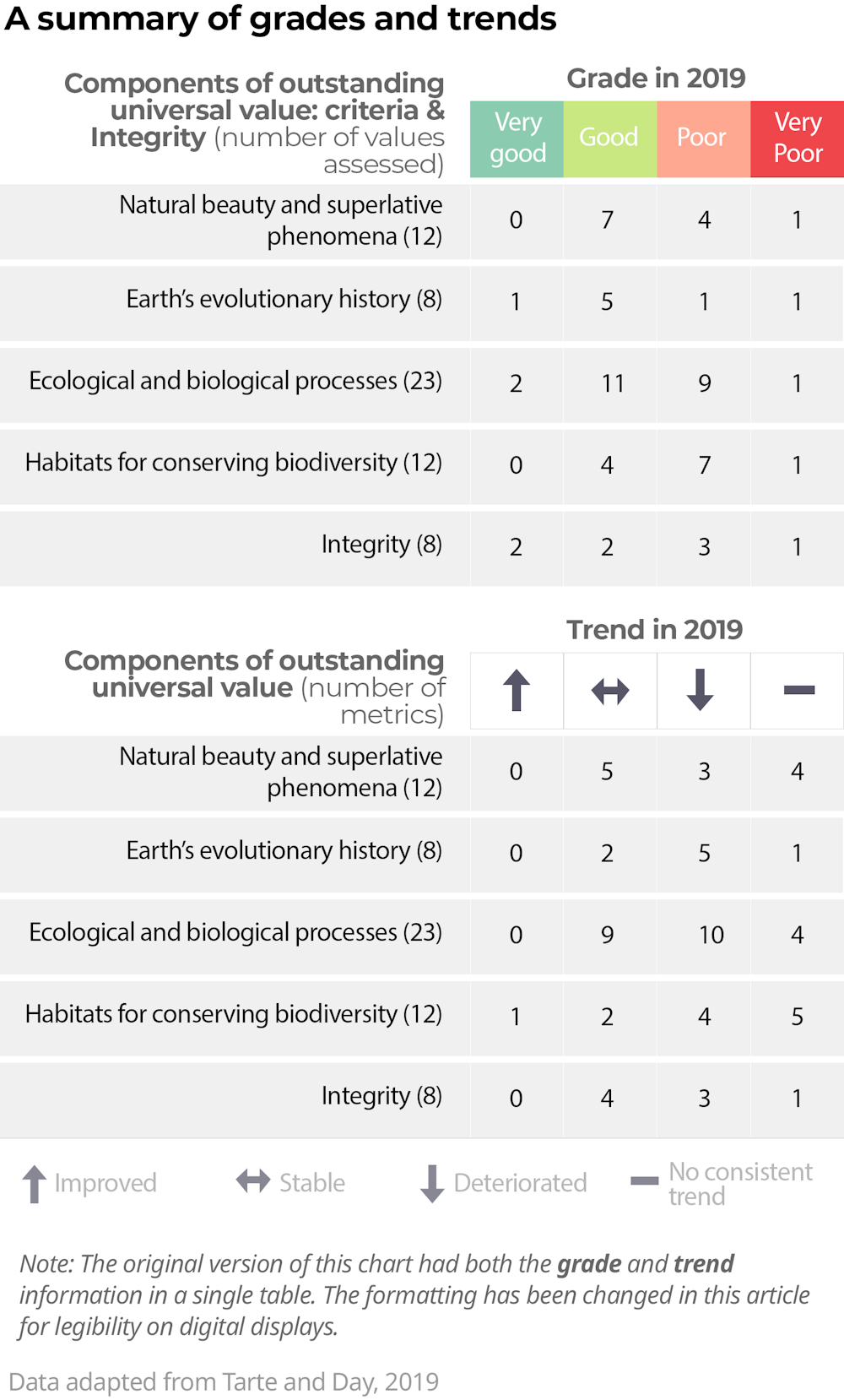
If a summary against all four criteria, plus integrity, is necessary, it would be better presented as per the table below showing the grades and trends of all relevant values.
CC BY-ND
If a summary against all four criteria, plus integrity, is necessary, it would be better presented as per the table below showing the grades and trends of all relevant values.
 CC BY-ND
Read more:
The Barrier Reef is not listed as in danger, but the threats remain
Looking ahead
Problems with the government’s report to UNESCO extend beyond the issues outlined above. The government acknowledges climate change is the biggest threat to the reef, and limiting temperature rise to 1.5℃ this century is widely accepted as the critical threshold for reef survival.
Read more:
'Sadness, disgust, anger': fear for the Great Barrier Reef made climate change feel urgent
But the government’s report fails to explain how Australia is reducing emissions in line with this goal. A recent analysis suggests if Australia’s efforts were matched globally, warming would not be kept within 2°C, let alone 1.5°C.
Without clear and unambiguous information, the world heritage committee cannot draw an informed conclusion about whether the Great Barrier Reef should be listed as “in danger”. The listing would not fix the problems – but it might force Australia to act.
Correction: a previous version of Table 2 in this report contained outdated figures for the category “Habitats for conserving biodiversity”. The figures have been corrected.
CC BY-ND
Read more:
The Barrier Reef is not listed as in danger, but the threats remain
Looking ahead
Problems with the government’s report to UNESCO extend beyond the issues outlined above. The government acknowledges climate change is the biggest threat to the reef, and limiting temperature rise to 1.5℃ this century is widely accepted as the critical threshold for reef survival.
Read more:
'Sadness, disgust, anger': fear for the Great Barrier Reef made climate change feel urgent
But the government’s report fails to explain how Australia is reducing emissions in line with this goal. A recent analysis suggests if Australia’s efforts were matched globally, warming would not be kept within 2°C, let alone 1.5°C.
Without clear and unambiguous information, the world heritage committee cannot draw an informed conclusion about whether the Great Barrier Reef should be listed as “in danger”. The listing would not fix the problems – but it might force Australia to act.
Correction: a previous version of Table 2 in this report contained outdated figures for the category “Habitats for conserving biodiversity”. The figures have been corrected.
Authors: Jon C. Day, PSM, Post-career PhD candidate, ARC Centre of Excellence for Coral Reef Studies, James Cook University


 Daily Bulletin


