

Before we rush to rebuild after fires, we need to think about where and how
- Written by: Mark Maund, PhD Candidate, School of Architecture and Built Environment, University of Newcastle
A primary school in East Gippsland was burnt down in the current bushfire crisis. While Premier Daniel Andrews immediately committed to rebuilding the school as it was, media reported the local CFA captain didn’t want it rebuilt.
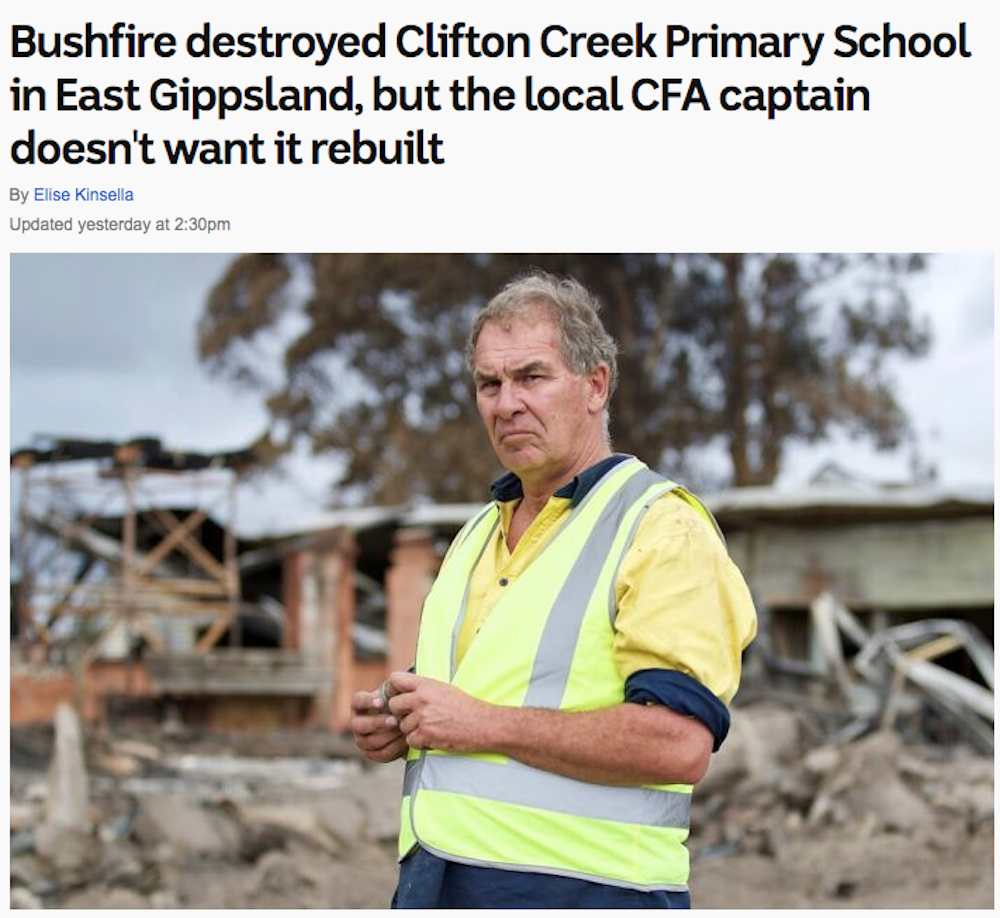 Screen Shot from abc.net.au.
https://www.abc.net.au/news/2020-01-15/bushfire-destroys-clifton-creek-primary-school-gippsland/11860490
Screen Shot from abc.net.au.
https://www.abc.net.au/news/2020-01-15/bushfire-destroys-clifton-creek-primary-school-gippsland/11860490
Public support for rebuilding in the same disaster affected places is often high. But as fire-fighting agencies are aware, our bushfires are increasing in size, intensity and duration, and a warming climate will continue to worsen these factors. We need to start being more strategic about where we rebuild homes and facilities lost to fire, and how.
Rush now, regret later
As there are sadly many people without homes and many businesses that have suffered lost income from reduced tourism and other activities, urgency in such a response seems reasonable.
But there’s a risk that rebuilding the same buildings in the same areas may not mitigate the current risks or any future risks under new climate scenarios – existing and new communities will be vulnerable. Planning can assist with managing future bushfire risks by helping decide where homes, buildings and infrastructure should be located.
Importantly, we must not rush to rebuild the same buildings in the same location. We need to consider risks from natural hazards in these bushfire prone areas such as ember attack, radiant heat, flammable building materials and safe evacuation routes.
If homes and some community buildings, such as schools, are located in areas that are too risky and likely to be lost in future bushfires then we need to consider our options. These may include changing the land use zoning to allow only lower-risk buildings (for industrial rather than residential use), or increasing building requirements for bushfire protection.
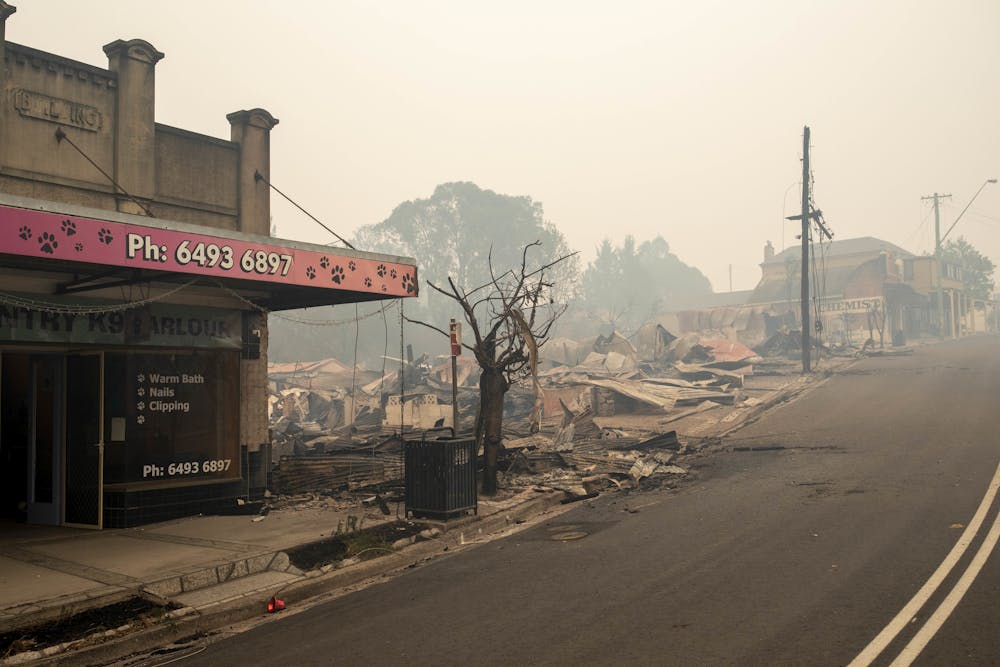 Cobargo, NSW after bushfires tore through the town in December.
AAP/Sean Davey
Cobargo, NSW after bushfires tore through the town in December.
AAP/Sean Davey
Before commencing rebuilding, planning agencies need to plan how communities can be made resilient and if there is opportunity to use the affected land for houses designed with the highest bushfire attack level or shops or offices with higher fire ratings.
Alternatively, planning agencies can choose to use cleared land adjacent to high bushfire risk as parks or roads to provide additional separation between buildings and vegetation.
Organisations involved in planning need to focus on increasing the separation between buildings and vegetation, as well as additional fire safety measures for buildings.
How to rebuild
We need to consider increased construction standards for buildings to better protect them against bushfires — things like fire resistant walls, thicker glass and metal screens for windows, non-combustible roofs and access to water to fight fires.
However these provide only some protection. Buildings may continue to be lost in future bushfires, so what we construct in these areas needs to be reconsidered.
Read more: Australian building codes don't expect houses to be fire-proof - and that's by design
Options to rebuild in high risk areas should include buildings that are seen as low risk to human life and livelihoods such as storage or warehouse-style buildings and light industrial buildings. Owners of these buildings may need to accept they may be lost to bushfire.
Buildings that contain large numbers of people that need assistance during bushfires such as schools, aged care and hospitals should be located with extensive separation from bushfire risk, as well as with increased construction standards with multiple evacuation routes.
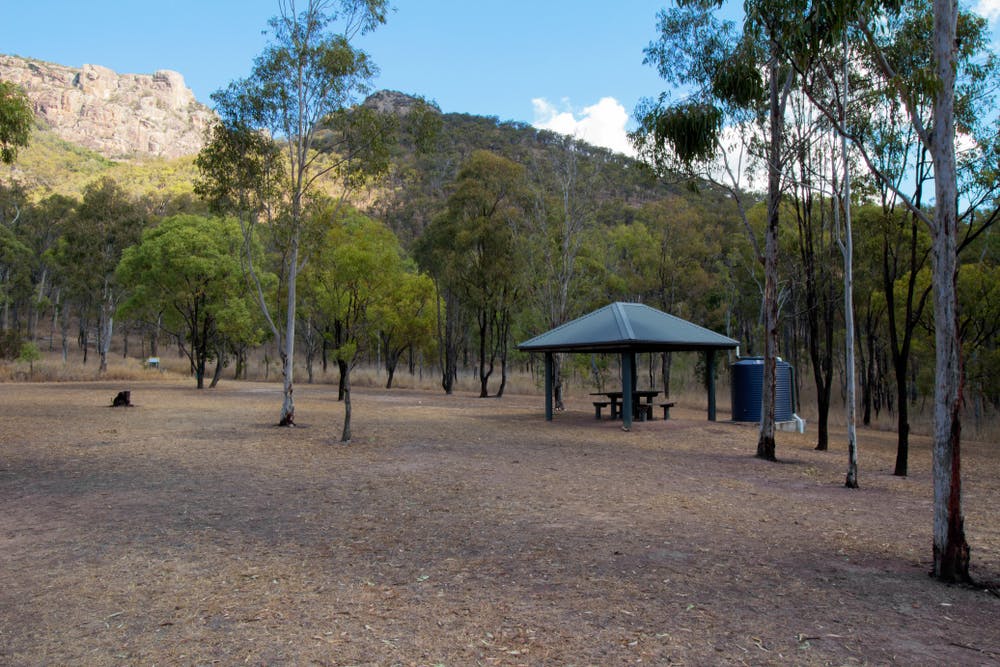 High-risk areas could be used as parks. This could also increase the separation between vegetation and dwellings.
from www.shutterstock.com
High-risk areas could be used as parks. This could also increase the separation between vegetation and dwellings.
from www.shutterstock.com
The speed and intensity of recent fires shows there may be less time to evacuate under existing and future disaster conditions, so continuing to build in high hazard prone areas may no longer be appropriate.
A new national planning policy should guide the states in considering the exposure of communities to these hazards and their capacity to respond, such as evacuation routes, distance to refuge centres and distance from fire services.
A national policy
Before we rush to rebuild our homes, roads and infrastructure we need to review planning policies and bushfire hazard maps produced by state fire services and have their involvement in future decision making around this area.
We need a national bushfire planning policy to address risk that crosses state boundaries and to provide a consistent approach to identifying where communities can locate and what activities can occur in high risk areas.
Authors: Mark Maund, PhD Candidate, School of Architecture and Built Environment, University of Newcastle


 Daily Bulletin


