

How to cope with extreme heat days without racking up the aircon bills
- Written by: Emma Power, Senior Research Fellow, Geography and Urban Studies, Western Sydney University
Summer in Australia is getting hotter. Extreme heat events, with daytime temperatures over 35 degrees Celsius, are becoming more common and we are getting more of these days in a row.
We all need to prepare ourselves, our homes and our neighbourhoods for hot and very hot days. Since 2016, the Cooling the Commons research project has been working with people living in some of Sydney’s hottest neighbourhoods to learn how they cope with heat.
Read more: Keeping the city cool isn't just about tree cover – it calls for a commons-based climate response
Discussion groups with residents across hotspots in Western Sydney, including Penrith, Cranebrook and St Marys, highlighted a wealth of things we can do to manage heat. We published some of the following tips in a recent flier.
Why can’t we all just rely on air conditioning?
Official advice for extreme heat is often to stay inside and turn on the air conditioning. While air conditioning can play a role, not everyone can afford it. Low-income and older households can be especially vulnerable to bill shock and are more likely to feel the impacts of extreme heat.
Read more: High energy costs make vulnerable households reluctant to use air conditioning: study
There is also the risk that running air conditioners uses energy resources that contribute further to global warming. More immediately, hot exhaust air from air-conditioning units can make the local environment hotter. This means keeping one home cool can make it harder for neighbours to keep their homes cool and make being outside even more uncomfortable.
Air conditioning in private homes creates a cool refuge for only some. Unless those homes have an open-door policy on hot days, many of us will need to find other ways to keep cool. If you do have air conditioning, think about how you could share your air with those near you who might really need it.
Read more: How people can best make the transition to cool future cities
Prepare before the heat hits
Shade is important for creating more comfortable living spaces.
Identify which parts of your home get the most afternoon sun in summer. Can you plant trees or vines, or move a pot plant outside the window to create a green screen? Can you attach awnings to shade the windows?
Low-cost temporary solutions can include attaching light-coloured shade cloth outside the window using removable hooks, or installing heavy drapes or blinds inside. Blankets or even aluminium foil are a low-cost creative way of keeping heat out.
 Illustration by Thomas Baldwin, from Climate Risk? Climate Ready!, Author provided
Open up to let in cool air at night
Can you open the windows and doors overnight to let in cooler air? If you are concerned about security, look for options for locking the windows in an open position, or using flyscreens and security grilles on windows and doors.
A low-cost option to keeping flying insects at bay on hot nights is a mosquito net over the window or around the bed.
Illustration by Thomas Baldwin, from Climate Risk? Climate Ready!, Author provided
Open up to let in cool air at night
Can you open the windows and doors overnight to let in cooler air? If you are concerned about security, look for options for locking the windows in an open position, or using flyscreens and security grilles on windows and doors.
A low-cost option to keeping flying insects at bay on hot nights is a mosquito net over the window or around the bed.
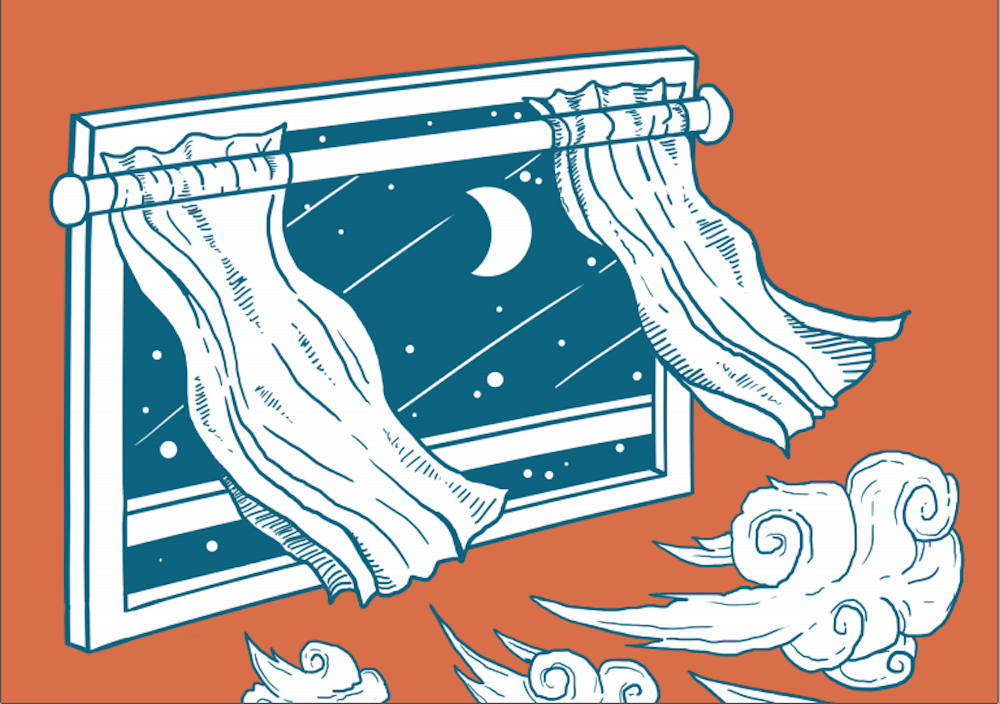 Illustration by Thomas Baldwin, Author provided
Use low-cost resources to prepare in advance.
Ceiling or portable fans are one of the best ways to cool your body when it’s hot. But remember fans don’t cool rooms, so turn off the fan when you leave the room or you’re just burning electricity.
Find ice trays and containers to freeze water – cake tins and storage containers are a good option. Putting these in front of a portable fan will mean the fan blows cool air.
Illustration by Thomas Baldwin, Author provided
Use low-cost resources to prepare in advance.
Ceiling or portable fans are one of the best ways to cool your body when it’s hot. But remember fans don’t cool rooms, so turn off the fan when you leave the room or you’re just burning electricity.
Find ice trays and containers to freeze water – cake tins and storage containers are a good option. Putting these in front of a portable fan will mean the fan blows cool air.
 Illustration by Thomas Baldwin, Author provided
Putting a wet face cloth on the insides of your wrists, around your ankles or on the back of your neck will bring down your body temperature. Hanging damp sheets in doorways or in front of a fan will help keep the temperature down – although the trick with the sheets won’t work if it’s a really humid day.
How to stay cool and comfortable on hot days
Morning is likely to be the coolest time of the day. Open up your windows and doors to let in the cooler morning air.
It’s the best time to be active – walk the dog, take the kids to the park, go for a swim. If possible, do your cleaning, cooking or outside work now. Plan meals that don’t require an oven.
Illustration by Thomas Baldwin, Author provided
Putting a wet face cloth on the insides of your wrists, around your ankles or on the back of your neck will bring down your body temperature. Hanging damp sheets in doorways or in front of a fan will help keep the temperature down – although the trick with the sheets won’t work if it’s a really humid day.
How to stay cool and comfortable on hot days
Morning is likely to be the coolest time of the day. Open up your windows and doors to let in the cooler morning air.
It’s the best time to be active – walk the dog, take the kids to the park, go for a swim. If possible, do your cleaning, cooking or outside work now. Plan meals that don’t require an oven.
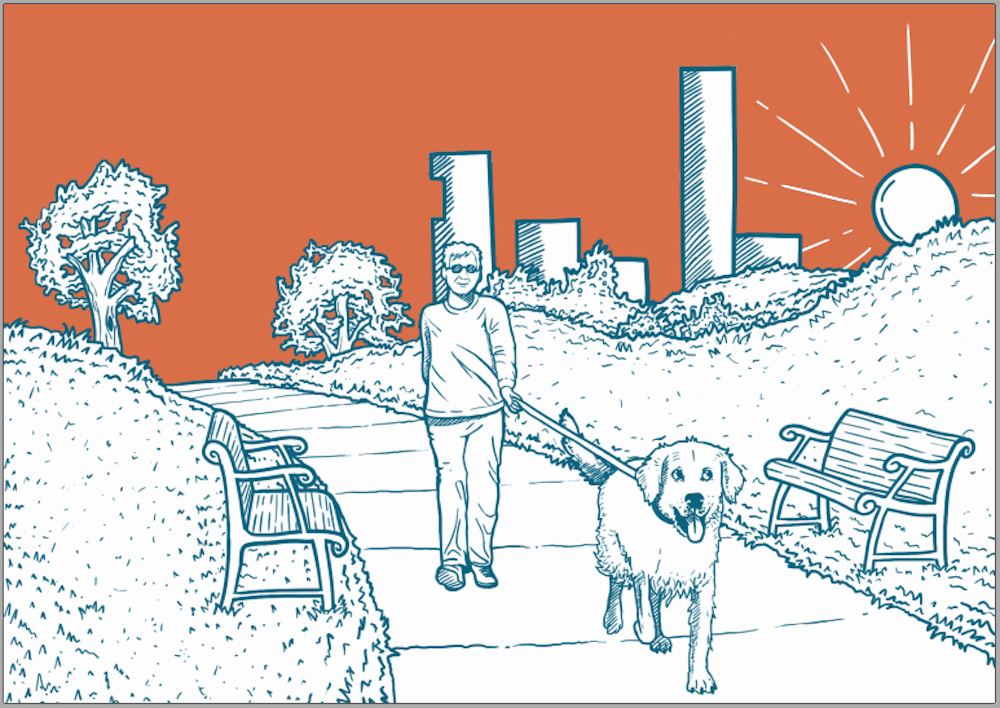 Illustration by Thomas Baldwin, Author provided
Close up as it heats up.
As the day starts to get hot, close the house up – shut windows, blinds and curtains. This could be as early as 9am on really hot days. If you are heading out to work, do this before you leave home.
Closing internal doors can help to keep the heat in one part of your home. You need to close doors to any parts of the home that get hot before the day gets hot.
Stay hydrated.
Drink plenty of water throughout the day. Put a jug of tap water in the fridge and remember to top it up.
Don’t forget to move pet water bowls and day beds out of the sun. If you live in a dry area, it can’t hurt to put out extra water bowls for needy wildlife!
Find a cooling refuge.
If your home gets uncomfortably hot, find the closest cooling refuges in your neighbourhood. These are places where you can go to cool down. Good examples that won’t break the bank are the local swimming pool or library.
Illustration by Thomas Baldwin, Author provided
Close up as it heats up.
As the day starts to get hot, close the house up – shut windows, blinds and curtains. This could be as early as 9am on really hot days. If you are heading out to work, do this before you leave home.
Closing internal doors can help to keep the heat in one part of your home. You need to close doors to any parts of the home that get hot before the day gets hot.
Stay hydrated.
Drink plenty of water throughout the day. Put a jug of tap water in the fridge and remember to top it up.
Don’t forget to move pet water bowls and day beds out of the sun. If you live in a dry area, it can’t hurt to put out extra water bowls for needy wildlife!
Find a cooling refuge.
If your home gets uncomfortably hot, find the closest cooling refuges in your neighbourhood. These are places where you can go to cool down. Good examples that won’t break the bank are the local swimming pool or library.
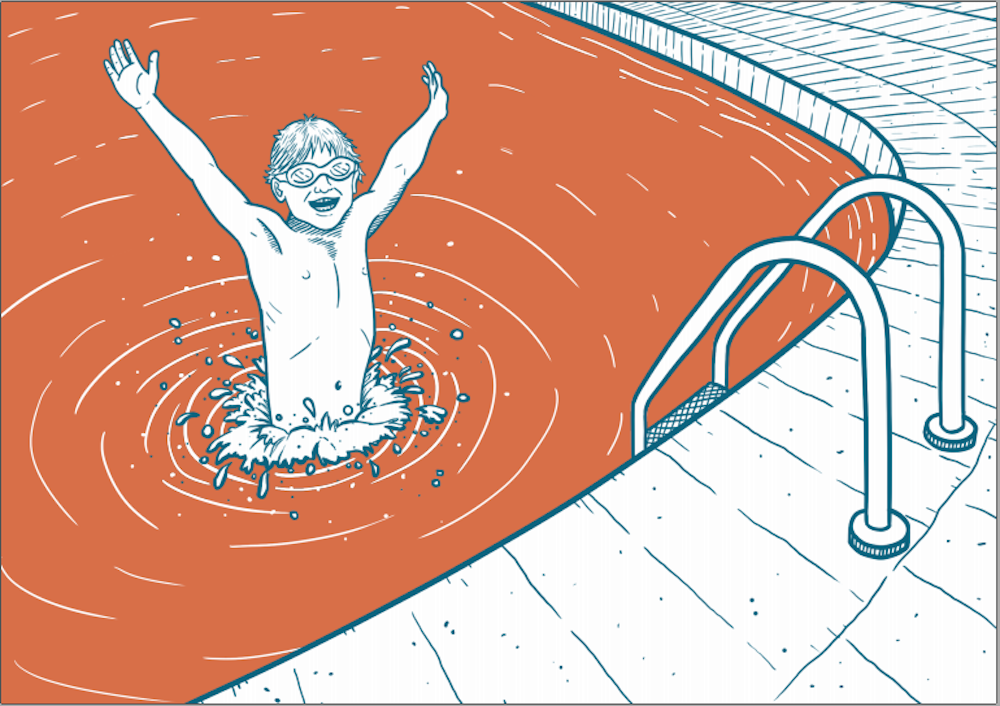 Illustration by Thomas Baldwin, Author provided
Some local councils provide lists of cooling centres on their websites.
Save air conditioning for when it’s most needed.
Try to save air conditioning for the hottest parts of the day. It will be most effective and cheapest to run if your home is well insulated and you’ve closed it up for the day.
Look after neighbours.
Remember to check on elderly or frail neighbours. Along with the very young, they are usually more affected by the heat and may need to cool down sooner than you do.
If your neighbours are in need, consider inviting them into your home to cool down. When it’s hot, let’s think of our cities as social commons rather than a collection of private spaces.
Illustration by Thomas Baldwin, Author provided
Some local councils provide lists of cooling centres on their websites.
Save air conditioning for when it’s most needed.
Try to save air conditioning for the hottest parts of the day. It will be most effective and cheapest to run if your home is well insulated and you’ve closed it up for the day.
Look after neighbours.
Remember to check on elderly or frail neighbours. Along with the very young, they are usually more affected by the heat and may need to cool down sooner than you do.
If your neighbours are in need, consider inviting them into your home to cool down. When it’s hot, let’s think of our cities as social commons rather than a collection of private spaces.
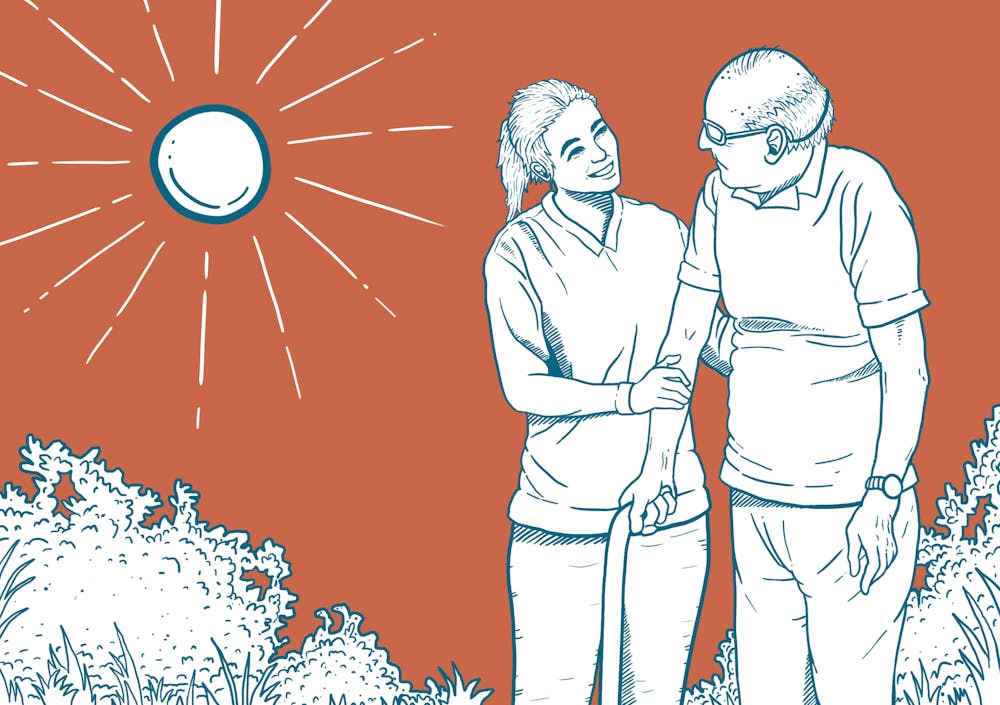 Illustration by Thomas Baldwin, Author provided
Read more:
When the heat is on, we need city-wide plans to keep cool
Illustration by Thomas Baldwin, Author provided
Read more:
When the heat is on, we need city-wide plans to keep cool
Authors: Emma Power, Senior Research Fellow, Geography and Urban Studies, Western Sydney University


 Daily Bulletin


