

Now we're in lockdown, how can we get out? 4 scenarios to prevent a second wave
- Written by: James Trauer, Senior Research Fellow, Monash University
Australia is effectively in lockdown. Public gatherings of more than two people are banned and people are only permitted to leave home for a limited set of reasons.
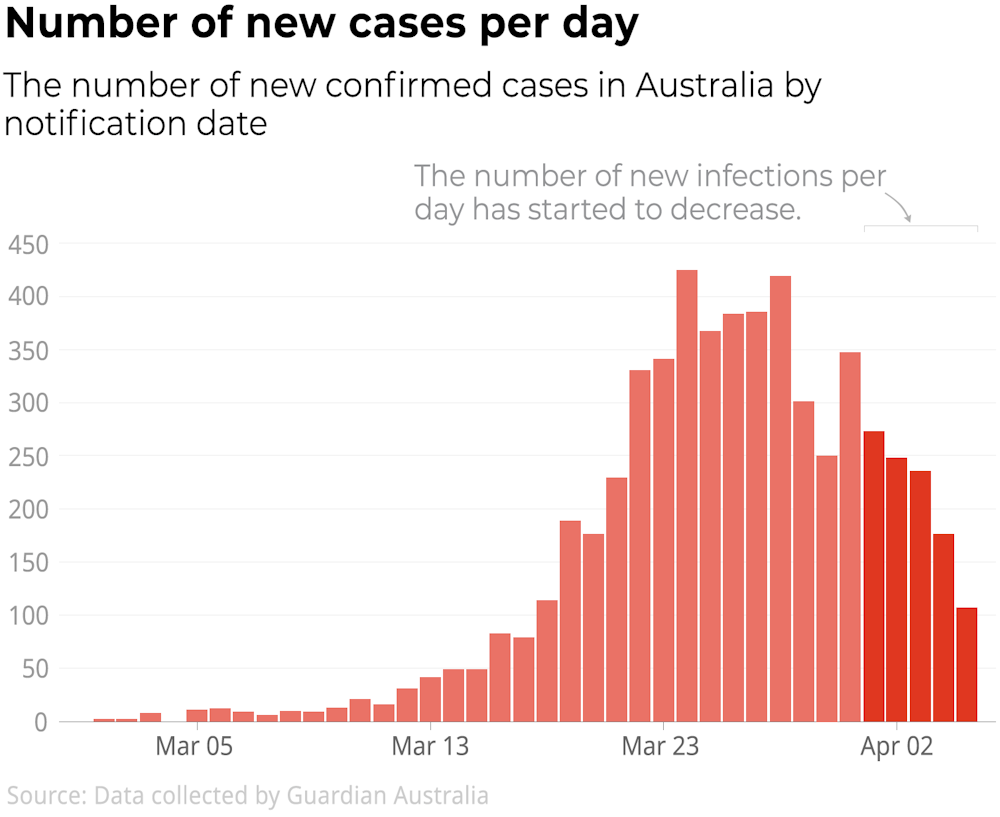
The recent tough measures appear to be having some effect and the daily growth rate of new cases is now slowing.
Although this is an encouraging indication we may be starting to reverse the epidemic, we need now to start thinking about if, when and how we relax our current aggressive control measures.
Read more: If coronavirus cases don't grow any faster, our health system will probably cope
What are our options for coming out of lockdown?
Achieving control buys time and allows us to learn more about the virus and the successes and failures of other countries.
But until an effective vaccine arrives, the majority of the population will still lack immunity to COVID-19. This is essentially identical to the position we were in when the first imported cases of the coronavirus arrived in Australia.
While there has been debate about the speed at which restrictions have been introduced, there has been less discussion about how and when these measures can be relaxed without causing another spike in infections.
 The Guardian, CC BY
We outline four broad options available for coming out of lockdown once we have gained initial control:
option 1: we could relax lockdown measures completely, prioritising a return to normal social and economic freedoms over suppressing infection
option 2: we could limit community transmission and ensure case rates remain very low until a vaccine is developed
option 3: we could push to completely eradicate the virus and avoid rebound when social distancing measures are relaxed, as long as borders remain closed
option 4: we could relax some measures and allow infection to continue in a very controlled manner, while protecting the vulnerable.
Each of these four approaches is associated with huge risks.
Read more:
Regaining control: the case for a short, sharp lockdown (rather than the slow trickle we've had so far)
The lockdown trap
The first option would see a resurgence of the virus, with similar consequences to those of an unchecked epidemic.
The Guardian, CC BY
We outline four broad options available for coming out of lockdown once we have gained initial control:
option 1: we could relax lockdown measures completely, prioritising a return to normal social and economic freedoms over suppressing infection
option 2: we could limit community transmission and ensure case rates remain very low until a vaccine is developed
option 3: we could push to completely eradicate the virus and avoid rebound when social distancing measures are relaxed, as long as borders remain closed
option 4: we could relax some measures and allow infection to continue in a very controlled manner, while protecting the vulnerable.
Each of these four approaches is associated with huge risks.
Read more:
Regaining control: the case for a short, sharp lockdown (rather than the slow trickle we've had so far)
The lockdown trap
The first option would see a resurgence of the virus, with similar consequences to those of an unchecked epidemic.
 Sources: Victoria, NSW, Queensland, SA, NT, WA, Tasmania, ACTThe second option involves keeping case numbers to a trickle until a vaccine arrives – squashing the curve to a flat line but not eliminating transmission completely. This appears to be the path we are now pursuing, but it is not yet clear whether we will be able to reopen businesses, restaurants and even schools while still allowing low-level transmission to continue.
If we continue this path, we should recognise that some form of lockdown is likely. We could gradually release the brakes, but any suggestion of an upswing would be met with renewed suppression efforts. We could continually be putting out spot-fires and intermittently returning to strict lockdown until a vaccine arrives.
Read more:
Coronavirus modelling shows the government is getting the balance right – if our aim is to flatten the curve
The third option involves an attempt to completely eradicate all circulating virus. Although we may be able to return to our previous lives, we would remain highly vulnerable to recurrence through importation if we were to reopen our borders.
If we were to pursue this path, extensive public engagement would be essential. We would need to remain in lockdown for many weeks after the last case has been reported and the rationale for pushing through towards eradication needs to be communicated clearly.
It is unclear if this is the strategy pursued by China, but its promising case numbers demonstrate the value of strict and prolonged lockdown. The rebound risk of this strategy will only be tested once strict lockdown measures are released.
Read more:
Where are we at with developing a vaccine for coronavirus?
Herd immunity
The fourth option may include carefully controlled transmission of the SARS-CoV-2 virus in select low-risk groups, which is an extremely dangerous path.
However, the almost complete absence of mortality in children and young adults may allow us to consider ways by which we can increase population-wide immunity, while protecting the vulnerable to avoid the huge rates of death seen in the elderly.
The term “herd immunity” has generated considerable controversy since the start of this pandemic. But ensuring a significant proportion of the population develop natural immunity to the virus – in a controlled manner – could be the only way to slow its spread while returning to our previous lifestyles, in the absence of an effective vaccine.
Read more:
Coronavirus: can herd immunity really protect us?
We still need to understand better the risks posed to young people from natural infection, as well as the strength and duration of natural immunity. But current indications are the disease is relatively benign in healthy, young people and that they do acquire immunity. This very distinctive pattern may provide a key to coming out of lockdown while minimising risks – if an effective vaccine fails to materialise in the near future.
This option would need to be carefully controlled to ensure the virus cannot spread to the elderly and the vulnerable. How this could be achieved remains to be considered, but could involve the creation of environments in which transmission can be carefully facilitated among healthy young volunteers, without any risk of spread to the general community.
Read more:
To get on top of the coronavirus, we also need to test people without symptoms
Natural immunity in a substantial proportion of the younger generation would allow those individuals to get on with their lives without putting others at risk. It would also slow any recurrent outbreaks that may occur once lockdown restrictions are relaxed.
Although there are no easy answers, we need to actively debate our exit strategy now, and collect the necessary information to guide our decision making. We may have to consider different solutions in different environments, but with an overarching strategy that is nationally coordinated.
Read more:
Coronavirus: can herd immunity really protect us?
Sources: Victoria, NSW, Queensland, SA, NT, WA, Tasmania, ACTThe second option involves keeping case numbers to a trickle until a vaccine arrives – squashing the curve to a flat line but not eliminating transmission completely. This appears to be the path we are now pursuing, but it is not yet clear whether we will be able to reopen businesses, restaurants and even schools while still allowing low-level transmission to continue.
If we continue this path, we should recognise that some form of lockdown is likely. We could gradually release the brakes, but any suggestion of an upswing would be met with renewed suppression efforts. We could continually be putting out spot-fires and intermittently returning to strict lockdown until a vaccine arrives.
Read more:
Coronavirus modelling shows the government is getting the balance right – if our aim is to flatten the curve
The third option involves an attempt to completely eradicate all circulating virus. Although we may be able to return to our previous lives, we would remain highly vulnerable to recurrence through importation if we were to reopen our borders.
If we were to pursue this path, extensive public engagement would be essential. We would need to remain in lockdown for many weeks after the last case has been reported and the rationale for pushing through towards eradication needs to be communicated clearly.
It is unclear if this is the strategy pursued by China, but its promising case numbers demonstrate the value of strict and prolonged lockdown. The rebound risk of this strategy will only be tested once strict lockdown measures are released.
Read more:
Where are we at with developing a vaccine for coronavirus?
Herd immunity
The fourth option may include carefully controlled transmission of the SARS-CoV-2 virus in select low-risk groups, which is an extremely dangerous path.
However, the almost complete absence of mortality in children and young adults may allow us to consider ways by which we can increase population-wide immunity, while protecting the vulnerable to avoid the huge rates of death seen in the elderly.
The term “herd immunity” has generated considerable controversy since the start of this pandemic. But ensuring a significant proportion of the population develop natural immunity to the virus – in a controlled manner – could be the only way to slow its spread while returning to our previous lifestyles, in the absence of an effective vaccine.
Read more:
Coronavirus: can herd immunity really protect us?
We still need to understand better the risks posed to young people from natural infection, as well as the strength and duration of natural immunity. But current indications are the disease is relatively benign in healthy, young people and that they do acquire immunity. This very distinctive pattern may provide a key to coming out of lockdown while minimising risks – if an effective vaccine fails to materialise in the near future.
This option would need to be carefully controlled to ensure the virus cannot spread to the elderly and the vulnerable. How this could be achieved remains to be considered, but could involve the creation of environments in which transmission can be carefully facilitated among healthy young volunteers, without any risk of spread to the general community.
Read more:
To get on top of the coronavirus, we also need to test people without symptoms
Natural immunity in a substantial proportion of the younger generation would allow those individuals to get on with their lives without putting others at risk. It would also slow any recurrent outbreaks that may occur once lockdown restrictions are relaxed.
Although there are no easy answers, we need to actively debate our exit strategy now, and collect the necessary information to guide our decision making. We may have to consider different solutions in different environments, but with an overarching strategy that is nationally coordinated.
Read more:
Coronavirus: can herd immunity really protect us?
Authors: James Trauer, Senior Research Fellow, Monash University


 Daily Bulletin


