

Personalities that thrive in isolation and what we can all learn from time alone
- Written by: Luke Smillie, Associate Professor, University of Melbourne
The coronavirus pandemic has caused tens of thousands of deaths around the world and pushed major economies into a tailspin. Beyond those impacts, almost all of us will face psychological challenges – trying to maintain a responsible social distancing regimen without sliding into psychological isolation and loneliness.
At least we’re all in the same boat, and misery loves company, right?
Actually, we’re not all in the same boat. Generalisations about how the COVID-19 lockdown will affect us overlook the fact people have different personalities. We’re all going to respond in different ways to our changing situation.
Extraverts and introverts
Take Bob, for example. After two days working from home Bob couldn’t wait to try a social drinking session over Zoom. But drinking a beer in front of his laptop just wasn’t the same. He’s wondering how he’ll cope in the coming weeks and months, cooped up inside and away from his friends.
He wonders this on a call to his sister, Jan: “I might not get coronavirus but I’m going to get cabin fever!”
Jan doesn’t understand Bob’s agitation or why he’s so worried about staying at home. If Jan is feeling bad about anything, it is the guilt of realising she might actually be enjoying the apocalypse – quiet evenings to herself, far from the madding crowd. Bliss!
Jan and Bob are archetypes of people we all know well. Bob represents the classic extravert. He’s talkative, gregarious and highly social. Jan is an introvert. She enjoys solitude and finds rowdy Bob a bit too much.
Different people, different responses
Differences in extraversion-introversion emerge in early life and are relatively stable over the lifespan. They influence which environments we seek out and how we respond to those environments.
In a recent study, extraverts and introverts were asked to spend a week engaging in higher levels of extravert-typical behaviour (being talkative, sociable, etc). Extraverts reaped several benefits including enhanced mood and feelings of authenticity. Conversely, introverts experienced no benefits, and reported feeling tired and irritable.
The social distancing rules to which we’re all trying to adhere are like a mirror image of this intervention. Now it’s the extraverts who are acting out of character, and who will likely experience decreased well-being in the coming weeks and months. Introverts, on the other hand, have been training for this moment their whole lives.
Why might introverts find isolation easier to deal with than extraverts? Most obviously, they tend to be less motivated to seek out social engagment. Introverts also tend to feel less need to experience pleasure and excitement. This may make them less prone to the boredom that will afflict many of us as social distancing drags on.
Looking deeper
Other aspects of our personalities may also shape our coping during isolation. Consider the remaining four traits in the Big Five personality model:
People high in conscientiousness, who are more organised, less distractable and also more adaptable, will find it easier to set up and stick to a structured daily schedule, as many experts recommend.
People high in agreeableness, who tend to be polite, compassionate and cooperative, will be better equipped to negotiate life in the pockets of family members or housemates.
People high in openness to experience, who tend to be curious and imaginative, will likely become absorbed in books, music and creative solutions to the humdrum of lockdown.
In contrast, people high in neuroticism, who are more susceptible to stress and negative emotions than their more stable peers, will be most at risk for anxiety and depression during these challenging times.
Of course, these are all generalisations. Introverts are not immune to loneliness, and those with more vulnerable personalities can thrive with the right resources and social support.
Life in a capsule
For some, living under lockdown might feel like working on a space station or Antarctic research facility. What lessons can we draw from personality research in these extreme environments?
That research shows people who are emotionally stable, self-reliant and autonomous, goal-oriented, friendly, patient and open tend to cope better in conditions of extreme isolation. In particular, it has been observed that “‘sociable [read agreeable] introverts’ – who enjoy, but do not need, social interaction – seem optimally suited for capsule living”.
To manage as best we can in our earthbound and non-polar “capsules”, we might aspire to some of the qualities noted above: to be calm and organised, determined but patient, self-reliant but connected.
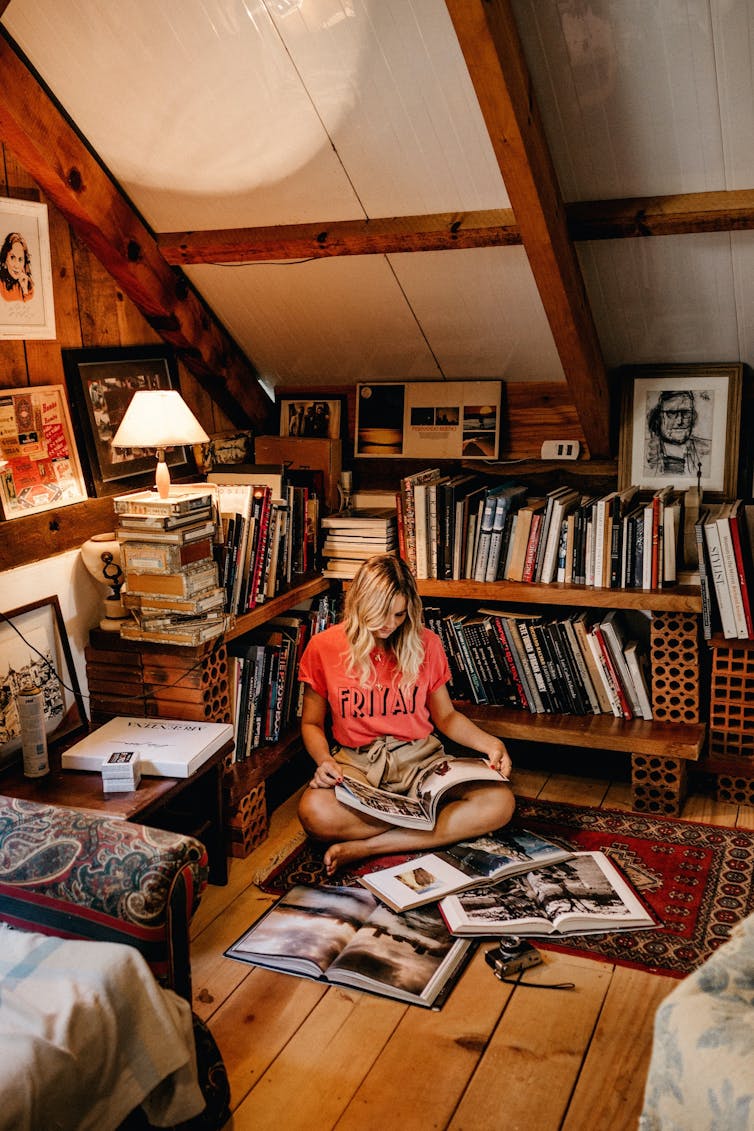 For some people, lockdown may provide time for creative pursuits.
Jonathan Borba/Unsplash
For some people, lockdown may provide time for creative pursuits.
Jonathan Borba/Unsplash
Lonelineness versus time alone
The coronavirus pandemic has arrived on the heels of what some describe as a “loneliness epidemic”, but these headlines may be overblown. Again, part of what is missing in such descriptions is the fact that clouds for some are silver linings for others.
A counterpoint to the so-called loneliness epidemic is the study of “aloneliness”, the negative emotions many experience as a result of insufficient time spent alone. As Anthony Storr wrote in Solitude: A return to the self, “solitude can be as therapeutic as emotional support”, and the capacity to be alone is as much a form of emotional maturity as the capacity to form close attachments.
Of course, some people in lockdown are facing formidable challenges that have nothing to do with their personality. Many have lost their jobs and face economic hardship. Some are completely isolated whereas others share their homes with loved ones. Even so, our response to these challenges reflects not only our predicament, but also ourselves.
Authors: Luke Smillie, Associate Professor, University of Melbourne


 Daily Bulletin


