

Supermarket shelves stripped bare? History can teach us to 'make do' with food
- Written by: Bethaney Turner, Associate Professor, Centre for Creative and Cultural Research, University of Canberra
Recent COVID-19 induced panic buying has raised concerns about food security for many Australians.
While there’s plenty of food available, many Australians have seen supermarkets stripped bare of essentials in recent weeks. For some it can be hard to find basic items like rice or canned foods.
This is especially true for many of our most vulnerable citizens, from the elderly to those in remote Indigenous communities. What’s more, rising job losses and higher food prices means many people will be out-priced, increasing the number of those experiencing food insecurity in coming months.
Read more: How a time of panic buying could yet bring us together
But scarcity and food system vulnerabilities are not new experiences. Wars, the great depression, the global financial crisis and natural disasters such as fires and floods have exposed the fallibilities of our food system.
In times of crisis and disaster “food preferences” are the first to go and “making do” – for those who can – becomes the name of the game.
And while right now there really is no reason to stock up on food supplies from supermarkets, the sight of empty shelves has led some Australians to look for alternative ways to feed themselves and their families. We can turn to past experiences to identify approaches, skills and resources.
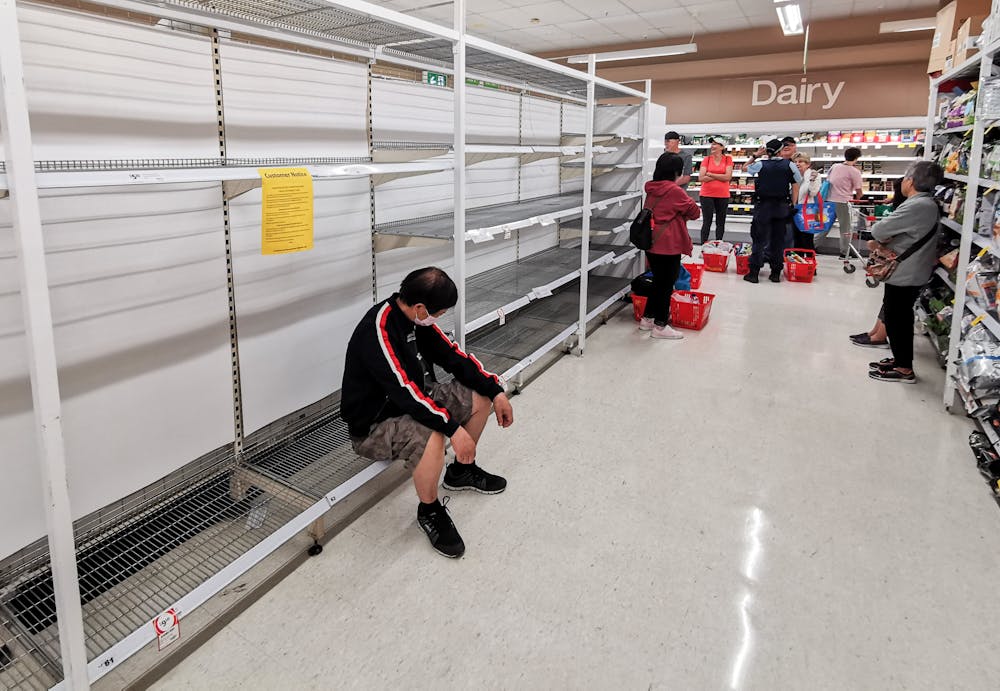 Some Australians are looking for alternative ways to feed themselves and their families.
James Gourley/AAP
Some Australians are looking for alternative ways to feed themselves and their families.
James Gourley/AAP
In fact, doing so can help us prepare to respond to future instability in food access expected to be brought about through the impacts of climate change. Looking to the past can help build the knowledge and skills necessary to strengthen future household and community resilience.
Changing diets
Having enough food available doesn’t mean everyone will have equal access, nor does it mean all of us will be able to eat typical diets.
The United Nation’s Food and Agricultural Organisation defines food security as requiring “physical and economic” access for “all people at all times”. It not only requires access to “sufficient, safe and nutritious food”, but also access to foods that meet our “dietary requirements and food preferences”.
Read more: Getting creative with less. Recipe lessons from the Australian Women's Weekly during wartime
Recent low yields of drought-impacted crops such as rice means supplies were limited even prior to the shortages created by panic buying.
Canneries are halting production on some of their standard lines as they struggle to access ingredients to keep up with unprecedented demand.
And measures introduced to support vulnerable groups such as meal delivery and “Basics Boxes” are currently unable to cater to diverse tastes and needs.
It’s likely, for those of us without special dietary needs, our everyday food habits will have to change.
Grow your own
Many Australians have turned to home food growing during COVID-19, with edible plants in nurseries quickly selling out of stock.
Growing your own is the most typical historical response to unstable food access. Limited supply during World War I led governments to encourage home and community food production. “Dig for Victory” campaigns were rolled out in the US and Canada, extending to the UK and Australia in World War II.
This video from 1941 explains how to prepare an area for growing veg, and why not having space is no excuse.The benefits of having more localised food systems are also regularly revealed during extreme weather events.
Food access in Australia heavily relies on supply chains powered by trucks travelling vast distances. When roads are blocked – such as in the recent bushfires and the 2011 Queensland floods – food access is threatened unless you or your neighbours are growing your own.
Read more: Food democracy: why eating is unavoidably political
Community gardens
Food gardening typically requires time, the willingness to be attentive to plant needs, as well as outside space with adequate sun. Not everyone has the infrastructure, knowledge or inclination to do this.
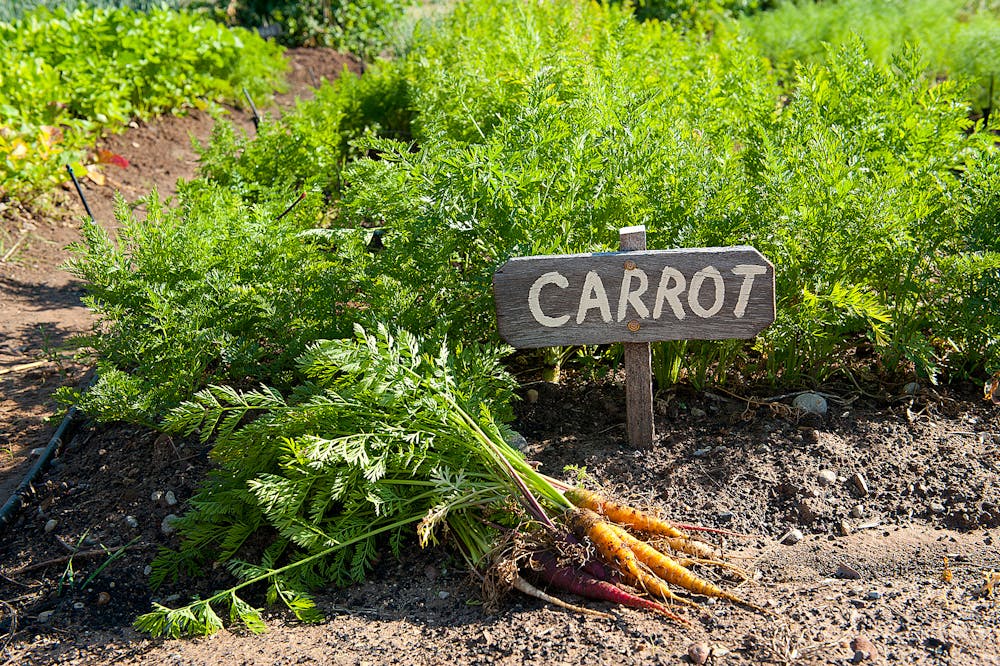 Community gardens are a good option for those without the infrastructure, knowledge or inclination to garden at home.
Penelope Beveridge/ AAP
Community gardens are a good option for those without the infrastructure, knowledge or inclination to garden at home.
Penelope Beveridge/ AAP
People can turn to communal gardening instead, such as The Happiness Garden in Canberra. Community gardens have historically been great ways of up-skilling and learning with others, but social distancing measures makes this challenging. It’s also important to be wary of soil safety depending on previous uses of the land, particularly if you live in the inner city.
Still, there’s a wealth of information available online, so connecting with local gardening groups, swapping socially distant tips within your suburb, or setting up food-sharing points with neighbours are great options for now.
Urban foraging
Food foraging and hunting of feral animals have supplemented mainstream food supplies during past economic instability. Weeds such as dandelions and feral rabbits were regular additions to meals during the Great Depression.
For urban dwellers, hunting for wild rabbits is probably not a realistic option, but urban food foraging has experienced a resurgence. Recent rain means dandelions, purslane and nettles are rampant right now and, with the right preparation, they can be eaten in salads, soups and stir fries.
Expert guidance is also available online to help you avoid picking anything poisonous.
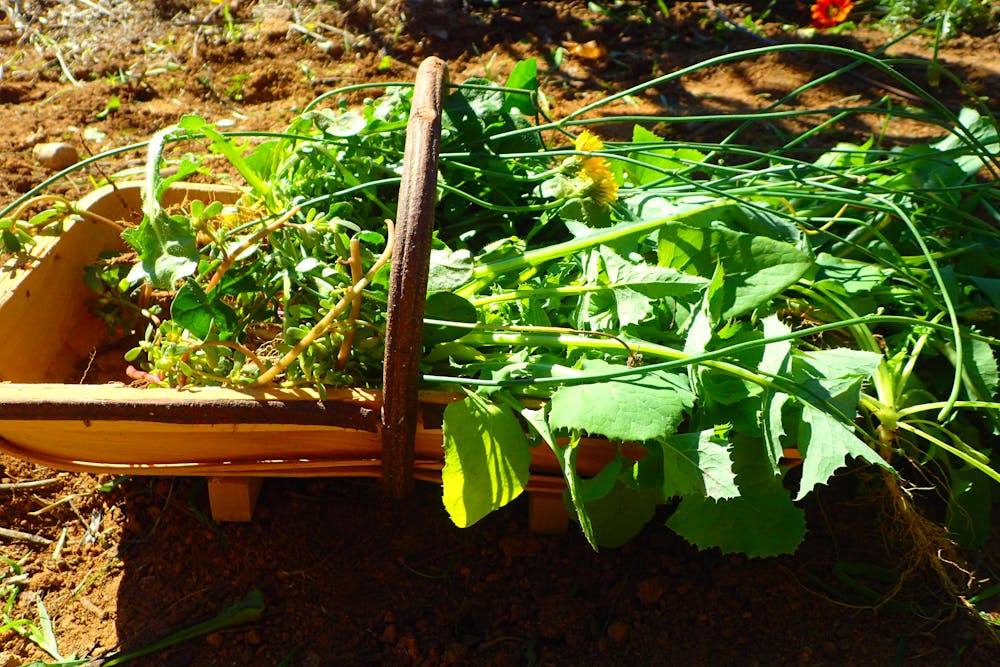 Edible weeds collected near the author’s home.
Hugo Potter, Author provided
Edible weeds collected near the author’s home.
Hugo Potter, Author provided
Start now to create good habits
Eliminating waste by being frugal and creative is key to making do in times of scarcity.
Knowing how best to store and preserve food (if you have limited fridge and freezer space consider bottling or fermentation); using whole foods (why peel carrots, potatoes and pumpkins?); and knowing substitution tricks (such as swapping eggs for sago), are important food skills in uncertain times.
Read more: 10 tips for eating locally and cutting the energy used to produce your food
This ability to adapt to uncertainty is critical to developing resilient communities.
As we look towards a future likely to be punctuated by more extreme weather events, environmental degradation and economic instability, we need robust national food security policy and local urban food systems planning that can meet the protracted challenges threatening our planetary health.
Right now is the perfect time for us to start experimenting with what we can do in our own homes and neighbourhoods to help secure our food futures.
Authors: Bethaney Turner, Associate Professor, Centre for Creative and Cultural Research, University of Canberra


 Daily Bulletin


