

If you took to growing veggies in the coronavirus pandemic, then keep it up when lockdown ends
- Written by: Andrea Gaynor, Associate Professor of History, University of Western Australia
The COVID-19 pandemic produced a run on the things people need to produce their own food at home, including vegetable seedlings, seeds and chooks.
This turn to self-provisioning was prompted in part by the high price rises for produce – including A$10 cauliflowers and broccoli for A$13 a kilo – and empty veggie shelves in some supermarkets.
As well as hitting the garden centres people looked online for information on growing food. Google searches for “how to grow vegetables” hit an all-time worldwide high in April. Hobart outfit Good Life Permaculture’s video on Crisis Gardening - Fresh Food Fast racked up over 80,000 views in a month. Facebook kitchen garden groups, such as Stephanie Alexander Kitchen Garden Foundation, sought to share information and inspiration.
The good life
Given the many benefits of productive gardening, this interest in increased self-sufficiency was an intelligent response to the pandemic situation.
Experienced gardeners can produce enough fruit and vegetables year-round to supply two people from a small suburban backyard.
Productive gardening improves health by providing contact with nature, physical activity and a healthier diet. Contact with good soil bacteria also has positive health effects.
Read more: Great time to try: starting a vegetable garden
While Australians have traditionally valued the feeling of independence imparted by a degree of self-sufficiency, psychological benefits arise from the social connectedness encouraged by many forms of productive gardening.
Amid COVID-19, gardeners gathered online and community gardens around the world brought people together through gardening and food. In some areas, community gardens were declared essential because of their contribution to food security. Although Australian community gardens paused their public programs, most remained open for gardening adhering to social distancing regulations.
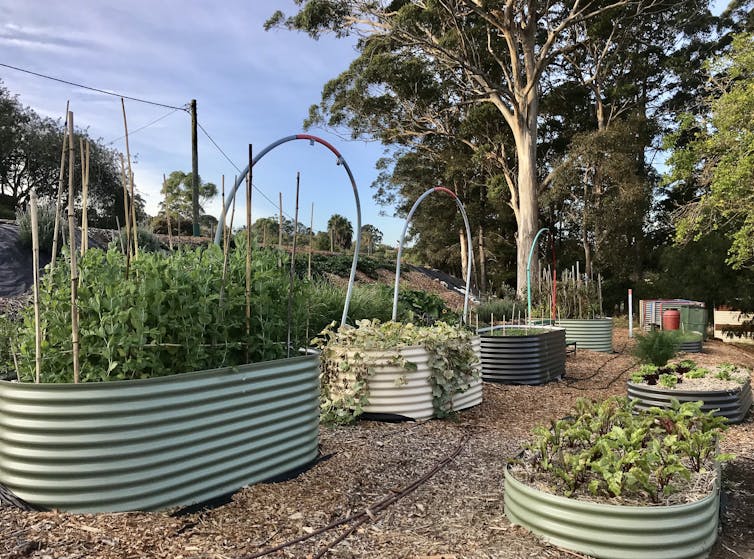 Community gardens have an important role to play in food resilience.
Andrea Gaynor
Community gardens have an important role to play in food resilience.
Andrea Gaynor
We always dig deep in a crisis
Vegetable gardening and poultry-keeping often surge in popularity during times of social or economic insecurity, such as the COVID-19 pandemic.
These responses are built on an established Australian tradition of home food production, something I have researched in depth.
Yet history tells us it’s not easy to rapidly increase self-provisioning in times of crisis – especially for those in greatest need, such as unemployed people.
This is another reason why you should plant a vegetable garden (or keep your current one going) even after the lockdown ends, as part of a broader suite of reforms needed to make our food systems more fair and resilient.
Read more: Can't go outside? Even seeing nature on a screen can improve your mood
In the second world war, for example, Australian food and agricultural supply chains were disrupted. In 1942-3, as the theatres of war expanded and shortages loomed, the YWCA organised women into “garden armies” to grow vegetables and the federal government launched campaigns encouraging home food production.
Community-based food production expanded, but it was not possible for everyone, and obstacles emerged. In Australia, there were disruptions in the supply of seeds, fertiliser and even rubber for garden hoses. In London, resourceful gardeners scraped pigeon droppings from buildings to feed their victory gardens.
Another problem was the lack of gardening and poultry-keeping skills and knowledge. The Australian government’s efforts to provide good gardening advice were thwarted by local shortages and weather conditions. Their advertisements encouraging experienced gardeners to help neighbours may have been more effective.
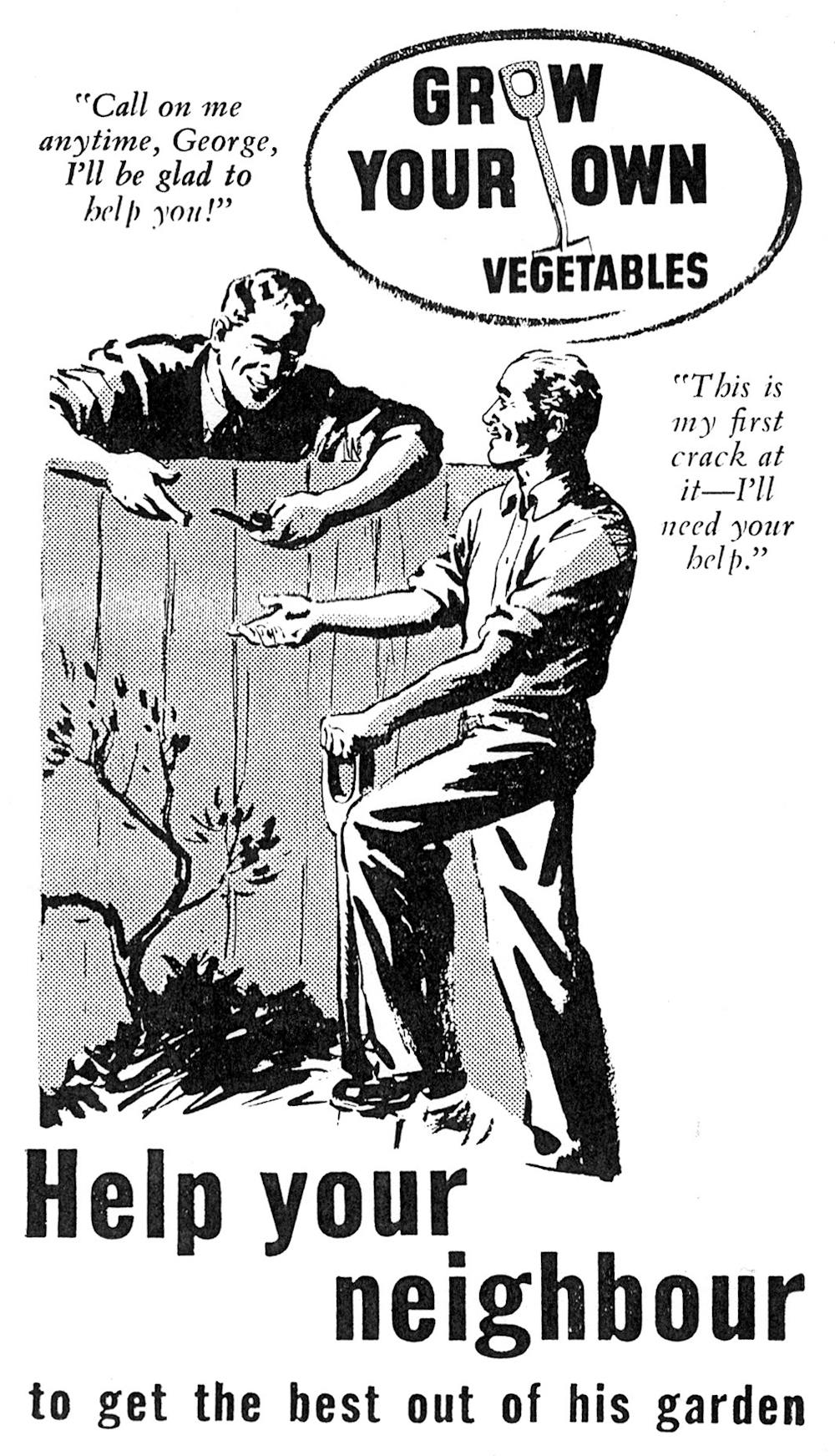 Australian government ‘Grow Your Own’ campaign advertising, 1943.
National Archives of Australia, Author provided
Australian government ‘Grow Your Own’ campaign advertising, 1943.
National Archives of Australia, Author provided
Home food production has also increased during times of economic distress. During the Great Depression in the 1920s and 1930s, a health inspector in the inner suburbs of Melbourne reported, with satisfaction, that horse manure was no longer accumulating:
… being very much in demand by the many unemployed who now grow their own vegetables.
The high inflation and unemployment of the 1970s – as well as the oil shocks that saw steep increases in fuel prices – saw more people take up productive gardening as a low-cost recreation and buffer against high food prices.
The urge to grow your own in a crisis is a strong one, but better preparation is needed for it to be an equitable and effective response.
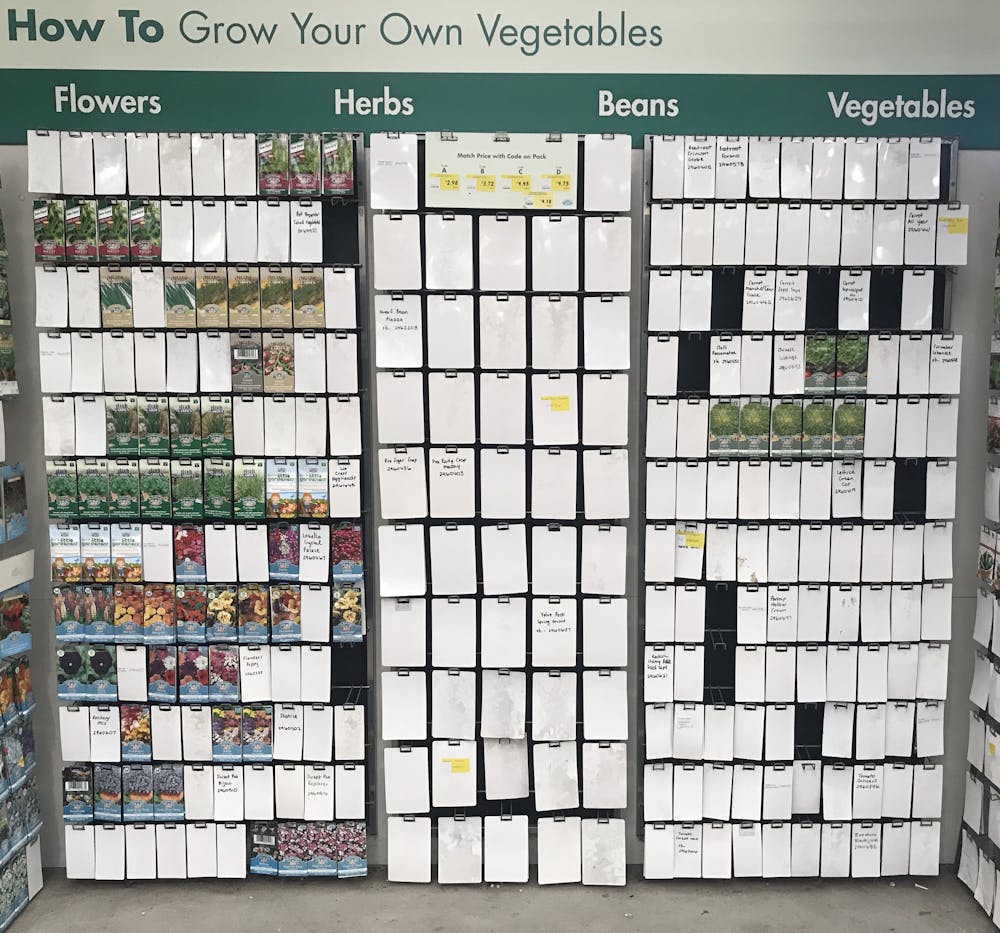 How to grow your own vegetables… as long as you like endive.
Andrea Gaynor
How to grow your own vegetables… as long as you like endive.
Andrea Gaynor
Beyond the pandemic
The empty shelves at nurseries and seed suppliers seen earlier this year tell us we were again insufficiently prepared to rapidly scale up productive home gardening.
We need to develop more robust local food systems, including opportunities for people to develop and share food production skills.
These could build on established programs, such as western Melbourne’s My Smart Garden. Particularly in built-up urban areas, provision of safe, accessible, free or low-cost gardening spaces would enable everyone to participate.
More city farms with livestock, large-scale composting and seed saving, can increase local supplies of garden inputs and buffer against external disruption.
Like other crises before it, COVID-19 has exposed vulnerabilities in the systems that supply most Australians with our basic needs. While we can’t grow toilet paper or hand sanitiser, there is a role for productive gardens and small-scale animal-keeping in making food systems resilient, sustainable and equitable.
Self-provisioning doesn’t replace the need for social welfare and wider food system reform. But it can provide a bit of insurance against crises, as well as many everyday benefits.
Read more: Supermarket shelves stripped bare? History can teach us to 'make do' with food
Authors: Andrea Gaynor, Associate Professor of History, University of Western Australia


 Daily Bulletin


