

Mr Morrison, you can cut 'green tape' without harming nature – but it'll take money and gumption
- Written by: Peter Burnett, Honorary Associate Professor, ANU College of Law, Australian National University
Prime Minister Scott Morrison this week announced environmental approvals for 15 major infrastructure projects will be fast-tracked to accelerate investment as Australia emerges from the COVID-19 lockdown.
Under the current system, proponents must seek both state and federal approvals for big developments. The new “single touch” approvals process will involve teams of state and federal officials assessing the projects jointly.
Read more: View from The Hill: 'Can do' Scott Morrison needs to take care in deregulating
This is by no means the first attempt by governments to streamline environmental approvals. Morrison says the latest push will be informed by a ten-year review of the Environmental Protection and Biodiversity (EPBC) Act, which has also been framed around cutting so-called “green tape” that slows developments. An interim report is due this month.
I was a federal environment official for 13 years, and from 2007 to 2012 was responsible for administering and reforming the Act. There are ways the laws can be streamlined without sacrificing the environment. But isolated from more comprehensive environmental reform, faster approval will bring significant environmental risk.
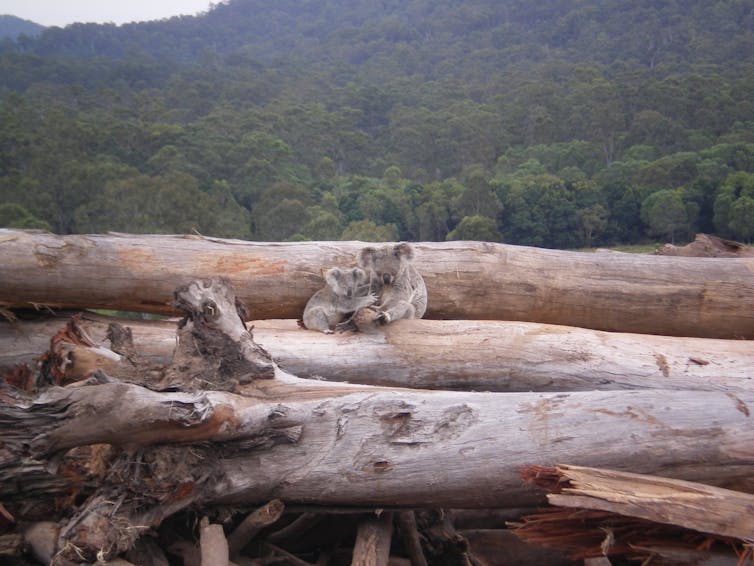 Faster environemnt approvals brings environmental risk.
WWF Australia
Faster environemnt approvals brings environmental risk.
WWF Australia
We’ve been here before
The first national agreement to streamline environmental approvals dates back to 1990, and Bob Hawke’s “New Federalism” push to reduce overlap between Commonwealth and state environmental laws.
More recently, the Gillard government in 2012, at the urging of business interests, sought to strike bilateral agreements with the states to reduce duplication in environmental approvals. The push was abandoned when each state demanded different arrangements, making the proposed system too messy and complex.
In 2014 the Abbott government revived this “one-stop shop” approach, but the move was blocked by the Senate.
A risky business
Environment advocates naturally oppose moves to streamline environmental laws and approval processes. They argue the regime already fails to protect threatened species and biodiversity, and the bar should not be lowered further.
It’s true that while governments may claim faster approvals won’t erode environmental standards, there aren’t many hard-and-fast standards to maintain.
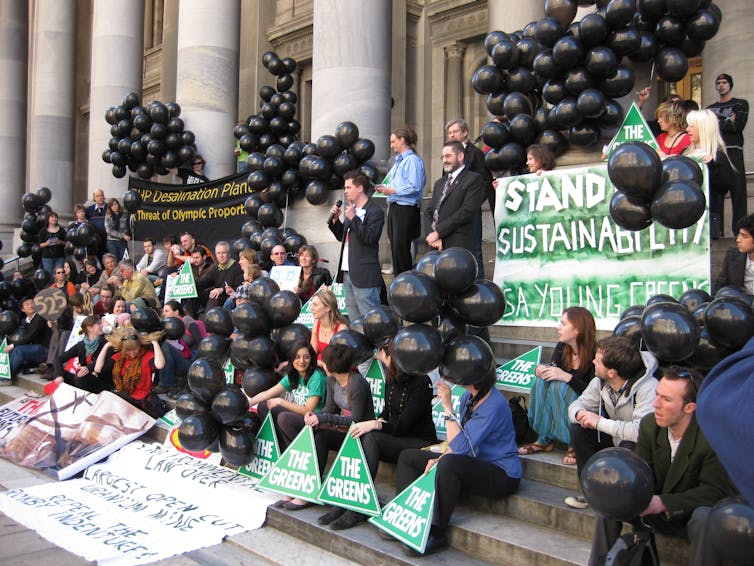 Environmentalists argue current laws are already inadequate.
Larine Statham/AAP
Environmentalists argue current laws are already inadequate.
Larine Statham/AAP
Instead, EPBC Act decisions mostly hinge on the minister’s conclusion that assessed environmental impacts are “not unacceptable”, provided certain conditions, such as minimising a project’s physical size, are met. But this is no standard at all, because such decisions are arbitrary and no “bottom line” for a project’s environmental performance is set.
As things stand, the closest thing to an on-ground environmental standard is the environmental offsets policy, which allows environmental damage from a project to be compensated for by environmental improvements elsewhere. But policies are not binding, there is no public register of approved offsets and little evidence of them being monitored and enforced.
Read more: Be worried when fossil fuel lobbyists support current environmental laws
The Act does include mechanisms for setting standards. These include “bioregional plans” intended to inform industry and decision-makers of the environmental values and objectives of a region, and how these should be met.
But since the Act commenced in 2000, just five such plans for marine areas have been developed, and none have been prepared for regions on land.
The Act also provides for recovery plans setting out the actions necessary to support listed threatened species. But as of 2018, fewer than half these species have recovery plans, and where they exist, the plans are often out of date and not specific enough.
Efficient approvals require proper resources
Morrison said his government wants to reduce Commonwealth assessment and approval times for major projects, from an average of 3.5 years to 21 months. But to do that, his government must stop starving its own regulatory systems of resources.
Between 2013 and 2019, the federal environment department’s budget was cut by 39.7%, according to an assessment by the Australian Conservtaion Foundation. So it’s little wonder approval processes slowed.
In November last year the Morrison government announced A$25 million to reduce unnecessary delays in environmental assessments, including the establishment of a major projects team. In effect, this was merely a reversal of previous funding cuts by this government and some of its predecessors.
What’s more, an efficient approvals process needs good information, yet this can be hard to come by.
The much-needed National Plan for Environmental Information was established in 2010 “to improve the quality and accessibility of Australian environmental information”. It would have reduced the need for fieldwork in environmental assessments. But in my view it was never properly resourced, and it has since been abolished.
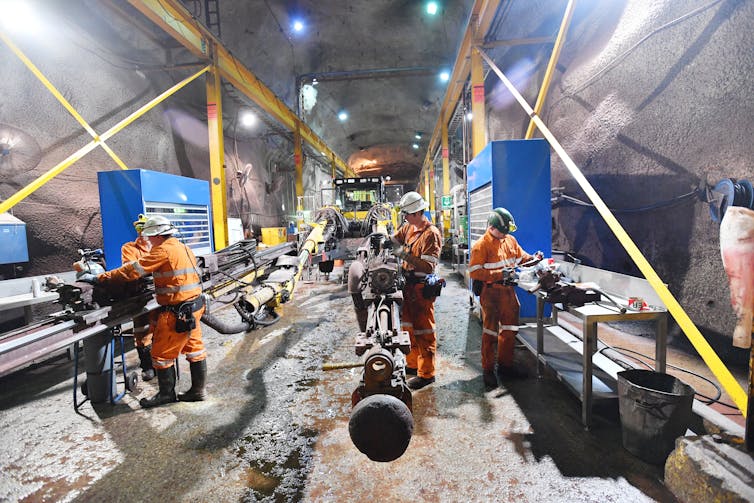 An expansion of BHP’s Olympic Dam mine site in Roxby Downs, South Australia, is among the priority infrastructure projects.
David Mariuz/AAP
An expansion of BHP’s Olympic Dam mine site in Roxby Downs, South Australia, is among the priority infrastructure projects.
David Mariuz/AAP
But streamlining could work
There are ways the Commonwealth and states could cut environmental approval times without cutting corners.
The proposed joint assessment teams would have to be well-resourced. They would also have to be authorised to negotiate procedural or cultural obstacles to meeting both federal and state legal requirements.
When I was in the environment department, it was common for federal and state officials to complain their counterparts were not addressing the assessment and approval requirements of the other jurisdiction.
And if companies behind developments want faster approvals, they will have to provide information to officials in a timely fashion – something that doesn’t always happen now.
Read more: Environment laws have failed to tackle the extinction emergency. Here's the proof
Australia has learnt much during the pandemic – not only about cooperation between the Commonwealth and the states, but also between government and business. Success in this latest streamlining attempt will demand excellence in both.
The larger challenge is to speed up the process without lowering the environmental bar.
The federal government should commission independent monitoring and evaluation of the environmental outcomes of approvals under these new arrangements. In 2009 a Senate committee recommendedmore resources for monitoring and audits, but nothing has improved in the decade since.
Independent evaluation won’t win over the sceptics, but it might assuage their worst fears.
Authors: Peter Burnett, Honorary Associate Professor, ANU College of Law, Australian National University


 Daily Bulletin


