

People who use drugs face unique challenges under hard lockdown. The government's support is vital
- Written by: Nicole Lee, Professor at the National Drug Research Institute (Melbourne) and Director at 360Edge, Curtin University
The “hard lockdown” of nine public housing towers in Melbourne has no doubt brought an array of challenges for the thousands of residents.
For people who regularly use drugs, this period could increase the risk of drug-related harms.
Recognising this, Victorian premier Daniel Andrews yesterday announced a series of support measures, including access to “wraparound mental health and drug and alcohol support”.
While the specifics are not yet entirely clear, it appears these measures will cater to people receiving alcohol and other drug treatment, to allow them to continue with this.
It’s also important these measures recognise that people who use drugs regularly, though not receiving treatment, may also need support during this time.
Read more: Melbourne tower lockdowns unfairly target already vulnerable public housing residents
Why are these supports needed?
There’s a complex relationship between housing stress, financial and social disadvantage, and mental health problems, including alcohol and other drug issues. But there’s very little recent data on alcohol and other drug use among people living in public housing in Australia.
Around 38% of people in public housing experience significant mental health problems or other disability. Some of those will have alcohol and other drug problems.
People who are socially disadvantaged are actually less likely to use alcohol and other drugs (and more likely to be past users). But they may be at greater risk of problems associated with their use.
For example, the rate of risky alcohol and other drug use among people who are homeless or at risk of homelessness is higher than the Australian average.
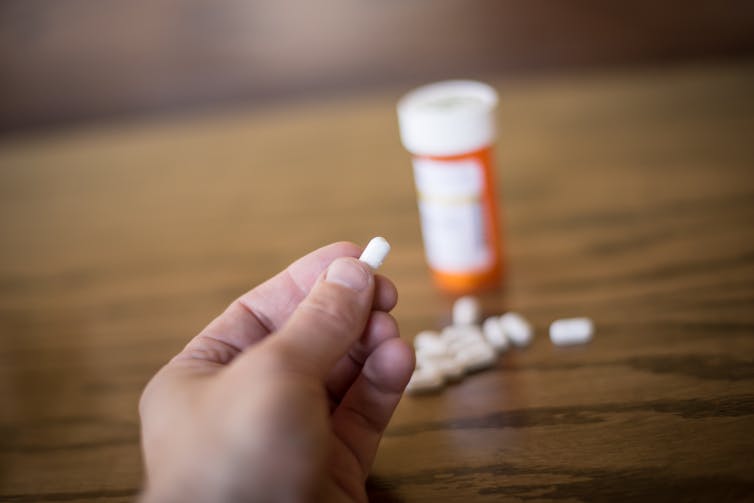 People can become dependent on drugs like opioids.
Shutterstock
People can become dependent on drugs like opioids.
Shutterstock
Ensuring people with alcohol and other drug problems can access support has important benefits: from the individual, to improving public health, to economic returns. For every $1 spent on drug treatment we save $7 in other costs.
What are the concerns?
Most people who use alcohol or other drugs use them occasionally with few problems.
A smaller number who use regularly may become dependent. This means their body has adapted to the drug in their system and they now need it to function.
Read more: Pot, pills and the pandemic: how coronavirus is changing the way we use drugs
In lockdown, people may not have access to their usual drug supply. For people who are dependent, stopping suddenly can result in withdrawal.
As the drug leaves the system, withdrawal symptoms can range from uncomfortable to life-threatening.
How will the government’s measures help?
We know treatment is effective in helping people stop or reduce drug use. It also helps prevent relapse. So it’s important for people already in treatment to be able to continue to access support so they don’t return to problematic use.
Pharmacotherapy (like methadone and buprenorphine) prevents opioid withdrawal symptoms. It works in a similar way to nicotine patches for people trying to quit cigarettes. It also dramatically reduces the risk of death.
A range of measures were put in place in the early stages of the pandemic to ensure access to pharmacotherapy.
These include procedures to allow delivery of these treatments to people in their homes if they are in lockdown or quarantine (normally they would need to visit the pharmacy daily).
It’s important these measures continue to be available to those in the locked down social housing estates.
Read more: Drug use may increase the risk of coronavirus. Here's how to reduce the harms
Withdrawal from drugs like opioids, benzodiazepines and alcohol can usually be managed safely at home using approved medicines under the care of experienced doctors and nurses.
The government has announced the establishment of two field emergency management units staffed by medical workers, GPs and nurses. A 30-bed urgent care clinic is also being set up in the area.
But people with risk factors, such as previously experiencing seizures during withdrawal, may require transfer to hospital. This must be factored into the government’s measures.
The government’s package also includes pharmacotherapy and medicines available on site. For people who are taking prescribed medicines, making sure they still have access to these prescriptions is essential.
People not currently in treatment
It’s important that people who are not already in treatment, especially those at risk of going into withdrawal, also have access to supports.
These include the option to start pharmacotherapy, access to other medicines they may need, doctors and nurses to support withdrawal, and counselling via telehealth. The government’s announcements so far don’t specifically address these measures.
With potentially less access to alcohol and other drugs during the pandemic, it’s also a good opportunity for people who want to cut back or stop altogether.
There were not enough alcohol and other drug treatment places to meet demand before COVID-19. Broadening access to treatment to meet the anticipated extra demand — both in the public housing towers and beyond — could have significant public health benefits.
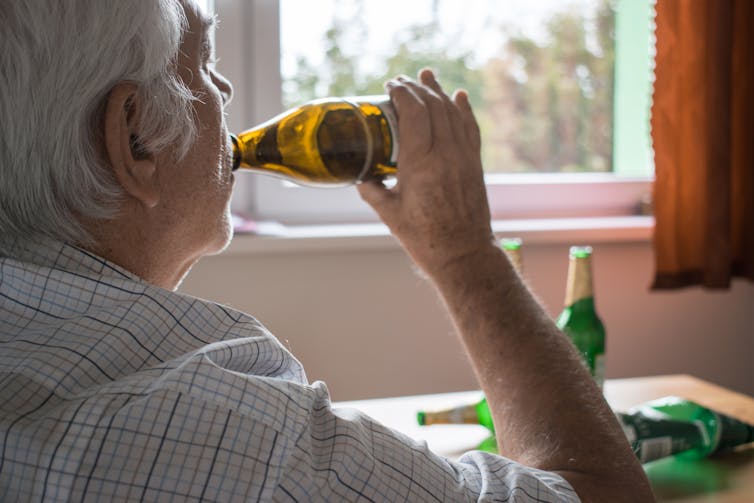 People who are dependent on alcohol could experience withdrawal if they can’t get it during the lockdown.
Shutterstock
People who are dependent on alcohol could experience withdrawal if they can’t get it during the lockdown.
Shutterstock
After lockdown
When the time comes to leave lockdown, and access to alcohol and other drugs increases, this presents a greater risk of overdose and other harms. For people who have reduced their alcohol or other drug use, their body will have adapted to lower levels of the drug, so what was a normal dose before may now be too much.
When people go back to using opioids after withdrawal, there’s a higher rate of death because their tolerance to opioids has decreased. So we must make sure naloxone, a drug that counters the effects of an opioid overdose, is readily available at the end of the lockdown.
If you resume alcohol or other drug use after a period of reduced use or abstinence, it’s important to use a small amount to start with until you see how you’re affected.
Getting help
If you’d like to talk to someone about your alcohol or other drug use call the National Alcohol and Other Drug Hotline on 1800 250 015. It’s a free call from anywhere in Australia.
If you’re trying to manage your drinking, Hello Sunday Morning offers a free online community of more than 100,000 like-minded people.
You can also chat online with a counsellor at CounsellingOnline. Or talk to your GP about seeing a psychologist or counsellor — many are now offering non-contact telehealth sessions.
Read more: Worried about your drinking during lockdown? These 8 signs might indicate a problem
Authors: Nicole Lee, Professor at the National Drug Research Institute (Melbourne) and Director at 360Edge, Curtin University


 Daily Bulletin


