

After the vicious cold snap, here are our tips to warm up while keeping your environmental footprint down
- Written by: Peter Osman, Scientist, Energy Efficiency & Renewables, CSIRO
Yesterday, Australia’s eastern states felt a vicious cold snap, and these wintry blasts make hunkering down in isolation at home a little easier. But as the temperature rises at home, so does our carbon footprint and energy bills.
Heating and cooling often accounts for up to 40% of energy bills. And energy consumption inside an Australian house is typically responsible each year for 8.5 tonnes of greenhouse gas emissions, not including what we produce from transport and the food we eat or the things we buy.
Of course, the extent you warm up or cool down your home depends on individual circumstances, such as whether you live in a house or an apartment, the size of your home and its orientation towards the sun. Here are a few tips to reduce your footprint (and energy bills) that can apply to many circumstances.
At no cost
There are several small things you can do that don’t really cost much but will make a huge difference to your comfort levels.
For example, making sure all windows are covered, and using doors or partitions, reduces heat and cold transfer between your rooms and the outside. Similarly, identifying and addressing any drafts or leaks around doors and windows, chimneys, gaps in floorboards, and so on, will also help improve the thermal comfort of your house.
 Layering up inside is good, but combining it with exercise is better.
Giulia Bertelli/Unsplash, CC BY
Layering up inside is good, but combining it with exercise is better.
Giulia Bertelli/Unsplash, CC BY
You’ve probably been told to just layer up, rather than switching the heater on. It’s true – adding a scarf and a woolly hat can help, but combining them with five minutes of exercise each hour (try a few star jumps) also makes a huge difference to your warmth. It’s much more effective than layering up while sitting passively.
Read more: When the heat hits: how to make our homes comfortable without cranking up the aircon
Hot water bottle or electric blanket?
Switching on an electric blanket for half an hour uses about the same electricity consumption as heating the kettle for a hot water bottle – but I suspect the hot water bottle would keep you warmer for longer.
Over the three months of winter, heating a kettle everyday for a hot water bottle would use about nine kilowatt hours of electricity, according to my calculations. That’s about nine kilograms of greenhouse gas, and the electricity would cost about A$2.50.
Running a three kilowatt reverse cycle air conditioner for heating a single bedroom for half an hour, and over the three months of winter, is far worse for your energy bills and the environment. It would use about 45 kilowatt hours, which is five times the greenhouse gas of a hot water bottle, and five times the cost.
 Compared to an electric blanket, a hot water bottle uses far less energy to make and keeps you warmer for longer.
Shutterstock
Compared to an electric blanket, a hot water bottle uses far less energy to make and keeps you warmer for longer.
Shutterstock
Gas, electricity or reverse cycle air conditioning?
Reverse cycle air conditioning can have a similar or smaller carbon footprint than gas heating, depending on your location. And gas heaters have carbon footprints two or three times smaller than electric heaters.
Medium to large household gas heaters can generally supply significantly more power for heating than an electric heater. So if you’re using a gas appliance instead of reverse cycle air conditioning, you may find it gives you a warmer house but consumes more energy.
Read more: Spruiking the stars: some home builders are misleading consumers about energy ratings
Depending on where you live, an air conditioner typically produces about one-third of the carbon emissions compared to an electrical heater.
But if just one small room needs to be heated and it’s too hard to install a small air conditioner, and too inefficient to run the main house air conditioner, then a small gas or electric heater may be the best solution. Do remember to keep the house and room properly ventilated where you are using gas heaters.
It’s rare a heating system needs to be on for 24 hours a day in every room of the house – it would cost a small fortune to run. Take care not to leave doors open unnecessarily, use room partitions where possible, and use the zone controls if your heating system has them to manage the rooms that need to be heated. If you have a timer on your heating system controller, use it instead of just letting the heater run.
Split or ducted air conditioner systems?
Air conditioning systems are often classed as either split or ducted. With split systems, part of the air conditioner is outside the house and the other part is in the room being heated or cooled. In this case, the outside unit sends hot or cold refrigerant through pipes to one or more inside units and these heat or cool air in the rooms.
With ducted systems, the inside unit is not in the room being conditioned, but typically may be in the ceiling or floor, where it warms or chills a stream of air delivered through air ducts to each room.
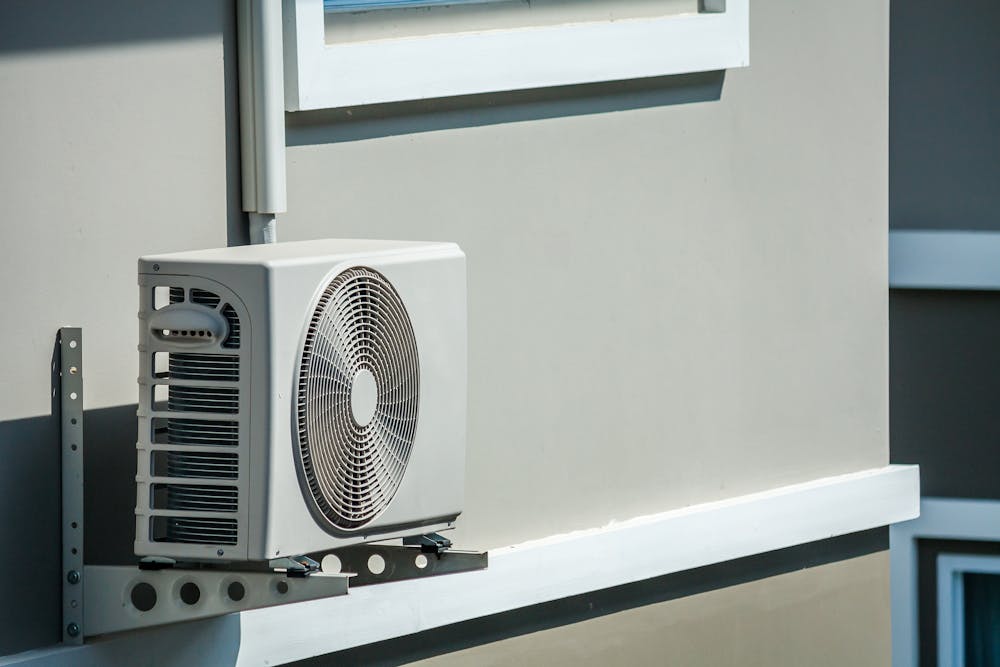 Split systems of air conditioning are more efficient because they usually heat up or cool down only one area.
Shutterstock
Split systems of air conditioning are more efficient because they usually heat up or cool down only one area.
Shutterstock
So which is more efficient?
Split systems are more efficient than unzoned ducted systems because they heat just the rooms that need to be warmed. Also, ceiling spaces can get very hot or cold, so ducting needs to have its own high-quality insulation, which should be regularly checked and repaired as necessary. Otherwise, you could easily double or triple your energy consumption.
Ducted systems are useful where there are large numbers of rooms that need to be conditioned, or if the house is in a damp location so occasionally passing warm air through the whole house keeps it dry.
Read more: Low-energy homes don't just save money, they improve lives
When buying an air conditioner, check it has a star rating to indicate energy efficiency and look out for as many stars as possible.
Be wary of standby power
When you switch off an air conditioner with the hand control, it will still use electricity, even if it’s not heating or cooling. Older models may consume as much electricity on standby as when running. So if you’re buying an air conditioner that can’t routinely be switched completely off, my advice is to ask how much standby power it uses.
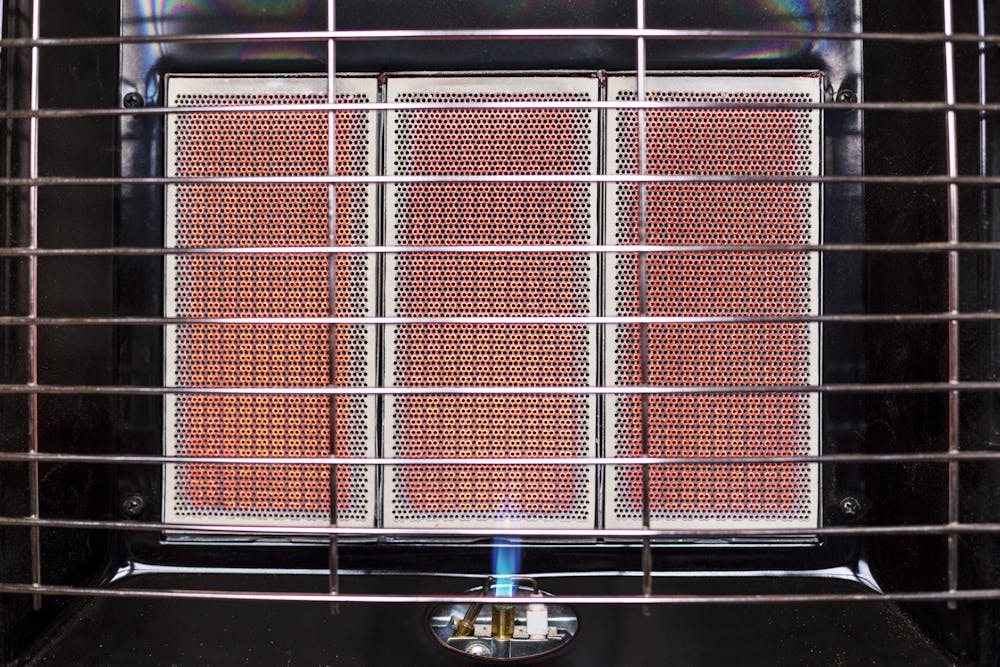 Gas heaters can give you a warmer house, but use more energy.
Shutterstock
Gas heaters can give you a warmer house, but use more energy.
Shutterstock
Be wary – some suppliers may only tell you the standby power for the inside unit, ask them for the standby power for the whole system including both the inside and outside units. If it’s much more than 20 watts, consider another model.
When it comes to taking action on climate change, we can all play our part to save energy and reduce emissions. Following just some of these tips will not only help you stay warm, but also keep your emissions profile lower.
Authors: Peter Osman, Scientist, Energy Efficiency & Renewables, CSIRO


 Daily Bulletin


