

Got someone with coronavirus at home? Here's how to keep the rest of the household infection-free
- Written by: Thea van de Mortel, Professor, Nursing and Deputy Head (Learning & Teaching), School of Nursing and Midwifery, Griffith University
Although some positive signs suggest Victoria’s second wave may be slowing, we continue to see large numbers of COVID-19 cases recorded every day.
Most people who test positive for COVID-19 won’t need hospital care and will self-isolate at home. But is it then inevitable the rest of the household will catch it?
It shouldn’t be, if you follow a few important infection prevention steps.
Read more: How can I treat myself if I've got – or think I've got – coronavirus?
First, how does the virus spread?
We understand SARS-CoV-2, the coronavirus that causes COVID-19, spreads to others primarily in two ways:
an uninfected person breathes in infectious droplets released when an infected person breathes, talks, coughs or sneezes
an uninfected person touches a surface contaminated with these droplets and then touches their mouth, nose, eyes or food. Viral particles can remain infectious on surfaces for extended periods.
There’s also mounting evidence SARS-CoV-2 can spread via the airborne route: smaller “aerosolised” particles that linger in the air.
Living in close quarters with someone with COVID-19 means thinking about ways to prevent each of these modes of transmission.
Isolation and ventilation
Ideally, the COVID-positive person should have their own room and bathroom to minimise contact with others. If a dedicated room isn’t available, they should maintain as much distance as possible from other members of the household.
It’s especially important for anyone in the household who is at higher risk — such as elderly family members or people with compromised immune systems — to keep their distance from the infected person.
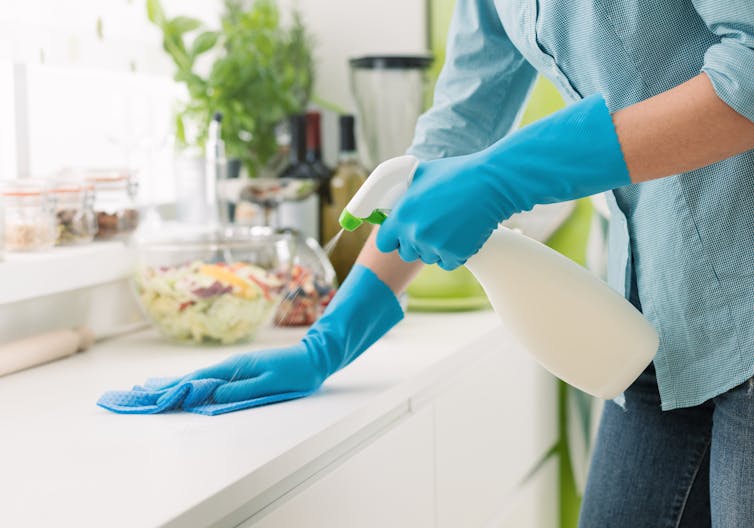 Regular cleaning can reduce the spread of infection.
Additionally, the better the ventilation, the lower the risk of transmission. Weather permitting, open windows to encourage air exchange.
It’s also a good idea to keep the door to the infected person’s room closed to minimise the movement of contaminated air into the rest of the house.
Personal hygiene
Everyone in the household — but the COVID-19 patient especially — should practise good respiratory hygiene (covering coughs and sneezes and disposing of used tissues).
Hand hygiene becomes even more important. Everyone in the household should wash their hands frequently, particularly before eating or after handling potentially contaminated objects. Use soap and water for at least 20 seconds or a sanitiser with at least 60% alcohol.
Read more: No, the extra hygiene precautions we're taking for COVID-19 won't weaken our immune systems
The World Health Organisation recommends the infected person wear a mask as much as possible to reduce the number of infectious particles in the air and lower the risk of transmission.
Caregivers may also choose to wear a mask when entering the infected person’s room. They should wear gloves if they’re going to come into contact with body fluids such as vomit, faeces or saliva.
All contaminated waste — such as used tissues, masks and gloves — should be put into a dedicated bin. The bin should have a lid and be lined. Wear gloves when emptying the bin.
Sharing isn’t caring
To prevent possible spread via contaminated objects, avoid sharing sheets, towels, toothbrushes, cups and glasses, eating utensils or equipment such as mobile phones with a COVID-positive person.
If others need to use or handle utensils the COVID-positive person has used, wear gloves when handling them, wash them with hot water and detergent or put them through a hot cycle in the dishwasher. Objects you can’t wash can be wiped down with disinfectant.
Handle used linen and clothing carefully to avoid the possibility of shaking virus particles into the air. In hospital settings, nurses make beds without flapping the sheets around to minimise the transfer of pathogens.
Put used linen directly into the washing machine and wash and dry it at the highest possible temperature setting. If you don’t have a clothes dryer, hang laundry in the sun. Evidence suggests sunlight can inactivate viruses.
Read more: What does it mean to be immunocompromised? And why does this increase your risk of coronavirus?
Up your cleaning game
You should clean surfaces such as benchtops and tables daily with hot soapy water followed by a disinfectant.
Pay particular attention to cleaning frequently touched shared surfaces, such as door and cupboard handles, light switches, toilets, sinks and taps.
If the bathroom is shared, the COVID-positive person should clean and disinfect the bathroom after using it if they’re well enough to do so. There is some evidence SARS-CoV-2 can be present in faecal matter.
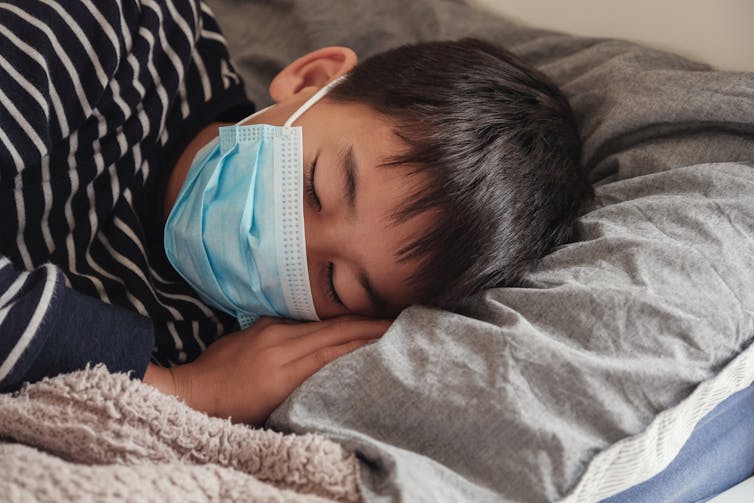 Ensure people with COVID-19 get plenty of rest.
Shutterstock
Ensure people with COVID-19 get plenty of rest.
Shutterstock
Caring for someone with COVID-19
If you’re looking after a family member or housemate with COVID-19, ensure they have nutritious food to eat and fluids to drink. Staying well hydrated is important when a person has a fever, to replace fluids lost due to sweating.
People with a virus often feel fatigued as a result of their body’s immune response, so it’s important they get plenty of rest.
While fever is nature’s way of fighting off an infection — our immune cells work better when we have a fever — if needed, anti-pyretic drugs such as paracetamol can make the person more comfortable.
Read more: How to clean your house to prevent the spread of coronavirus and other infections
It’s important to monitor how the person is feeling, and seek medical help if they deteriorate.
Finally, members of the household should keep an eye out for and get tested if they develop any COVID-19 symptoms, such as cough or fever.
Authors: Thea van de Mortel, Professor, Nursing and Deputy Head (Learning & Teaching), School of Nursing and Midwifery, Griffith University


 Daily Bulletin


